

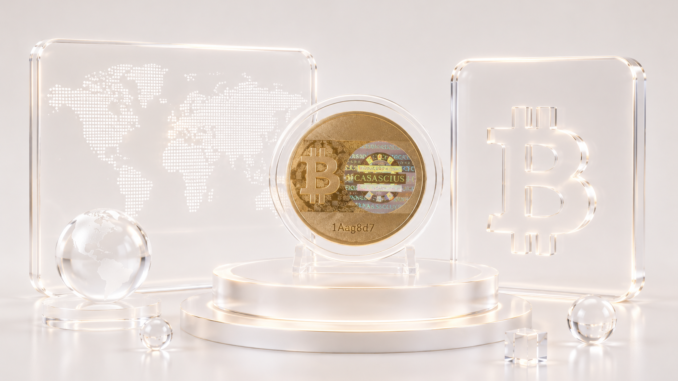
Casascius coins are physical Bitcoin collectibles that were created by Mike Caldwell, better known in the early Bitcoin community by the name Casascius. They turned Bitcoin into something people could hold in their hands: a metal coin, round or bar that contained access to real BTC through a hidden private key.
The important point is that a Casascius coin is not a separate cryptocurrency. It is a physical object tied to a Bitcoin private key. The coin usually has a public Bitcoin address visible on the outside and a private key sealed under a tamper-evident hologram. If the BTC is still at that address and the hologram has not been peeled, the coin is usually described as loaded or funded.
Classic Casascius coins became famous because they bridged two worlds. Bitcoin was designed as digital peer-to-peer money, yet Casascius made it feel physical. Early holders could give someone a coin that represented 1 BTC, 10 BTC, 25 BTC, 100 BTC or even 1,000 BTC, while the real value still lived on the Bitcoin blockchain.
That makes Casascius coins part wallet, part collectible, part Bitcoin history. They are related to Bitcoin because they hold access to BTC, but they are also tied to numismatics because condition, rarity, grading, provenance and collector demand can affect their market price.
How Casascius Coins Worked
A classic loaded Casascius coin worked through a simple but powerful idea. The physical coin displayed a Bitcoin address. Under the hologram was a private key or redeemable code that could spend the BTC assigned to that address. The visible address allowed anyone to check whether the coin was still funded without opening it.
The private key was the secret. As long as the hologram stayed intact and the BTC remained at the address, the coin could represent both physical collectible value and digital Bitcoin value. If someone peeled the hologram and used the private key, the BTC could be moved to another wallet. After that, the physical coin might still be collectible, but it would no longer be loaded with spendable BTC.
This design made Casascius coins an early form of physical cold storage. The private key was offline, hidden inside a physical object. Hackers could not drain the BTC through an online wallet app unless they had access to the key. The weakness was that physical security became everything. Theft, damage, counterfeiting, hologram tampering, poor storage or careless redemption could all create serious loss.
The same custody principle still matters today. Bitcoin ownership depends on private-key control, whether the key is stored in a modern hardware wallet, paper wallet, seed phrase backup or old physical Bitcoin. A guide to private keys and seed phrases helps explain why anyone who reveals the secret can control the funds.
Why Casascius Coins Matter In Bitcoin History
Casascius coins matter because they are among the most iconic physical artifacts from Bitcoin’s early years. They appeared when Bitcoin was still small, experimental and unfamiliar to most people. A physical coin helped make the idea easier to understand: there was real BTC on-chain, but the bearer held the key inside a physical object.
That made Casascius coins useful for early education and face-to-face exchange. They showed that Bitcoin was not stored inside a bank account or company database. It was controlled by keys. Whoever held the valid private key could move the BTC. That lesson remains central to self-custody.
They also became historically important because production of funded pieces ended early. Casascius suspended sales of items containing digital bitcoins in late 2013 after U.S. regulatory pressure around money transmission. That turned existing funded pieces into scarce collectibles from a specific period in Bitcoin history, similar to colored coins, the Bitcoin tokenization experiment, before NFTs and Ordinals.
Casascius coins now sit at the intersection of Bitcoin culture, cold-storage history and physical cryptocurrency collecting. Some buyers care about the loaded BTC. Others care about the coin as an artifact. Serious collectors may care about all three: the BTC value, the physical condition and the story behind the series.
Loaded, Redeemed, Peeled And Unfunded Casascius Coins
Casascius coins are usually described by funding status. A loaded or funded coin still has BTC at the associated Bitcoin address. The hologram is usually intact, and the private key has not been used. These are the most important examples for collectors because they combine digital Bitcoin value with physical rarity.
A redeemed or peeled coin has had the hologram opened. The private key was exposed, and the BTC was likely swept to another wallet. A redeemed coin can still have collectible value, especially if it is rare, graded or historically interesting, but it should not be priced as if it still contains BTC.
An unfunded coin is a physical piece that does not contain BTC. After regulatory pressure, later Casascius items were sold without embedded digital bitcoins or with a different funding model. These can still be collectibles, but they are not the same as classic funded Casascius coins.
This status difference is essential. Two coins can look similar to a beginner while having completely different value profiles. A loaded 1 BTC coin may be worth at least its BTC value plus any collectible premium. A peeled 1 BTC coin may be worth far less because the on-chain BTC has already moved. An unfunded piece may be valuable only as a collectible, not as a Bitcoin bearer instrument.
A buyer should never assume a Casascius coin is funded only because the front shows a denomination. The address must be checked, the hologram must be inspected and the seller’s claim must be verified.
How To Check Whether A Casascius Coin Still Holds BTC
The safest first step is to locate the public Bitcoin address or firstbits shown on the coin. The public address can be checked on the Bitcoin blockchain to see whether the expected BTC is still there. This does not require peeling the hologram or exposing the private key.
A funded coin should show an on-chain balance at its associated address. If the balance has moved, the coin has been redeemed or otherwise compromised. If the address still holds BTC and the hologram appears intact, the coin may still be loaded, although physical authentication is still necessary.
The hologram matters because it protects the private key. A peeled, damaged, replaced or suspicious hologram is a major warning sign. Casascius holograms were designed to show tampering if opened, but collectors should still watch for counterfeits, resealed pieces or poor-condition seals.
Some Casascius pieces have been graded by coin-grading services. Grading can help with authentication, condition and resale confidence, but it does not replace blockchain verification. A slabbed coin can still be funded or redeemed depending on the address balance and hologram condition.
A buyer should treat verification as two separate checks:
- Does the blockchain address still hold the BTC?
- Does the physical coin appear authentic and untampered?
Both must make sense before a coin is valued as loaded.
Why Collectors Pay Premiums For Casascius Coins
A loaded Casascius coin can be worth more than the BTC inside it. That extra value is the collectible premium. The premium can depend on denomination, year, series, metal, condition, grade, rarity, error variety, provenance, whether the coin is loaded, and broader collector demand.
This is similar to traditional numismatics, but with a Bitcoin twist. A rare coin may have metal value, historical value and collector value. A Casascius coin can have BTC value, physical collectible value and cultural Bitcoin value at the same time.
The highest-end examples can attract major premiums because they are early Bitcoin artifacts with real BTC still locked inside. Large-denomination pieces, rare series and high-grade examples are especially attractive to collectors. Some auction results have treated Casascius coins as serious numismatic items rather than simple novelty tokens.
The premium can also change with Bitcoin’s price. If BTC rises sharply, the loaded value rises. If collector demand rises, the premium can expand. If the coin is peeled, damaged or suspected of tampering, the premium can shrink quickly. A Casascius coin is not just “BTC in metal form.” It is a collectible with its own market.
Casascius Coins Vs Modern Bitcoin Wallets
Casascius coins were an early attempt to make Bitcoin tangible. Modern Bitcoin custody usually works differently. Most users today store BTC through software wallets, hardware wallets, multisig setups or exchange accounts. These tools are easier to back up, spend from and recover when set up correctly.
A hardware wallet keeps private keys offline while allowing the user to sign transactions deliberately. A Casascius coin keeps the private key sealed physically until redemption. Both are cold-storage concepts, but they behave differently. A hardware wallet can generate many addresses, support backups, allow test transactions and sign without exposing the seed. A Casascius coin usually holds one embedded private key that must be exposed to spend.
Modern Bitcoin-only wallets give users more flexibility for fees, coin control, receive addresses, transaction review and backups. The broader hardware wallet category also gives long-term holders better tools for self-custody than physical bearer coins.
That does not make Casascius coins obsolete as collectibles. It means they should not be treated as the best way for a modern beginner to store Bitcoin. Their value today is mostly historical, collectible and numismatic, with loaded BTC adding another layer.
Should A Casascius Coin Be Redeemed?
Redeeming a Casascius coin means exposing the private key and moving the BTC to a modern wallet. This can make sense if the holder is worried about hologram degradation, theft, inheritance risk, physical damage or private-key safety. It can also make sense if the owner wants to secure the BTC with a modern hardware wallet or multisig setup.
The trade-off is that redeeming the coin can reduce its collectible value. A loaded, intact Casascius coin usually carries more collector appeal than a peeled coin. Once the hologram is opened, the physical piece becomes a redeemed artifact rather than a bearer-style Bitcoin collectible.
This decision should not be rushed. A holder should compare the BTC value, collectible premium, personal security situation, storage conditions, insurance, estate plan and ability to redeem safely. A coin with a large BTC load may deserve professional help, secure handling and a planned redemption process rather than a casual phone-wallet sweep.
A holder who redeems should move the BTC to a wallet they already understand. The redemption process should not happen on a compromised computer, fake wallet app or random website. Modern self-custody still requires careful backups, test transactions and seed phrase security.
The broader lesson is the same as any crypto self-custody: the person controlling the key controls the money. Redeeming only improves security if the new custody setup is safer than the old sealed coin.
Risks When Buying Casascius Coins
Buying a Casascius coin is riskier than buying normal BTC on an exchange because the buyer must evaluate both blockchain value and physical authenticity. A fake coin, peeled coin, resealed coin, unfunded coin, compromised private key or misleading listing can create serious loss.
The main risks include:
- The BTC has already been swept from the address.
- The hologram has been peeled, replaced or tampered with.
- The coin is counterfeit.
- The seller does not actually own the coin.
- The listing confuses loaded, redeemed and unfunded status.
- The public address is not the one tied to the coin.
- The coin is damaged or poorly stored.
- The collectible premium is overpaid.
- The buyer lacks a secure plan for storage or redemption.
Private sales require extra caution. Escrow, provenance, high-quality photos, address verification, grading, seller history and professional auction records can all help reduce risk. None of them remove the need to verify funding status and physical condition.
Buyers should also avoid “too good to be true” offers. A loaded Casascius coin is not likely to sell far below its BTC value unless something is wrong. If a seller pressures the buyer to move fast, refuses address verification or avoids clear photos of the hologram and firstbits, the safest response is to walk away.
How To Store A Casascius Coin Safely
A Casascius coin should be treated like a high-value bearer asset. If it is loaded, possession of the physical object plus access to the hidden private key can control real BTC. Storage should protect against theft, fire, water, humidity, tampering and accidental loss.
A safe deposit box, secure home safe, professional vault or insured storage arrangement may be appropriate depending on value. The holder should also think about inheritance. If nobody knows the coin exists or understands what it is, the BTC could be lost. If too many people know, theft risk increases.
Physical handling matters. Avoid scratching, peeling, heating, bending or exposing the hologram to conditions that may degrade the seal. A graded coin should be kept in its slab unless there is a clear reason to open it. A loaded high-denomination coin should not be casually carried, displayed or shipped without planning.
Documentation should be kept separately. The owner may want records of purchase, photos, grade, public address, storage location, insurance information and redemption instructions. These records should not include the private key unless the coin has already been redeemed and the key is no longer useful.
A crypto backup kit can help modern users think about recovery planning. Casascius coins are unusual because the backup is partly physical and partly on-chain. The owner needs a plan for both.
Casascius Coins, Paper Wallets And Cold Storage
Casascius coins are close to paper wallets in one important way: the private key is hidden physically. A paper wallet stores a private key or seed on paper. A Casascius coin stores a private key under a hologram. Both can keep keys offline, but both can fail if the physical material is damaged, stolen, copied or exposed.
Modern self-custody has moved away from simple paper wallets because spending from them can be risky. A user may expose the key on an unsafe device, sweep funds incorrectly, send change to the wrong place or fail to understand wallet behavior. Casascius coins share some of those risks when redeemed.
A hardware wallet is usually safer for most modern users because the seed can be backed up separately, transactions can be signed without exposing the key, and the user can manage many addresses. A multisig setup can go further by requiring more than one key to spend funds.
Casascius coins are best understood as historical physical Bitcoin cold storage, not as the default storage model for new users. They are valuable because of what they represent: early Bitcoin, physical key storage, numismatic scarcity and the culture of self-custody before modern hardware wallets became normal.
Common Mistakes With Casascius Coins
The first mistake is assuming every Casascius coin is loaded. Some are redeemed. Some are unfunded. Some are damaged. Some may be counterfeit. Funding status must be checked on-chain.
The second mistake is peeling the hologram without a plan. Once the private key is exposed, the coin’s loaded collectible status changes permanently. The BTC should be swept safely and quickly to a secure wallet if redemption is the goal.
The third mistake is trusting screenshots instead of checking the Bitcoin address. A seller can show old photos, old balances or unrelated addresses. The buyer should verify the current on-chain balance and match it to the coin.
The fourth mistake is ignoring physical condition. A coin with a damaged hologram, poor storage history, scratches, corrosion or questionable slab may trade differently from a cleaner example.
The fifth mistake is treating the coin like a normal hardware wallet. A Casascius coin cannot update firmware, generate new addresses, support multisig or sign transactions securely without revealing the embedded key. It is a sealed private key, not a modern signing device.
The sixth mistake is using an unsafe redemption process. Sweeping a private key into a fake wallet, compromised browser extension or infected computer can lose the BTC immediately. Redemption should happen only with trusted software, clean devices and a clear plan.
The final mistake is ignoring scam risk. Fake recovery helpers, fake buyers, fake escrow agents, fake grading claims and suspicious private messages are common around high-value crypto collectibles. A guide to crypto recovery scams is useful because people with old physical Bitcoin often attract exactly the kind of attention scammers like.
Are Casascius Coins Still Relevant?
Casascius coins remain relevant because they show how early Bitcoin users thought about ownership. They made private keys physical. They turned BTC into a bearer-style object. They gave people a way to hand Bitcoin to someone without logging into an exchange or app. They also revealed the trade-offs of physical key storage long before hardware wallets became mainstream.
They are no longer the normal way to store Bitcoin. Modern users have better tools for security, recovery, fees, address management and inheritance planning. Still, Casascius coins remain among the most recognizable Bitcoin collectibles ever made.
Their relevance today comes from three layers. The first is loaded BTC value. The second is collectible premium. The third is historical meaning. A Casascius coin is a reminder that Bitcoin is digital, but ownership always comes back to key control.
For collectors, that combination is the point. For beginners, it is a useful lesson. Bitcoin does not live inside the coin. The BTC lives on-chain. The coin matters because it protects the secret that can move it.
Conclusion
Casascius coins are physical Bitcoin collectibles created during Bitcoin’s early years. Classic loaded pieces contain access to real BTC through a private key hidden under a tamper-evident hologram. If the BTC is still at the visible Bitcoin address and the hologram is intact, the coin may carry both Bitcoin value and collectible premium.
They matter because they made Bitcoin tangible before most people understood self-custody. They also show the strengths and weaknesses of physical key storage. A sealed private key can protect funds from online attacks, but it creates physical risks around theft, tampering, damage, redemption and inheritance.
Casascius coins are not a separate coin, not a modern hardware wallet and not a risk-free collectible. They are early Bitcoin artifacts that sit between numismatics and self-custody. Anyone buying, selling, storing or redeeming one should verify the address, inspect the hologram, understand the funding status, protect the physical object and plan the custody transition before exposing the private key.


Be the first to comment