

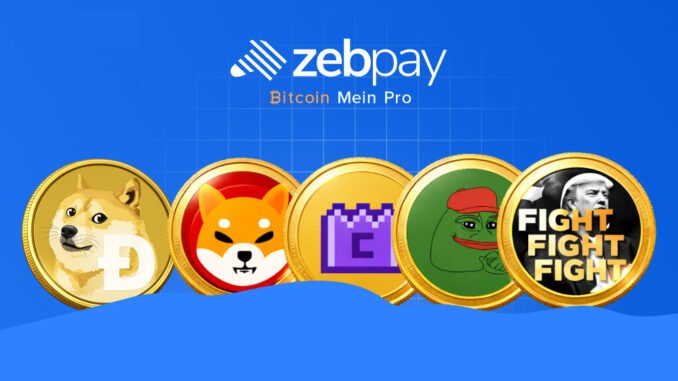

There is a specific kind of financial chaos that only the internet can produce. In 2013, two software engineers created a crypto asset as a joke; they put the face of a Shiba Inu dog on it, named it after a meme, and expected nothing. That coin, Dogecoin, now has a market capitalisation in the billions of dollars.
That story is both the appeal and the warning of meme coins in a single paragraph.
Meme coins sit at the intersection of internet culture and financial speculation. They are not designed the way Bitcoin was designed, with a fixed supply, a clear monetary philosophy, and years of cryptographic research behind it. Most meme coins are deployed in hours on existing blockchains by anonymous developers, given a funny name, and handed over to a community that may or may not stick around.
What makes them worth understanding is not their technology, but their behaviour. Meme coins move on tweets, not earnings reports. In a market where sentiment can be manufactured overnight, that makes them both an opportunity and a trap, depending entirely on timing.

This guide explains what meme coins are, how they actually work, which ones have stayed relevant, and what you are genuinely taking on when you decide to buy one.
Key Takeaways
- Meme coins are a category of crypto coins driven by internet culture and community sentiment, not technology or utility. Most are created quickly, go viral briefly, and fade, but a handful have built lasting market presence.
- The top meme coins by market cap include Dogecoin (DOGE), Shiba Inu (SHIB), Pepe (PEPE), Bonk (BONK), and Floki (FLOKI), each with very different origins and community structures.
- Meme coin prices are extremely volatile. Double-digit percentage swings in a single day are common, and crashes of 80–90% from peak are not unusual.
- The biggest risks are rug pulls, pump-and-dump schemes, and near-zero liquidity in smaller coins. There is no regulatory protection or recourse if you lose money.
- Meme coins can be part of a portfolio, but only as a small, high-risk allocation that you can afford to lose entirely.
What Are Meme Coins?
Meme coins are digital assets that originate from internet humour, pop culture references, or viral trends rather than a defined technological use case. The term covers a wide range, from coins with their own independent blockchains (like Dogecoin) to tokens deployed in minutes using standard smart contract templates on Ethereum or Solana.
What separates a meme coin from a mainstream crypto is intent and backing. Bitcoin was designed to be a decentralised payment network. Ethereum was built to enable programmable smart contracts. Most meme coins were created to be funny, to ride a trend, or, in some cases, to make the creator money quickly.
Dogecoin has real merchant adoption and an active developer base. But it does mean that the majority of meme coins have no structural reason to hold value once the initial hype fades.
How Do Meme Coins Work?
Most meme coins are built on top of existing blockchains, primarily Ethereum, Solana, or Binance Smart Chain, using token standards like ERC-20 or SPL. This significantly lowers the barrier to creation. A basic meme coin can be deployed with minimal technical knowledge and almost no capital.
The price mechanism depends on supply and demand. Demand for meme coins is driven by attention. Here is how a typical meme coin cycle plays out:
- A coin launches with a viral concept, a dog breed, a political figure, or a trending meme format.
- Early holders and communities on X (Twitter), Reddit, Telegram, and Discord start promoting it.
- Influencer mentions or celebrity references drive a spike in buyers.
- Price rises sharply, generating media coverage and FOMO among retail investors.
- Early holders sell at peak, which minimizes the liquidity and results in a price collapse.
This cycle repeats constantly across new meme coins. The exceptions, coins that survive past this cycle and build genuine communities, are few, but they exist.
Also Read: Top Meme Coin in 2026
Can I Make Money From Meme Coins?
Yes. It has happened. Early Dogecoin holders turned negligible investments into life-changing returns. SHIB made some investors millionaires. PEPE delivered 1,000%+ gains to those who entered early and exited before the drop.
But the structure of meme coin markets means that for every person who made money, a larger number lost it. The gains for early sellers are largely funded by the losses from the late buyers. The market does not reward patience or research the way equities might; it rewards timing, which is far harder to control.
What actually determines whether you profit:
- Entry participants have structurally better odds than those who buy after media coverage peaks.
- Knowing when to sell is harder than knowing when to buy. Most retail investors hold too long.
- Position sizing is the single most controllable variable. How much of your portfolio you risk is the only factor entirely in your hands.
Is It Safe to Invest in Meme Coins?
“Safe” is not the right frame for this asset class. Meme coins are high-risk, speculative instruments. Here is what that means in practice:
Extreme Volatility
Meme coin prices can move 50–80% in a single day, in either direction. There is no floor and no fundamental anchor. A single tweet from a high-profile account can double or halve a coin’s value within hours.
Rug Pulls
A creator launches a meme coin, generates hype, collects liquidity from buyers, then removes all funds and disappears. This is one of the most common forms of fraud in the meme coin space and is especially prevalent with newer, unaudited tokens.
Pump-and-Dump Schemes
Coordinated groups accumulate a coin quietly, then promote it aggressively to drive up the price. Once retail buyers enter and push the price higher, the group sells its entire position — leaving latecomers with a rapidly declining asset.
Liquidity Risk
Outside of established meme coins like DOGE and SHIB, trading volumes can be extremely thin. If you need to sell during a price drop, there may not be enough buyers at any reasonable price.
No Recourse
There is no regulatory protection, no deposit insurance, and no legal framework that covers losses from meme coin investments in most jurisdictions. If you lose money, there is no authority to appeal to.
What Happens If I Buy a Meme Coin and It Crashes?
You absorb the loss. There is no stop-loss mechanism built into the market, no guaranteed buyer, and no recovery fund. This is why position sizing is the most important risk management tool available to retail investors in this space.
If a coin you hold drops to near-zero, which is the outcome for the majority of meme coins over a long enough time horizon, your investment is effectively unrecoverable. The practical implication: never allocate more to meme coins than you are prepared to lose entirely without it affecting your financial stability.
Conclusion
Meme coins are a genuinely unusual financial phenomenon. They are real assets with real money flowing through them, born from a culture that was never designed to produce financial instruments. That contradiction, between their absurd origins and their sometimes staggering market caps, is exactly what makes them compelling to some and dangerous to many.
They can be a legitimate part of a diversified crypto portfolio if approached with clear limits on exposure and no illusions about what they are. They are not investments in a business, a technology, or a productive asset. They are bets on attention, on whether enough people will care about something long enough to drive its price up before you sell.
Understood that way, meme coins make a certain kind of sense. Mistaken for something more stable than that, they have cost a lot of people a lot of money.
In the grand scheme of things, ZebPay blogs are here to provide you with crypto wisdom. Get started today and join 6 million+ registered users to explore endless features on ZebPay!
FAQs
What is a meme coin in simple terms?
A meme coin is a crypto coins that originated from an internet joke, meme, or pop culture moment. Their value is driven almost entirely by community hype and social media attention.
Are meme coins a good investment?
That depends entirely on your risk tolerance and how you define “investment.” Meme coins are high-risk, speculative assets. Some people have made significant returns. A larger number have lost money.
Can meme coins reach zero?
Yes. The majority of meme coins that have launched have eventually dropped to near-zero value.
How are meme coin prices determined?
Meme coin prices are set by supply and demand on crypto exchanges. What drives demand is attention, like social media posts, influencer mentions, celebrity endorsements, etc.
Disclaimer:
Crypto products and NFTs are unregulated and can be highly risky. There may be no regulatory recourse for any loss from such transactions. Each investor must do his/her own research or seek independent advice if necessary before initiating any transactions in crypto products and NFTs. The views, thoughts, and opinions expressed in the article belong solely to the author, and not to ZebPay or the author’s employer or other groups or individuals. ZebPay shall not be held liable for any acts or omissions, or losses incurred by the investors. ZebPay has not received any compensation in cash or kind for the above article and the article is provided “as is”, with no guarantee of completeness, accuracy, timeliness or of the results obtained from the use of this information.



Be the first to comment