



Share

Last updated:
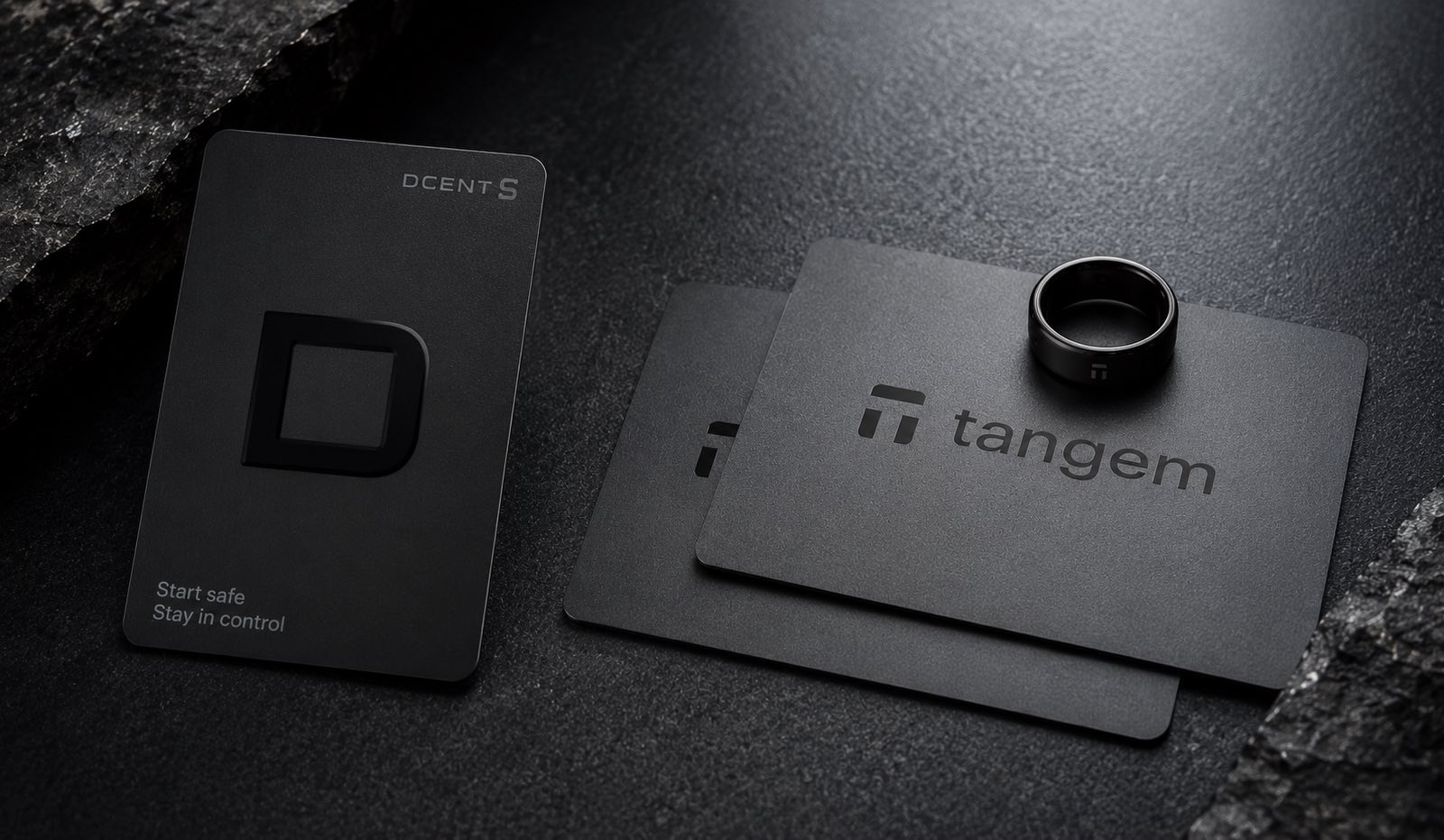
The hardware wallet market has seen a quiet revolution over the past few years. Even though traditional USB-style devices like Ledger and Trezor still dominate the conversation, a new category of card-shaped cold wallets has emerged. These devices look like credit cards, fit in your wallet, and use NFC to sign transactions. No cables, no batteries, no Bluetooth pairing. Just tap and go.
Two names stand out here; DCENT S and Tangem. Both use EAL6+ certified secure elements, and both promise to make self-custody easier than ever. But they take fundamentally different approaches to one critical area – backup and recovery. This single difference shapes everything else about how these wallets work and who they are for.
DCENT S launched in July 2026 as the latest offering from IOTRUST, a South Korean company with years of hardware wallet engineering experience. Tangem has been around longer and comes from Switzerland, with a strong focus on simplicity and beginner accessibility. Both have loyal followings, but they serve slightly different users.
This comparison breaks down every important aspect of these two wallets so you can decide which one fits your needs. We will look at design, security, backup systems, supported assets, daily usability, mobile apps, and overall value.
DCENT S vs Tangem: Quick Comparison
| Feature | DCENT S | Tangem |
| Form Factor | Card (credit-card-sized) | Credit card or ring |
| Security Certification | EAL6+ Secure Element | EAL6+ Secure Element |
| Backup Method | Dedicated R3covery Card (encrypted chip backup) | Duplicate wallet cards (2 or 3-card sets) |
| Backup Card Signs Transactions? | No (recovery-only) | Yes (identical to primary) |
| Seedless Setup | Yes | Yes |
| NFC Signing | Yes | Yes |
| Battery/Charging | No | No |
| Supported Blockchains | 100+ | 90+ |
| Supported Tokens | 4,900+ | 14,000+ |
| IP Rating | IP69 | IP69K |
| Warranty | 1 year | 25 years |
| Mobile App | DCENT App | Tangem App |
| XRP Support | Full XRPL, Trust Lines, dApps, swaps | Standard XRP support |
| Company Location | South Korea | Switzerland |
Design & Build Quality
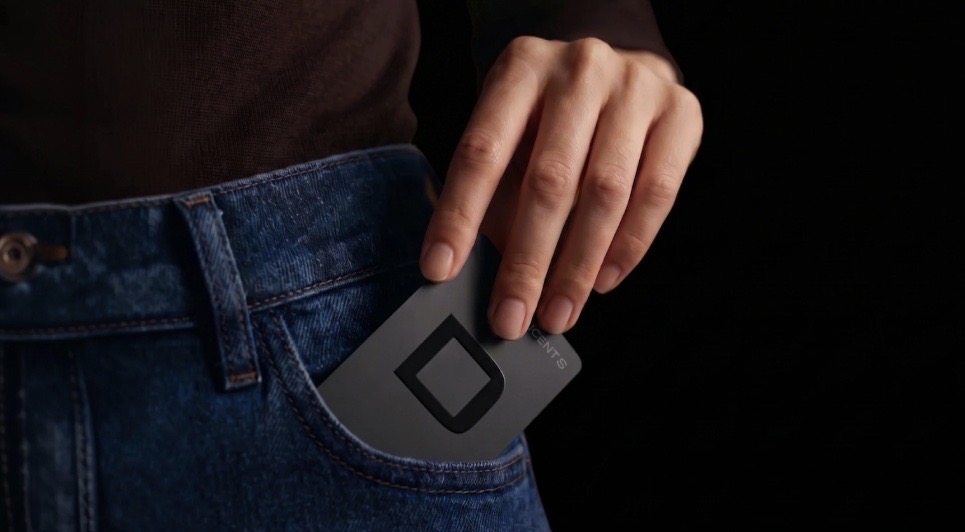
Both wallets use a credit-card-sized form factor. The DCENT S measures 85.6 by 54 millimeters and comes in at just 0.9 millimeters thick. That is thinner than most standard payment cards. Tangem is similarly sized and feels just as slim and lightweight. Both devices fit easily into any wallet slot alongside your other cards.
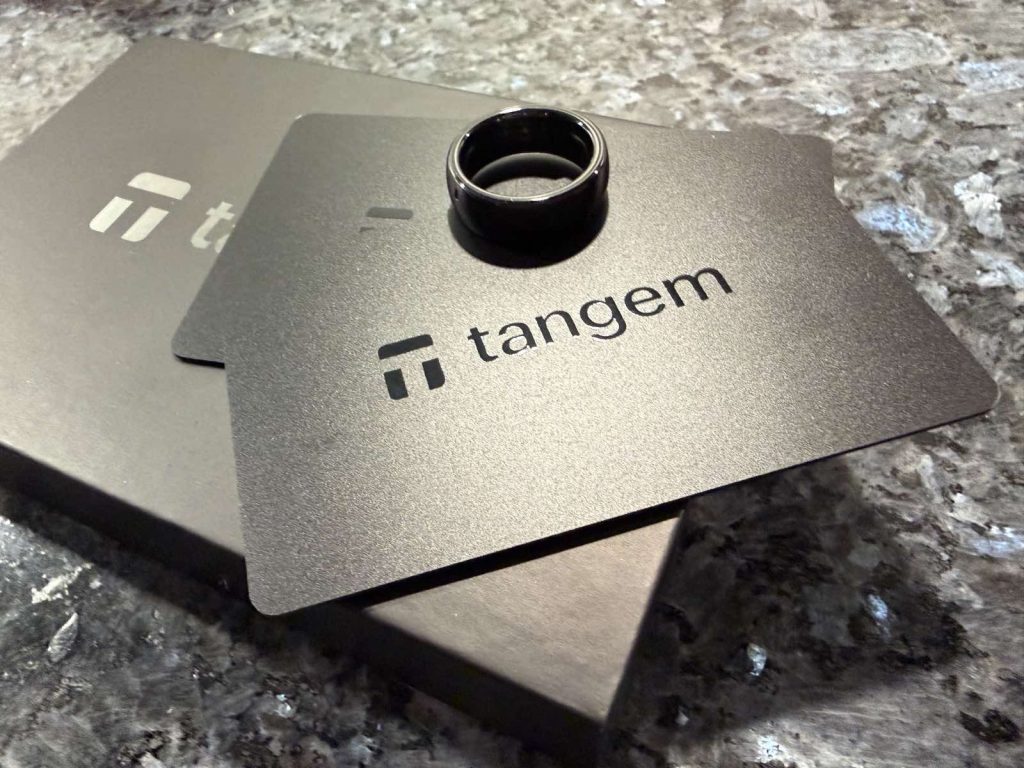
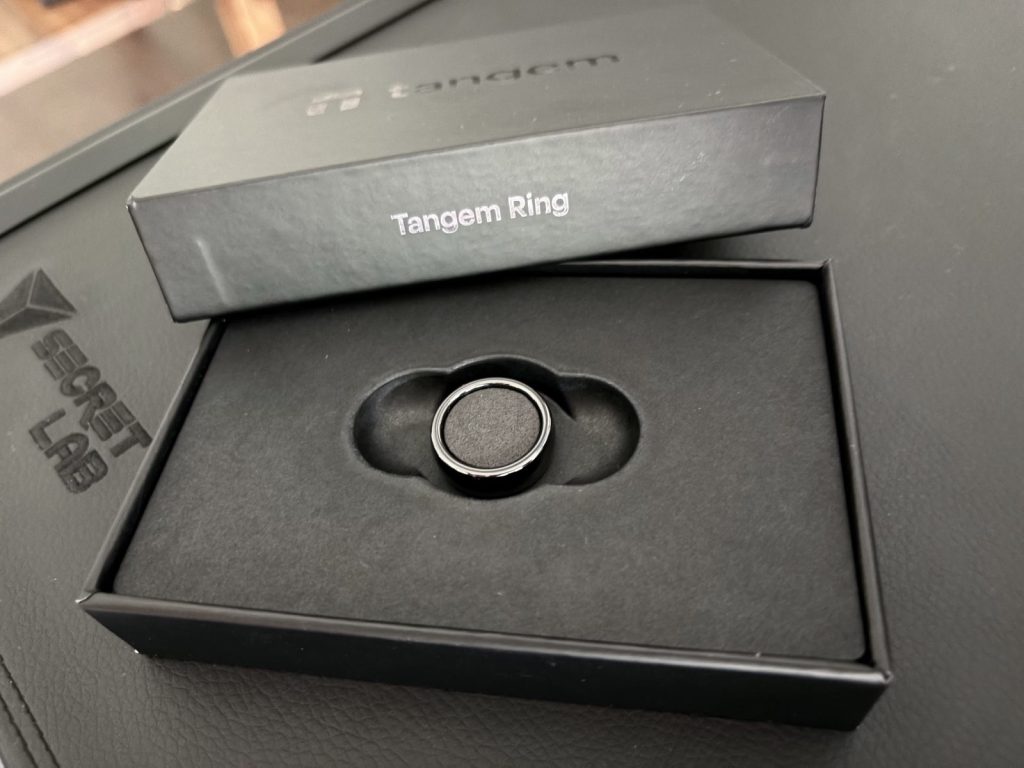
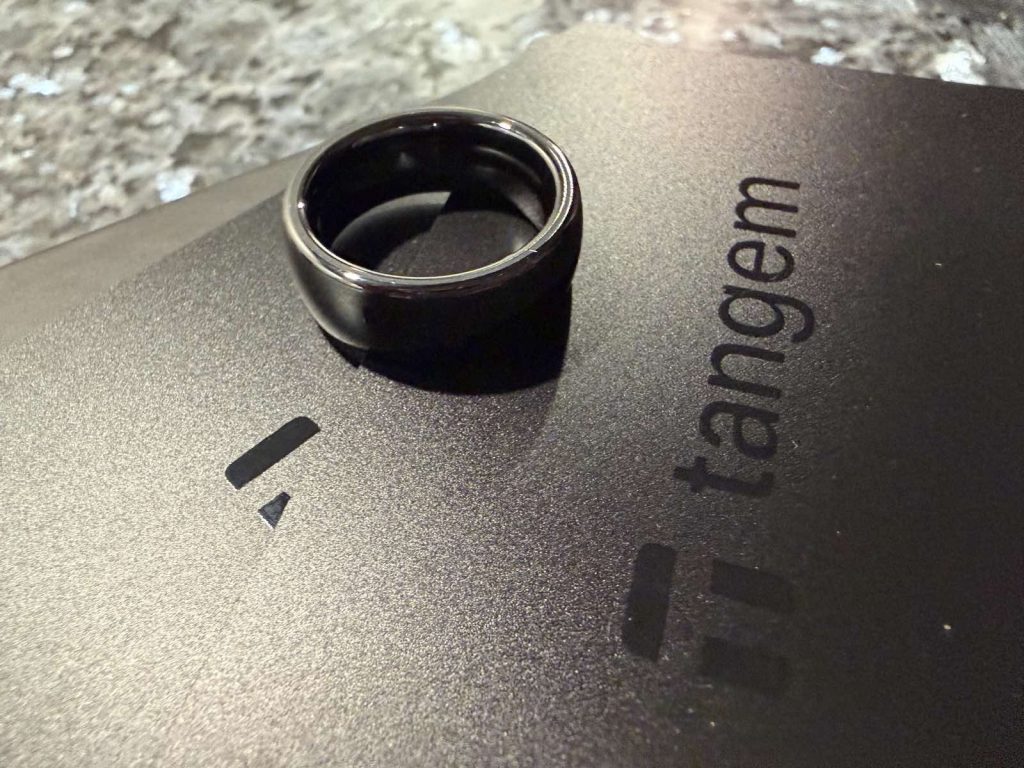
Tangem offers an additional form factor that D’CENT does not; a wearable ring. If you prefer something even more convenient than a card, the Tangem ring lets you carry your wallet on your finger. It is a nice option for people who do not want to carry another card or who simply like the novelty of a crypto ring.
The build quality on both is excellent. DCENT S carries an IP69 dust and water resistance rating, while Tangem goes slightly higher with IP69K. In practical terms, both can survive being dropped in water, exposed to dust, and subjected to everyday wear and tear. Tangem also advertises resistance to X-rays, electrostatic discharge, and electromagnetic pulses, which adds another layer of durability for people who travel frequently or work in environments where such exposure is possible.
Temperature tolerances are similar. DCENT S operates from minus 30 to plus 50 degrees Celsius, while Tangem works from roughly minus 25 to plus 50 degrees Celsius. Either wallet will function in hot cars, freezing winters, or tropical climates.
The one difference that stands out is that Tangem offers a 25-year warranty on their hardware, while DCENT S provides a limited lifetime warranty. Both are generous, and neither company expects you to replace your wallet anytime soon.
Security & Private Key Protection
This is where both wallets are remarkably similar – and that is a good thing. Both use EAL6+ certified secure elements. This is the same level of security certification used for government IDs, passports, and EMV payment cards. It protects against both invasive physical attacks and non-invasive side-channel attacks.
The private key generation process is identical in concept. When you set up either wallet, the secure element generates your private key on-device. The key never leaves the chip under any circumstances. It never touches your smartphone, never goes to the cloud, and never gets stored on company servers.
Both wallets are battery-free and get powered entirely by your phone’s NFC field during signing sessions. This means there is no always-on power source that could be exploited. The card is inert until you tap it against your phone, which significantly reduces the attack surface compared to Bluetooth-enabled wallets that remain discoverable.
Tangem adds anti-counterfeit verification through their app, which lets you confirm that your card is genuine before you use it. DCENT S does not emphasize this feature in their marketing, though the secure element itself provides strong protection against cloning attempts.
Firmware security is another point where Tangem has an edge in transparency. They have had their firmware independently audited by Kudelski Security in 2018 and Riscure in 2023. DCENT S is newer to the market, and while their secure element is certified, they have not published equivalent third-party audit results at this stage.
Both wallets lock themselves automatically after repeated incorrect PIN entries, and both include tamper protection that locks the card if someone attempts to physically extract the chip.
Backup & Recovery
This is where the two wallets diverge completely, and it is the single most important difference between them.
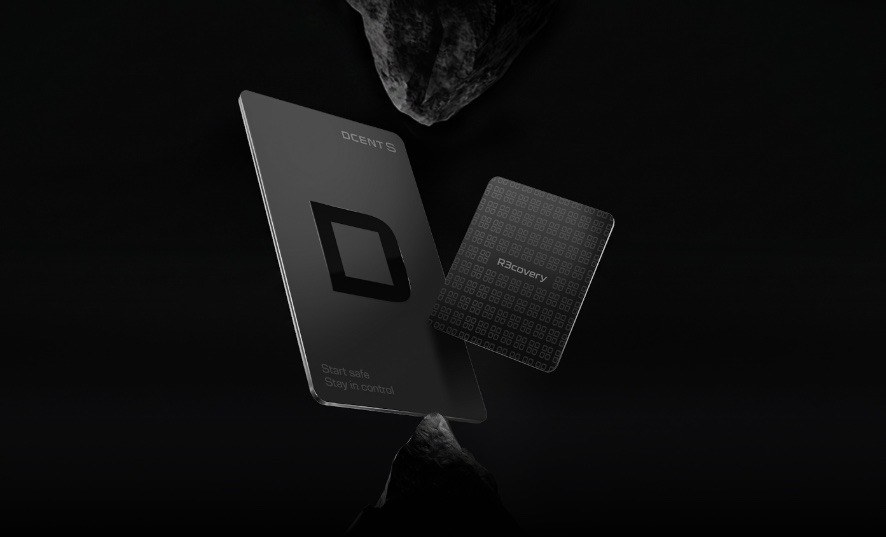
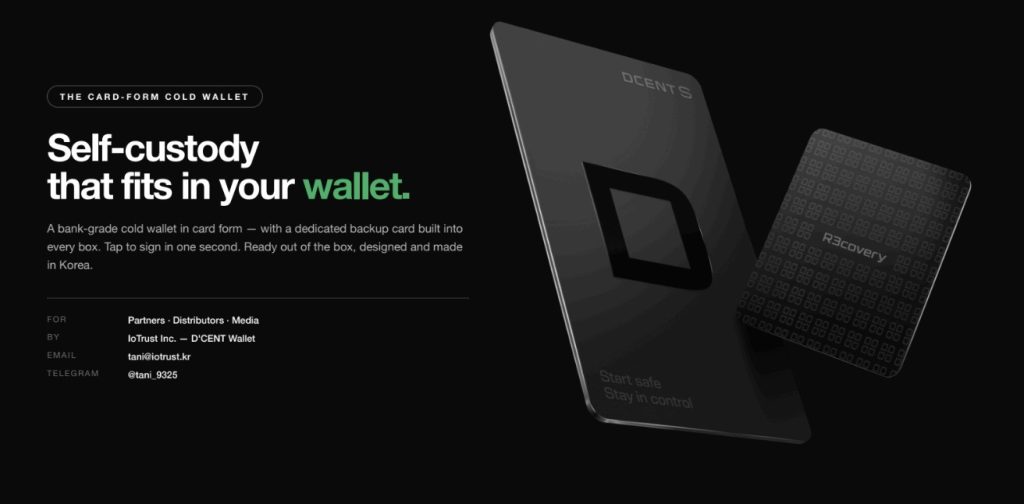
DCENT S uses what they call the R3covery Card. Every box contains two cards – the main DCENT S for everyday transactions and a dedicated recovery card. The recovery card cannot sign transactions. Its only purpose is to restore your wallet if you lose your primary card. The backup is stored inside another EAL6+ secure chip, so your recovery data is never displayed as words, never written on paper, and never typed anywhere.
If you lose your DCENT S, you tap the R3covery Card against your phone, restore the wallet, and then move everything to a new DCENT S card. The recovery card itself remains a high-value target because whoever holds it can restore your wallet. The company recommends storing the two cards in different physical locations.
Tangem takes a different approach. Instead of a dedicated recovery card, they sell wallet sets that include two or three identical cards (or combinations of cards and a ring). During setup, the private key is securely copied to all devices in the set. Any of these duplicate cards can function as the primary wallet. If you lose one card, you simply use another from your set.
The Tangem approach means you do not need to order a replacement card just to restore access. You already have a backup ready to go. The downside is that every card in your set can sign transactions. If someone gets hold of one of your backup cards and knows your PIN, they have full access to your funds. With DCENT S, the recovery card cannot sign anything, so even if stolen, it is useless without the main card and PIN.
There is a trade-off here. Tangem offers immediate redundancy – you have multiple working cards from day one. DCENT S offers a recovery-only backup that cannot be misused for transactions but requires you to obtain a new primary card after loss.
Supported Coins & Networks
DCENT S supports over 100 blockchain networks and more than 4,900 tokens. Tangem supports more than 90 blockchain networks and over 14,000 tokens.
In practice, both wallets cover all the major assets you are likely to hold. Bitcoin, Ethereum, XRP, Solana, Stellar, Polygon, and BNB Chain are supported on both. New chains are added through app updates on both platforms, so you do not need to update the physical card firmware.
Where DCENT S distinguishes itself is in XRP support. The company has been working with the XRP Ledger since 2018, and they make a point of emphasizing full XRPL functionality. Trust Lines, decentralized applications, swaps, sending, receiving, and holding XRP are all fully supported. If you are active on the XRP Ledger, DCENT S feels like it was built specifically for you.
Tangem supports XRP as well, but they do not make it a central part of their marketing. For most users, both wallets cover everything they need. The difference in token count is more about counting methodology than actual compatibility.
Ease of Setup & Daily Use
Both wallets are exceptionally easy to set up. Tangem claims a two-minute setup time, while DCENT S estimates three minutes. In reality, both are fast enough that the difference is negligible. You download the app, tap the card, create a PIN, and you are ready to send and receive crypto.
Daily use is where the similarity continues. Both wallets require an NFC-enabled Android or iPhone. You open the app, create a transaction, tap the card against your phone, wait about one second for the signing to complete, and the transaction is broadcast. No cables, no pairing, no charging.
Neither wallet has a display, which means you cannot verify transaction details directly on the device. You rely on the app to show you the transaction details before you sign. This is a trade-off for the card form factor – traditional hardware wallets with screens offer an extra layer of verification that these card wallets cannot provide.
For people who frequently use their crypto on mobile devices, both wallets feel natural. The tap-to-sign workflow is almost identical to using a contactless payment card. It takes the friction out of self-custody and makes it feel like a normal part of your daily routine.
Mobile App Experience
The DCENT app and Tangem app both serve as the primary interface for managing your assets. They let you send and receive crypto, view your portfolio, and track transaction history. Both apps are available for Android and iOS.
Tangem’s app has been around longer and benefits from more mature feature development. It offers built-in swapping through integrated providers, staking support for certain assets, and the ability to connect to decentralized applications. The portfolio tracking and market price features are polished and regularly updated.
DCENT’s app is part of a broader ecosystem that includes their other hardware wallet products. It is clean, functional, and gets the job done. The app supports swapping, portfolio tracking, and all the basic functions you need. It may not have quite as many built-in services as Tangem, but it covers the essentials well.
Both apps are beginner-friendly and do not assume prior experience with cryptocurrency. If you can use a basic banking app, you can use either of these.
Price & Value
Pricing for both wallets depends on the configuration you choose. Tangem offers two-card and three-card sets, with higher prices for larger sets. The ring version is also priced higher than the card version. DCENT S comes as a single primary card plus the R3covery Card in every box.
DCENT S launched with free U.S. shipping, delivered duty paid, a 30-day money-back guarantee, and a limited lifetime warranty. Tangem typically offers similar shipping options and warranty coverage, though their standard warranty is 25 years rather than lifetime.
When comparing value, the backup method matters. With Tangem, you are paying for multiple working cards upfront. With DCENT S, you get one working card and one recovery-only card. If you lose your primary DCENT S, you need to buy a replacement. If you lose a Tangem card, you already have another one in your set.
Tangem and DCENT S take different approaches to backup. Tangem focuses on immediate multi-card redundancy, while DCENT S separates daily use from recovery by pairing the main card with a dedicated R3covery card.
DCENT S vs Tangem: Pros & Cons
DCENT S Pros:
- Dedicated recovery card that cannot sign transactions
- Seedless setup available
- Full XRPL support with Trust Lines, dApps, and swaps
- Thinner card design at 0.76mm
- Limited lifetime warranty
- Korean hardware engineering with design and assembly in South Korea
DCENT S Cons:
- Fewer built-in app features compared to Tangem
- No third-party security audit published yet
Tangem Pros:
- Multiple identical cards included, immediate backup ready
- 25-year warranty
- Wider token support (14,000+)
- More mature app with built-in staking, swapping, and dApp connectivity
- Available in ring form factor
- Independent firmware audits by Kudelski and Riscure
Tangem Cons:
- Every backup card can sign transactions (higher risk if stolen)
- No dedicated recovery-only card option
- Slightly thicker than DCENT S
- Less emphasis on XRP-specific features
Which Wallet Should You Choose?
After spending time with both wallets and looking closely at what each one offers, I lean toward the DCENT S for most users. The deciding factor is the backup system.
Tangem gives you multiple identical cards that all work as primary wallets. This is convenient, no question about it. If you lose one card, you grab another from your set and keep going. But here is the catch – every single one of those cards can sign transactions. If someone steals one of your backup cards and figures out your PIN, they have full access to your funds. The redundancy is nice, but the security model is less segmented.
DCENT S takes a different approach that I find more thoughtful. The R3covery Card cannot sign transactions. Its only purpose is to restore your wallet. This means even if someone gets hold of your backup card, they cannot move a single coin without also having your primary card and PIN. That separation between daily use and emergency recovery is a smarter security design. You store the two cards in different places, and you have built-in protection against a single point of failure.
The XRP support on DCENT S is another strong reason to choose it. Full XRPL functionality with Trust Lines, decentralized applications, and swaps makes it the obvious choice if you hold XRP or interact with the XRP Ledger. Tangem also supports XRP, but DCENT S places more emphasis on XRP-oriented workflows and recovery-focused positioning.
There is also something to be said for a company that has been building hardware wallets since 2017 and serves users across 220 countries. IOTRUST has engineering experience that predates many of their competitors. The DCENT S is designed and assembled in South Korea, which speaks to the quality control and manufacturing standards you get with the product.
At the end of the day, both wallets represent a major step forward in making self-custody accessible. But the DCENT S offers a more secure backup architecture, better XRP support, and the peace of mind that comes from knowing your recovery card cannot be used against you. That is why I would choose it over Tangem.



Be the first to comment