



A few years back, most online casinos pitched themselves the same way: a generous welcome bonus, a handful of recognizable slots, done. That formula hasn’t disappeared, but it doesn’t hold player loyalty the way it used to. People now switch between platforms in the time it takes to open a new tab, and the operators keeping them around are the ones whose libraries of online casino games run deep enough that nothing gets stale.
The shift in how casinos talk about themselves has become more apparent now. Marketing copy that once opened with bonus percentages now opens with title counts, provider rosters, and exclusive studio partnerships. Game variety has become the thing operators compete on, not unlike how streaming services stopped competing purely on price and started competing on catalog depth.
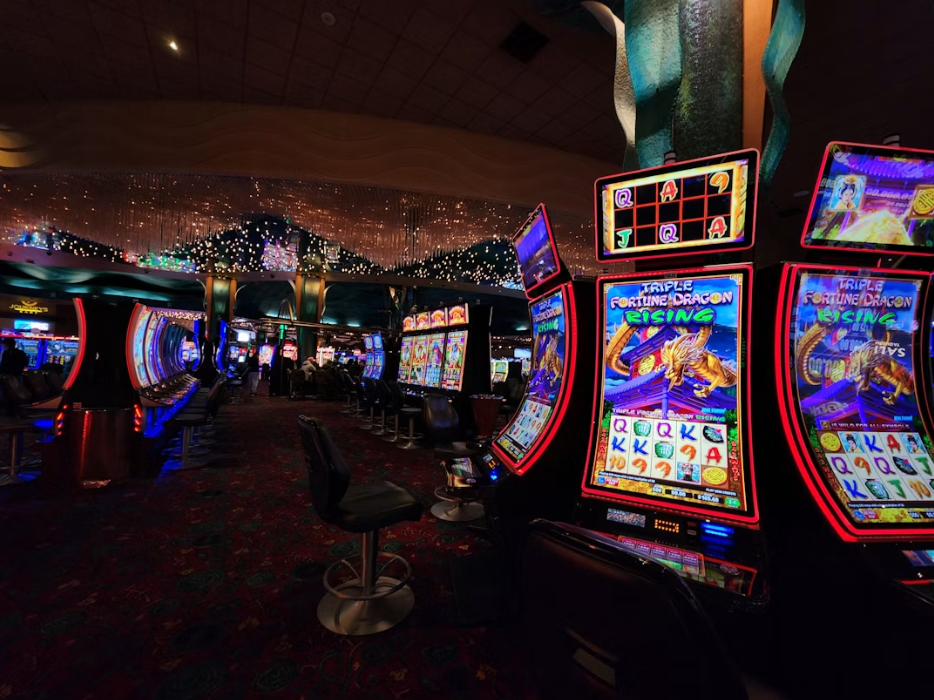
None of that scale happened by accident. It reflects something bigger going on across the industry, where operators are pouring money into content variety simply because players have started to expect it.

Why game count started mattering so much
Online slots used to be a fairly narrow category. Users simply needed to pick a theme they like, choose from a handful of dominant studios, and that was the extent of it. That’s no longer true. The category has splintered into dozens of sub-genres, from high-volatility slots chasing large multiplier caps to slower-burn titles built for long sessions, Megaways mechanics, cluster pays, hold-and-win bonus rounds, and arcade-style crossovers that barely resemble a traditional slot at all.
Some of this comes down to how people actually play. Regular players tend to rotate through titles rather than parking themselves on one game for months at a time, and a shallow catalog runs out of new things to offer fast. Once a session starts feeling repetitive, the competitor is one tab away, and there’s rarely much friction stopping someone from clicking over.
The UK Gambling Commission’s ongoing survey work provides useful context around online gambling participation. Online participation has remained substantial across recent survey waves, although the figures vary depending on how lottery-only participation is counted. For operators, that represents a sizeable audience competing for attention, which helps explain why game selection has become such an important part of the online casino proposition.
Slots, live tables, and in-house originals
Most modern casino libraries break down into three layers.
Third-party slots still make up the bulk of any catalog. These come from established studios such as Pragmatic Play, Hacksaw Gaming, Nolimit City, and Play’n GO, each with its own signature style, whether that’s Pragmatic’s rapid-fire bonus features or Nolimit City’s reputation for pushing volatility to the extreme.
Live casino games bring a dealer-hosted experience to blackjack, roulette, baccarat, and a growing list of game-show formats. This category has expanded quickly because it recreates the social, real-time energy of a physical casino floor without anyone having to leave home.
In-house originals are where real separation happens. Building exclusive content takes serious studio investment, and not every operator can justify that spend, which is exactly why this tier tends to sort out the serious platforms from everyone else.
Crypto casino games and the push for transparency
A big catalog alone doesn’t build trust, and platforms built around crypto casino games in particular have had to work on that other half of the equation. One theme showing repeatedly in current coverage of the sector is the move toward provably fair systems, where players can check for themselves that a round wasn’t tampered with.
Recent reporting on crypto gambling points to this shift, with BitcoinWorld noting that more platforms are adopting provably fair systems that allow players to independently verify certain game outcomes.
What this means for iGaming trends in 2026
This pressure to expand isn’t confined to crypto-first platforms. Market research firm The Business Research Company puts the global iGaming platform market at roughly $130.5 billion in 2026, up from $110.8 billion in 2025, with continued double-digit growth forecast through the rest of the decade. Rising player expectations around content depth are a real part of that story. As more operators move into regulated markets, competing purely on odds or bonus size stops working, since a rival can match those numbers within a week. A genuinely broad, well-curated library takes years and real studio relationships to build, which is exactly what makes it a sturdier edge than a promotional offer ever could be.
That’s also why AMBCrypto’s own roundups of the top crypto casinos have started weighing game selection so heavily alongside licensing and payment speed. Library depth has become one of the clearest ways to tell a serious platform apart from a short-lived one, and it’s shaping up as one of the defining iGaming trends of 2026.
Smaller operators are handling this pressure in different ways. Some are leaning into a tighter, more curated selection built around a specific niche, betting that focus wins out over sheer volume for certain players. Others are racing to bolt on aggregator feeds that pull in hundreds of studios at once, even if the resulting lobby ends up feeling less curated. Neither approach is wrong exactly, but both are reactions to the same underlying shift: players want choice, and they expect that choice to keep growing.
Where the industry goes from here
Game variety probably won’t stay the defining battleground forever. Categories shift, and today’s edge has a habit of becoming tomorrow’s baseline. Right now, though, the operators pulling ahead are treating their game libraries the way a streaming service treats its catalog, as core infrastructure rather than a footnote in the marketing plan.
For players, that rivalry is a good thing. More studios fighting for space inside major casino libraries tend to mean more inventive titles, tighter volatility options, and features that get refined instead of just recycled. Whether that pace holds up over the long run is a separate question, but for anyone comparing online casino games today, the depth of the game library is as good a starting point as any.
Disclaimer: This is a paid post and should not be treated as news/advice.



Be the first to comment