



Bitcoin was designed as a peer-to-peer electronic cash system that allows people to transfer value without relying on a bank or other financial intermediary. More than 17 years after its launch, it is also widely used as an investment and store of value.
But replacing government-issued money is a much bigger challenge.
Fiat currencies such as the US dollar and euro are deeply embedded in wages, taxes, lending, government spending and everyday pricing.
Bitcoin offers an alternative monetary network with a fixed maximum supply and no central issuer, but its volatility, scalability, accounting role and regulatory treatment make a complete replacement of fiat unlikely under current conditions.

A more realistic question is whether Bitcoin can become an increasingly important parallel form of money and reserve asset alongside government currencies.
What Is Government-Issued Money?

Government-issued money is commonly called fiat currency. Examples include the US dollar ($), euro, British pound (£) and Japanese yen (¥).
Unlike Bitcoin, fiat currency is issued within a government and central bank monetary system. Central banks can influence the money supply and financial conditions through tools such as interest rates and balance-sheet policies.
Modern money is also much more than physical banknotes.
Most money used in developed economies already exists digitally as balances in commercial bank accounts. In the United States, for example, the Federal Reserve measures different forms of money through aggregates such as the monetary base, M1 and M2.
That means Bitcoin is not competing simply with paper cash. It is competing with an established digital financial system used for payments, credit, savings, taxation and settlement.
How Did Bitcoin Change the Idea of Money?
Bitcoin introduced a different way to transfer and hold value.
Satoshi Nakamoto’s 2008 whitepaper described Bitcoin as a peer-to-peer electronic cash system that could allow online payments to move directly between parties without going through a financial institution.
The Bitcoin network has no central bank or company controlling issuance. Instead, a decentralized network verifies transactions, while Bitcoin’s protocol limits the eventual supply to 21 million BTC.
These characteristics give Bitcoin several properties that differ from fiat money:
- Fixed maximum supply
- No central issuer
- Global transferability
- Self-custody
- Public transaction verification
- Permissionless access at the protocol level
Its fixed supply does not protect Bitcoin from changes in purchasing power. BTC’s market price can move sharply, sometimes within hours, making it much more volatile than major fiat currencies.
Is Bitcoin Actually Money?
Economists typically evaluate money through three main functions:
- Medium of exchange: Can it be used to buy goods and services?
- Unit of account: Are products, wages and debts commonly priced in it?
- Store of value: Can it preserve purchasing power over time?
Bitcoin performs each function to different degrees.
It can serve as a medium of exchange, and anyone with the right wallet can send BTC directly to another user. However, most goods and services are still priced in local fiat currencies rather than BTC.
Bitcoin is also increasingly treated as a store-of-value asset, particularly because its supply is capped. But its price volatility makes short-term purchasing power much less predictable than cash or bank deposits.
Its weakest monetary function remains the unit of account. Even businesses that accept Bitcoin commonly price products in dollars, euros or another local currency and convert the amount into BTC at checkout.
Bitcoin Versus Fiat Currency
Neither system is universally superior across every use case. Bitcoin prioritizes scarcity, open access, and reduced dependence on centralized monetary authorities, while fiat systems provide comparatively stable units of account and integrate with taxation, lending, and government finance.
| Feature | Bitcoin | Fiat Currency |
| Issuer | No central issuer | Government monetary system / central bank |
| Maximum supply | 21 million BTC | No fixed maximum |
| Network access | Permissionless at protocol level | Banking access depends on financial system |
| Transfers | Global and peer-to-peer | Banks and payment networks |
| Price stability | Highly variable | Generally more stable in the short term |
| Unit of account | Limited | Widely used |
| Taxes and government payments | Limited | Standard |
| Self-custody | Possible | Physical cash possible; digital balances generally rely on intermediaries |
| Monetary policy | Predetermined issuance rules | Managed by central banks |
Table 1. Bitcoin Versus Government-Issued Money
What Would Bitcoin Need to Replace Fiat Currency?
For Bitcoin to replace government currencies rather than simply coexist with them, adoption would need to extend far beyond investment.
Wider Everyday Use
Workers would need to receive salaries in BTC, businesses would need to price goods in BTC, and consumers would need to use it routinely rather than converting between Bitcoin and fiat.
Greater Price Stability
Bitcoin can experience large percentage moves over short periods. That makes budgeting difficult when wages, rent, loans and everyday products must all be priced consistently.
Scalable Payments
Bitcoin’s base layer prioritizes security and decentralization rather than processing every small retail transaction directly.
Additional payment layers can increase speed and reduce costs, but widespread replacement of existing payment infrastructure would require those systems to be reliable and easy enough for mainstream users.
Broader Legal and Tax Integration
Governments collect taxes, issue debt, pay employees and operate budgets primarily in their own currencies. Bitcoin would need much deeper integration into those systems before it could replace national currencies.
Easier User Experience
Self-custody gives users direct control over Bitcoin but also transfers responsibility to the owner. Lost private keys, incorrect transactions and security failures can result in permanent losses. Mass adoption would require systems that make those risks easier for ordinary users to manage.
El Salvador Showed the Limits of Bitcoin as National Money
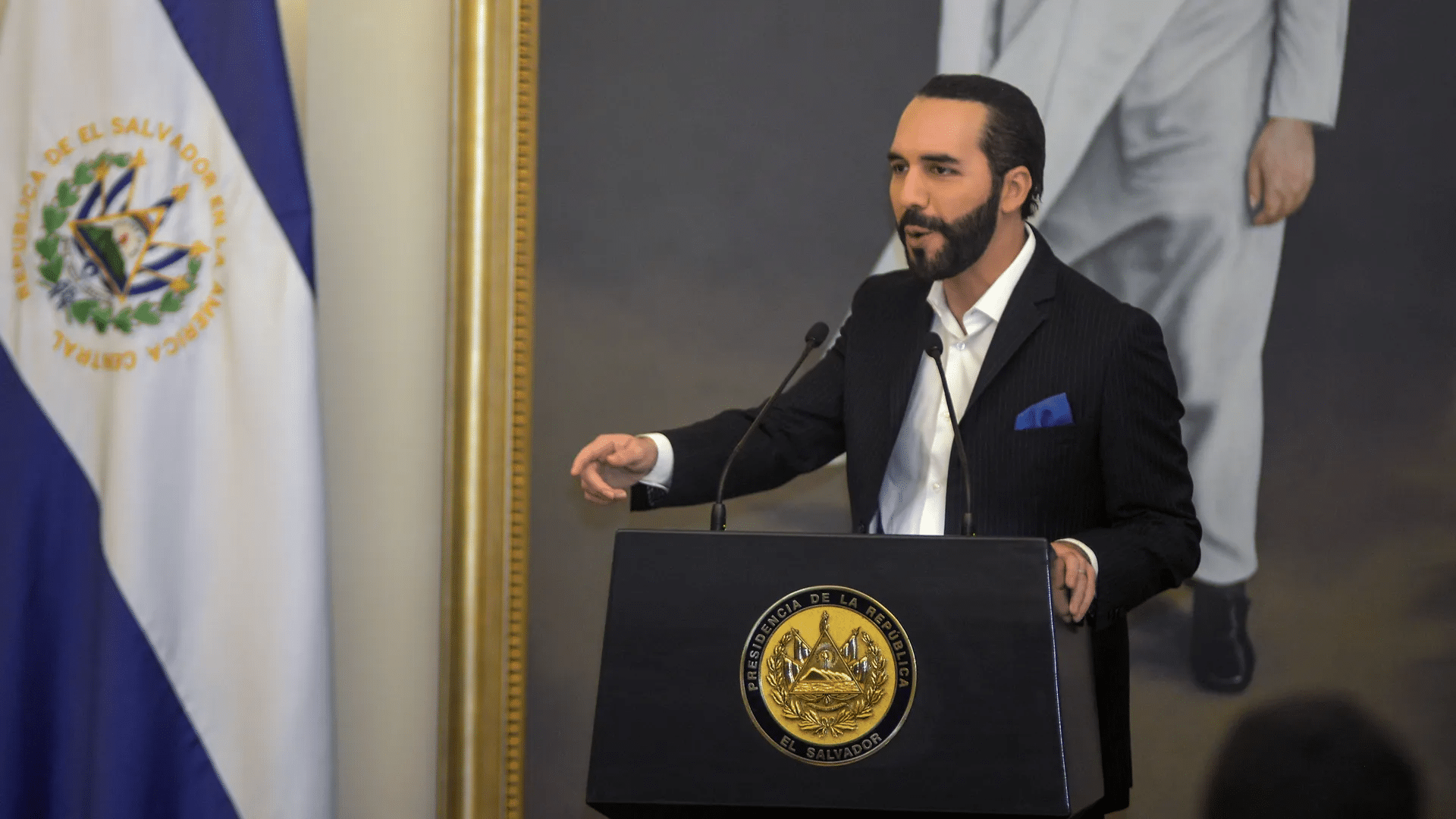
El Salvador became the first country to adopt Bitcoin as legal tender in 2021, making it an important real-world test of Bitcoin’s use alongside a national monetary system.
The framework changed significantly in 2025. Amendments to the country’s Bitcoin Law removed key characteristics of legal tender. Private businesses no longer had to accept BTC; acceptance became voluntary, taxes had to be paid in US dollars, and the government’s role in Bitcoin transactions was restricted.
That experience is useful because it shows the difference between making Bitcoin legally available and replacing the currency already used for accounting, taxes, and daily commerce.
Governments Are Holding Bitcoin Without Replacing Fiat
Bitcoin’s role in government finance has also changed. In March 2025, the United States established a Strategic Bitcoin Reserve through an executive order.
The reserve was initially capitalized with BTC the government already held through finalized asset forfeitures, and the order directed officials to explore budget-neutral ways to acquire additional Bitcoin.
That is significant institutional recognition of Bitcoin as a reserve asset. However, it does not mean the US is replacing the dollar with Bitcoin. The dollar remains the country’s unit of account, tax currency, and foundation of the banking system.
Government ownership of BTC therefore supports a different possible future: Bitcoin functioning alongside fiat as a strategic or reserve asset rather than replacing it.
Could Central Bank Digital Currencies Compete With Bitcoin?
Central bank digital currencies (CBDCs) are another part of the changing monetary system. A CBDC is digital money issued by a central bank. It differs fundamentally from Bitcoin because a central bank issues and controls it.
CBDC research remains widespread. A Bank for International Settlements (BIS) survey in 2024-2025 found that 91% of 93 responding central banks were exploring a retail CBDC, wholesale CBDC or both. Wholesale projects were generally further advanced.
The European Central Bank (ECB), for example, is developing a digital euro pilot. In 2026 it selected 36 payment service providers for the project, with the operational pilot planned to begin in the second half of 2027. A potential digital euro issuance could follow in 2029 if the required legislation is adopted.
CBDCs would not decentralize government money. Instead, they could digitize fiat-based payment systems while preserving central bank control.
Is Bitcoin Likely to Replace Fiat Currency?
A complete replacement of government-issued money would require governments, businesses and households to reorganize much of the financial system around Bitcoin.
Little evidence suggests this transition is currently happening at that scale. A hybrid system is more plausible based on today’s developments.
Bitcoin can operate as a global digital asset, a self-custodied form of money, and a potential reserve asset, while fiat currencies continue handling most wages, taxes, credit, and everyday pricing. Stablecoins, tokenized bank deposits and CBDCs could add even more digital forms of government-linked money to that system.
Bitcoin does not have to replace the dollar, euro or other currencies to play a larger role in global finance.
What Could the Future of Money Look Like?
The distinction between physical and digital money is already becoming less important. Bank deposits are digital, stablecoins can represent fiat-linked value on blockchains, banks are experimenting with tokenized deposits, and central banks continue researching CBDCs.
Bitcoin introduces another model entirely, which is that of digitally scarce money operating independently of a central issuer.
For Bitcoin, the key measures will be whether more people actually use BTC for payments, whether payment infrastructure continues improving and whether businesses and governments increasingly treat it as a monetary or reserve asset.
Can Bitcoin Become Part of the Future of Money?
Yes, Bitcoin can play a larger role in the future monetary system without entirely replacing government-issued currency.
Its strongest differentiators are its fixed supply, decentralized settlement network, portability and ability to be self-custodied. Those properties have already allowed Bitcoin to develop beyond its original role as an experimental peer-to-peer payment system.
Fiat currencies still have major structural advantages for everyday economic activity. Prices, salaries, taxes, loans and government accounts are overwhelmingly denominated in national currencies, while Bitcoin remains volatile.
The more useful question, then, is not whether Bitcoin will make fiat disappear. It is how much of the monetary system Bitcoin can capture alongside fiat currencies, stablecoins, tokenized deposits and future CBDCs.
Frequently Asked Questions
Need a refresher? Here are the most common questions about Bitcoin replacing government-issued money.
Can Bitcoin Replace the US Dollar?
Bitcoin can be used alongside the US dollar, but replacing it would require BTC to take over functions including everyday pricing, salaries, taxation, lending and government finance. There is currently no indication that the US monetary system is moving toward replacing the dollar with Bitcoin.
Is Bitcoin Legal Tender?
Bitcoin’s legal status differs by jurisdiction. El Salvador previously required Bitcoin acceptance under its 2021 legal-tender framework, but reforms enacted in 2025 made private-sector acceptance voluntary and removed key features associated with legal-tender status.
Why Do Some People Consider Bitcoin Money?
Bitcoin can transfer value, be held as savings and be exchanged for goods and services. However, it is still rarely used as a unit of account, since most prices, salaries and debts are denominated in fiat currency.
Is Bitcoin Better Than Fiat Currency?
Bitcoin and fiat have different properties. Bitcoin offers fixed supply and decentralized settlement, while major fiat currencies generally provide greater short-term price stability and deeper integration with banking, credit and government systems.
Could Bitcoin and Fiat Currency Coexist?
Yes. They already do. Bitcoin can be held, transferred and used for payments while national currencies continue to handle most everyday economic activity. Current developments such as the US Strategic Bitcoin Reserve show that governments can hold Bitcoin as an asset without replacing their national currency.


Be the first to comment