

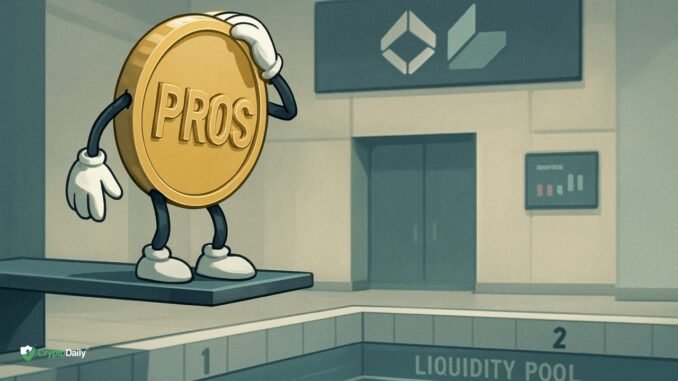

Pharos (PROS) is getting a fresh venue. Bitrue has announced a PROS/USDT spot pair opening at 06:00 UTC on 8 June 2026, with deposits already live via the Pharos Network and withdrawals scheduled for 06:00 UTC on 9 June 2026 (Bitrue support (announcement)).
For traders and token treasuries, the practical question is simple: does a new exchange turn “more access” into ““more real liquidity” — tighter spreads, deeper books, better fills — or just another venue with headline volume?
The backdrop is noisy. On 8 June 2026, CoinGecko’s snapshot showed ~$4.66M in 24‑hour PROS volume with OKX as the top market (~$1.30M, ~28% share) (CoinGecko (Pharos page)), while CoinMarketCap’s live page showed a materially higher ~$8.49M and market cap ~$84.75M at that moment (CoinMarketCap (Pharos page)). Meanwhile, OKX is running a Flash Earn campaign distributing 1,800,000 PROS from 5–11 June across multiple subscription pools (OKX Help / Announcements). All three dynamics influence what Bitrue’s listing can realistically do.

| Aspect | What to Know |
|---|---|
| Event timing | Bitrue opens PROS/USDT at 06:00 UTC on 8 June 2026; withdrawals at 06:00 UTC on 9 June; deposits already live via the Pharos Network (Bitrue support). |
| Current market snapshot | CoinGecko showed ~$4.66M 24‑h PROS volume; OKX led with ~$1.30M (~27.9% share) at the time of access (CoinGecko). |
| Tracker divergence | CoinMarketCap showed ~$8.49M 24‑h volume and ~$84.75M market cap the same day, highlighting how estimates differ (CoinMarketCap). |
| Incentive backdrop | OKX Flash Earn for PROS runs 5–11 June with a 1,800,000 PROS pool spanning BTC, OKB, OKSOL, ETH, and PROS subscriptions (OKX). |
| Liquidity diagnostics | Watch spreads, depth at 0.5–2%, slippage on test orders, maker/taker fees, and withdrawal reliability in the first 24–72 hours. |
| Who benefits most | Arbitrageurs and active traders if Bitrue onboards market makers quickly; long-term holders if custody and fiat ramps fit their stack. |
Core Concepts
New listings expand access, but “access” is not the same as “liquidity.” Liquidity is the ability to execute size with minimal price impact. An exchange can bring thousands of potential buyers and sellers, yet if few place resting orders, or if market makers don’t commit inventory, spreads stay wide and slippage bites.
Reported 24‑hour volume is a noisy proxy for liquidity. Divergent snapshots across trackers often reflect different data pipelines and filtering for suspicious activity. For traders, the live order book — the spread and the depth within 1–2% of mid — is usually more relevant than a single volume headline.
In the first days of a listing, liquidity often depends on whether established market makers integrate the venue quickly. If they do, cross‑venue arbitrage tightens spreads and harmonizes prices with incumbents like OKX. If they don’t, early trades may pay a premium in implicit costs despite an apparently active tape.
Glossary: key terms
- Realized volume: Executed trades between independent participants; useful when tied to slippage and spread, not a standalone metric.
- Market depth (at X%): Total resting quantity available within X% of the mid‑price; a practical measure of how much you can buy/sell before moving the market.
- Spread: The difference between best bid and best ask; narrower usually means lower implicit cost for small orders.
- Maker/taker fees: Exchange charges for placing liquidity (maker) or removing it (taker); can flip the economics for high‑turnover strategies.
- Wash trading risk: Artificial trades intended to inflate volume metrics; can mislead venue comparisons.
- Arbitrage: Buying on one market and selling on another to capture price differences; a force that aligns prices and can deepen liquidity.
Step-by-Step Playbook
- Confirm the listing windows. Note Bitrue’s PROS/USDT start (06:00 UTC, 8 June) and withdrawal opening (06:00 UTC, 9 June) to avoid operational dead time (Bitrue support).
- Cross‑check trackers at the same timestamp. Compare CoinGecko and CoinMarketCap simultaneously; large deltas are common and should temper assumptions about headline volume.
- Measure the live spread and depth. When books go live, record the top‑of‑book spread and quantity available within 1% and 2% on Bitrue vs your incumbent venue (e.g., OKX).
- Probe with tiny market orders. Send small test orders to estimate real slippage and fill quality; scale only if costs track your expectations.
- Review fee tiers and rebates. Maker/taker schedules, promotions, and VIP tiers can offset or exacerbate implicit costs from spreads.
- Watch transfer and withdrawal reliability. Early‑listing queues happen; confirm deposits post quickly and that withdrawals work once opened.
- Monitor incentive spillovers. Track how OKX’s Flash Earn campaign and other promos coincide with flows; incentive‑driven deposits don’t always become spot depth (OKX).
- Document execution versus benchmarks. Compare realized VWAP and slippage against mid‑price on both venues; keep a log to drive routing decisions.
What Changes With a Bitrue Listing for PROS?
Bitrue expands PROS access to its user base and liquidity partners. If major market makers onboard quickly, cross‑exchange arbitrage can compress spreads and align Bitrue’s price with OKX, the current leading venue by CoinGecko’s snapshot. If onboarding lags, Bitrue’s book may initially feel thin despite activity elsewhere.
Operationally, Bitrue’s deposit path is via the Pharos Network, with withdrawals one day after trading begins. Those windows matter for inventories: traders may be able to buy on Bitrue before they can withdraw to sell elsewhere, which can temporarily kink cross‑venue price relationships (Bitrue support).
Pricing data disagreement across trackers (CoinGecko vs CoinMarketCap on 8 June) is another reminder to look beyond aggregates. For execution, what counts is the real‑time state of the book and the reliability of transfers, not whose 24‑hour counter runs higher at a given moment (CoinGecko; CoinMarketCap).
Where Volume Comes From: Incentives Versus Utility
Incentives can seed activity, but they don’t guarantee durable liquidity. OKX’s Flash Earn campaign for PROS allocates 1,800,000 PROS across subscription pools for a week, potentially attracting deposits from users who otherwise wouldn’t touch the spot market in the same period (OKX).
These mechanics can influence spot volumes in two ways: some recipients may sell rewards, creating incremental two‑way flow; others may hold, reducing float. But incentive participants are often yield‑motivated, not price‑discovery‑motivated. If rewards end, activity can retrace. Bitrue’s listing will convert to durable liquidity only if everyday users and market makers find consistent reasons to quote and trade PROS beyond promotional windows.
Pro tip: When comparing venues on listing week, take synchronized screenshots of spreads and depth at 0.5%, 1%, and 2% at the same minute across exchanges. One clean timestamp beats hours of mixed anecdotes.
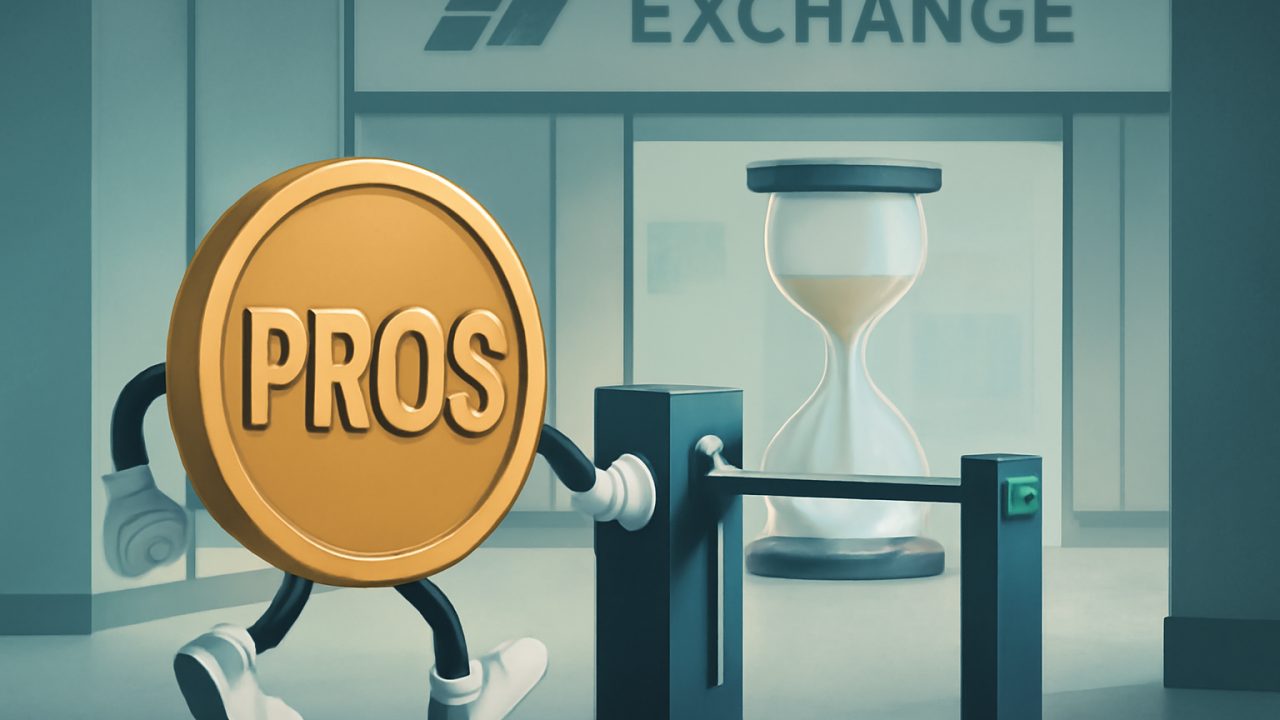
Comparing Venues: Execution Quality Over Hype
Rather than treating listings as binary good/bad events, anchor on execution quality. The table below outlines how to think about Bitrue versus an incumbent centralized venue and decentralized pools without leaning on unstable headline numbers.
| Venue Option | Status for PROS | What to Check Live | Strengths | Trade‑offs | Best Fit |
|---|---|---|---|---|---|
| Bitrue (new listing) | PROS/USDT spot opens 8 June; withdrawals 9 June; deposits via Pharos Network. | Spread, depth at 1–2%, order cancel/modify speed, deposit/withdraw success, maker activity onboarding. | Fresh access to new user base; potential maker incentives; early arbitrage edges if pricing lags incumbents. | Initial thin books possible; temporary withdrawal lag can trap inventory; API/stability still being proved for this pair. | Active traders and arbitrageurs testing for early mispricings with tight risk controls. |
| OKX (established market) | Largest single market share for PROS per CoinGecko’s snapshot on 8 June. | Consistency of spreads, depth trend through day, effect of Flash Earn flows on spot sells/buys. | Known liquidity base; mature market‑making coverage; broader routing integrations. | Incentive flows may create non‑sticky bursts; fees and VIP tiers dictate net cost. | Systematic traders seeking stable execution and integrations; holders leveraging Earn options. |
| DEX pools/aggregators | Depends on chain and pool size; may lag centralized venues on depth. | On‑chain slippage curves, gas, MEV risk, pool TVL; aggregator quotes across pools. | Self‑custody; transparent state; permissionless access 24/7. | Price impact for size; LP incentives ebb/flow; bridging and MEV considerations. | Long‑tail users preferring custody and transparency over tightest spreads. |
Pitfalls & Red Flags
- Chasing headline volume without context. Tracker snapshots can diverge meaningfully; anchor on spreads, depth, and realized slippage instead of totals.
- Assuming incentives equal liquidity. Earn campaigns may drive deposits, not resting orders; liquidity can fade when rewards end.
- Overlooking withdrawal timing. If trading opens before withdrawals, inventories can get stuck temporarily, complicating hedges or arbitrage.
- Ignoring fee math. Maker/taker schedules and tiers can turn a seemingly better venue into a higher all‑in cost after rebates and spreads.
- Thin book whipsaws. Early hours can see wide spreads and spoof‑y orders; test with small size and confirm fill reliability.
- Network deposit mismatches. Ensure you are sending PROS over the supported network path; wrong‑network deposits can be lost.
For more context and level‑headed market coverage, visit Crypto Daily.
Frequently Asked Questions
When does Bitrue start trading PROS and when can I withdraw?
Bitrue plans to open PROS/USDT at 06:00 UTC on 8 June 2026. Deposits are already live via the Pharos Network, and withdrawals are scheduled to open at 06:00 UTC on 9 June 2026 (Bitrue support).
Which exchange currently shows the most PROS trading?
On a snapshot accessed 8 June 2026, CoinGecko listed OKX as the largest single market for PROS by 24‑hour volume, around $1.30M at that time, roughly 28% of the total it tracked (CoinGecko). This can change quickly.
Why do CoinGecko and CoinMarketCap show different PROS volumes?
Data sources, listing coverage, and filters for suspicious trades differ. On 8 June 2026, CoinGecko showed ~$4.66M for 24‑hour volume while CoinMarketCap showed ~$8.49M and a market cap near ~$84.75M at that moment (CoinGecko; CoinMarketCap). Use them as guides, not absolutes.
Does OKX’s Flash Earn campaign increase spot liquidity for PROS?
It can influence flows by attracting deposits and distributing rewards (1,800,000 PROS across multiple pools from 5–11 June) (OKX). But reward‑driven activity isn’t the same as tight spreads or deep order books; liquidity may fade after incentives end.
How can I tell if Bitrue’s listing leads to “real” liquidity?
Track the spread and the quantity available within 1–2% of mid, plus your realized slippage on test orders. If these converge with incumbent venues over several sessions — while transfers and withdrawals run smoothly — you’re likely seeing real liquidity form.
Is it wise to trade at the exact moment a new pair lists?
Early trading can feature wide spreads and fast price moves. If you participate, consider very small sizes initially and verify order behavior and transfer reliability before scaling. Volatility and execution risk are typically elevated in the first hours.
What risks should long‑term holders consider around the listing?
Beyond price volatility, confirm custody paths, supported deposit networks, and withdrawal timing. Review exchange fee tiers and security practices, and beware of making decisions based solely on changing headline volumes. None of this is financial advice.
Disclaimer: This article is provided for informational purposes only. It is not offered or intended to be used as legal, tax, investment, financial, or other advice.





Be the first to comment