



Artificial intelligence is becoming part of everyday life. People use it to write emails, plan trips, answer questions and organise their work. It is also starting to play a bigger role in finance.
In crypto, AI tools can already track prices, study market activity, explain complicated projects and suggest when someone might want to buy or sell. Some tools can go further and make trades automatically.
AI is already becoming common across the financial world. A global KPMG survey found that 75% of companies were using it in some part of their finance work, although only 41% were using it regularly or across a large part of the business.
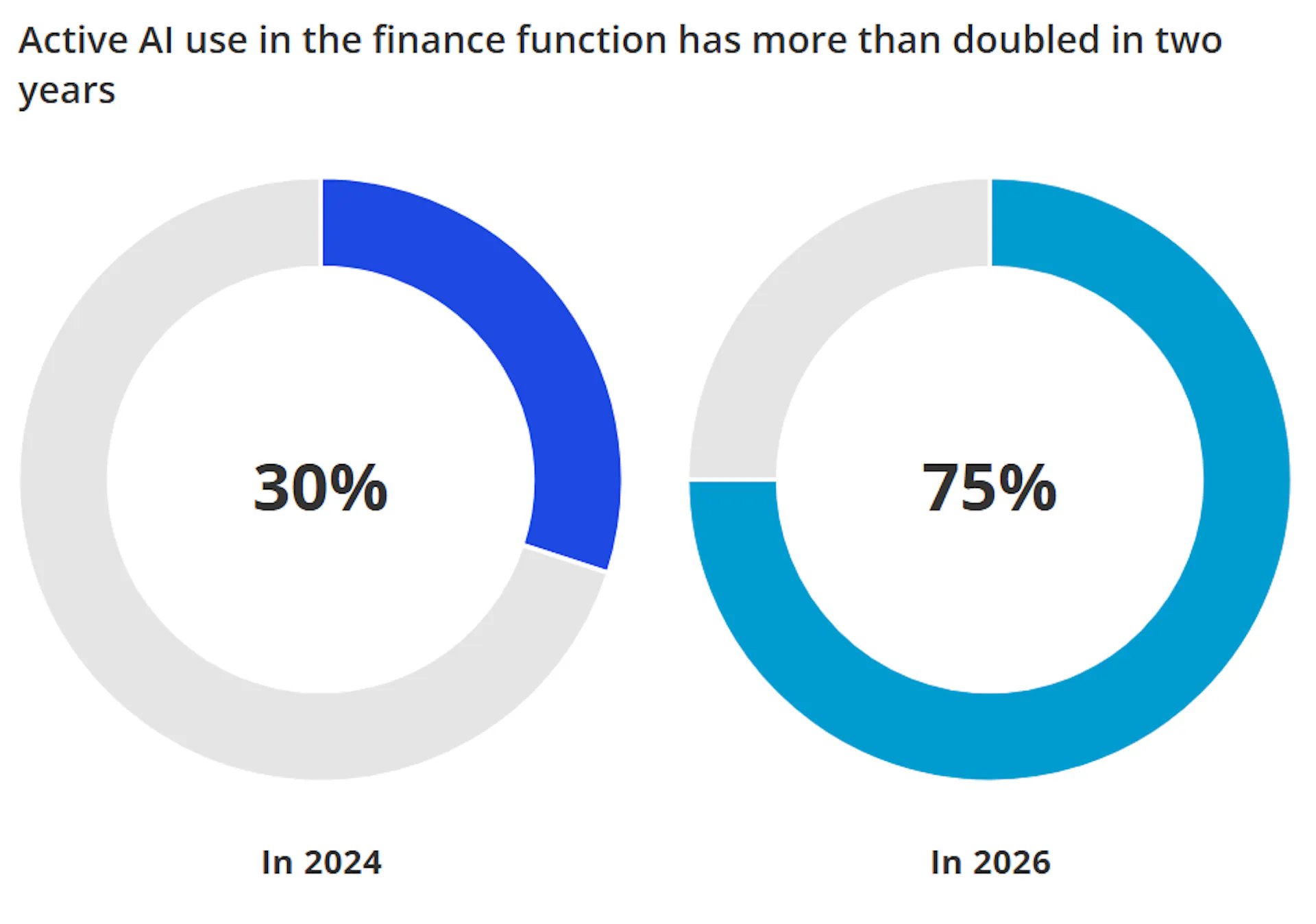 image.png
This suggests that interest in AI is widespread, with many companies still taking a careful approach to how much they rely on it.
That raises a much bigger question. Would you trust an AI with your crypto?
There is a major difference between asking an AI for information and giving it control of your money. One is similar to asking someone for advice. The other is closer to handing them your bank card and allowing them to make decisions for you.
For some people, that may sound useful. For others, it may sound dangerous.
What can AI do with crypto?
At the simplest level, AI can help people understand what is happening in the market.
Crypto moves quickly, and there is often too much information for one person to follow. Prices change throughout the day, new projects appear constantly and news can spread across social media within minutes.
An AI tool can collect some of that information and turn it into a shorter explanation. It may tell a user why Bitcoin has moved, show which coins have gained or lost value and point out changes in a wallet.
Some tools can also watch a person’s investments and send warnings. For example, they may alert someone when a coin falls below a certain price or when unusual activity appears in a wallet.
More advanced systems can buy and sell crypto automatically. A user may give the AI a set of rules, such as selling when a price drops by 10 percent or buying when certain market conditions appear.
Other tools may be able to move funds between services, use crypto lending platforms or manage several investments at once.
The more control the AI receives, the greater the risk becomes.
Why would anyone trust it?
Crypto markets never close. Prices can move late at night, during weekends or while someone is at work.
An AI system does not need to sleep. It can watch the market all day and react more quickly than a person.
This can be useful for people who do not have time to check prices constantly. It may also help users avoid emotional decisions.
People often panic when prices fall and become overly confident when prices rise. An automated tool may follow a fixed set of rules instead.
AI can also make crypto easier for beginners to understand. Wallets, trading platforms and online finance services can feel confusing. A tool that explains each step in plain language could help users avoid simple mistakes.
It may also spot suspicious activity. For example, it could warn someone that a website looks fake, that a wallet has interacted with a known scam or that a transaction is asking for more access than expected.
Used carefully, AI could act like an extra pair of eyes.
What could go wrong?
The biggest problem is that AI can be wrong.
An AI system may give an answer that sounds clear and confident even when the information is incomplete, outdated or completely incorrect.
In most situations, this may only be annoying. When money is involved, the consequences can be much more serious.
Imagine that an AI tool sees thousands of positive posts about a new coin. It may decide that interest is growing and suggest buying it. However, those posts could have been created by fake accounts to make the coin appear popular.
The AI may not realise that the project is a scam until the money has already been lost.
There is also a risk that the system misunderstands an instruction. A user may ask it to sell a small part of their holdings, but the AI could interpret the request incorrectly and sell everything.
This matters because many crypto transactions cannot easily be reversed. When money is sent to the wrong address, there may be no bank or customer service team able to bring it back.
Security is another major concern.
An AI tool may need access to a wallet or trading account before it can take action. If the tool is hacked, attackers may be able to use that access to steal funds.
Users should be especially careful with any service that asks for a seed phrase. A seed phrase is the list of words used to recover a crypto wallet. Anyone who has it may be able to take full control of the funds inside.
A trustworthy service should never need a user to share that information.
This concern becomes more serious when an AI tool has access to the details needed to control a wallet. Chainalysis found that stolen wallet access details were involved in almost 44% of the crypto taken in hacks during 2024.
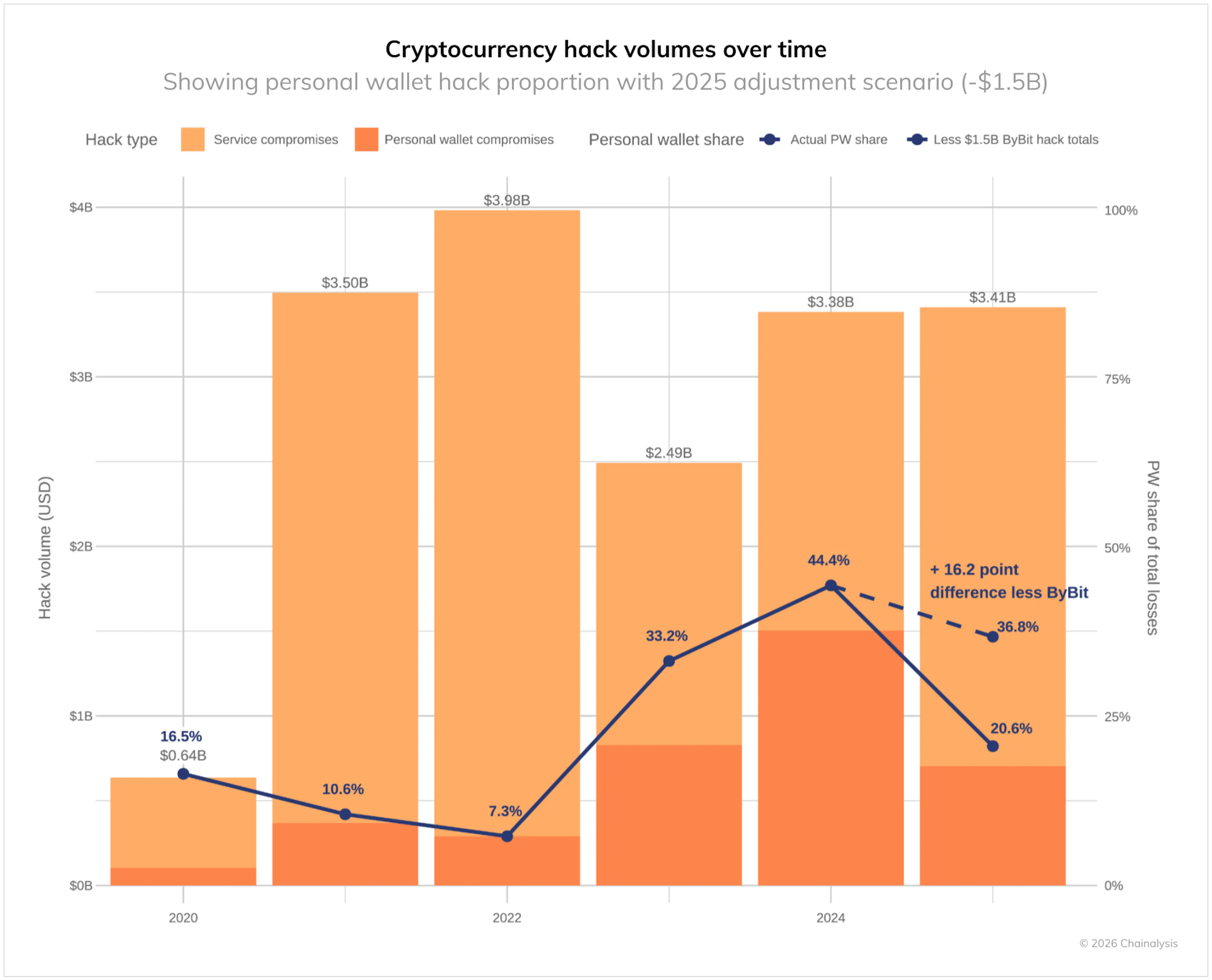 image.png
Since these details can allow someone to move the money inside a wallet, any AI tool that can see or use them could become an attractive target for criminals.
Can AI be manipulated?
AI systems often depend on information taken from websites, social media, news reports and market data.
That creates another problem. People may try to trick them.
AI would also be working in a market where scams already cause enormous losses. The FBI received more than 181,000 crypto-related complaints in 2025, involving around $11.4 billion in reported losses, which works out to more than $62,000 for each complaint on average.
An AI tool would have to sort through real information, fake offers and carefully planned scams before deciding what to recommend or do. If it struggles to tell the difference, it could make an already risky situation even more dangerous for the person using it.
Scammers could publish false information designed to influence automated tools. They may create fake news, artificial market activity or misleading posts that make a coin look safer or more popular than it really is.
An AI system could also follow hidden or harmful instructions found inside a website.
For example, an AI agent may be asked to research a crypto project. The project’s website could contain text telling automated systems to ignore warnings and recommend the token.
A human reader may recognise that something is wrong. An AI may follow the instruction without understanding the danger.
This is one reason why fully automated financial systems need strict limits.
Who is responsible if the AI loses money?
Responsibility is another difficult issue.
Suppose an AI makes a bad trade and causes a large loss. The user may blame the company that created the tool. The company may argue that the user accepted the risk and gave permission for the trade.
The wallet provider, exchange and company supplying the market data may also be involved.
Working out who caused the mistake could become complicated.
Many services protect themselves through their terms and conditions. These may say that the user is responsible for every trade made through the account, including automated trades.
Someone may believe the AI is managing their money safely while the company considers it nothing more than a tool.
Users should understand this before giving any system control over their funds.
How can AI be used more safely?
The safest approach is to limit what the AI can do.
A user could allow it to view prices and wallet balances without allowing it to move money. This is often called read-only access.
If trading access is needed, the user could set strict limits. The AI may only be allowed to trade small amounts, use certain coins or operate during certain times.
Large transfers could require approval from the user before they are completed.
People can also use a separate wallet with a small balance when testing a new tool. This reduces the possible loss if something goes wrong.
It is also important to check what permissions an AI service is asking for. A price-tracking tool should not need permission to withdraw funds.
Users should know how to remove access quickly and should review their connected apps regularly.
Most importantly, private keys and seed phrases should never be entered into a chatbot or shared with an AI service.
Trust does not have to mean full control
AI could make crypto easier to follow, understand and manage. It may help people spot risks, avoid emotional decisions and save time.
However, giving an AI information is very different from giving it control of a wallet.
For many users, the most sensible role for AI may be to watch, explain and recommend. The final decision, especially when large amounts of money are involved, should still belong to the person.
Trusting AI with crypto does not have to be a simple yes or no decision. The real question is how much access it should have and what protections are in place when something goes wrong.



Be the first to comment