


TL;DR
- XRP ETFs took in $6.55M in net inflows on July 2, all from Bitwise. That marks an eighth consecutive positive week, pushing assets under management to $987.91M across seven funds — about 1.5% of XRP’s market cap. The coin is trading at $1.09 against $1.10 resistance heading into a low-liquidity holiday weekend.
- Blockstream CEO Adam Back called the BIP-110 transaction-filtering proposal effectively dead, with mining-pool support at just 0.31% of hashrate.
- Shiba Inu coin slipped to 32nd place with a $2.55B market cap, overtaken by NEAR Protocol and Tether Gold. Exchange reserves are climbing back toward 87 trillion tokens after whales returned 493B coins in early July, following a 781B withdrawal in June. About $50M separates SHIB from re-entering the top 30.
- Bitcoin is holding its $59,000–$62,000 accumulation zone after whales added 270,000 BTC and spot ETFs flipped back to $221.7M in net inflows, but the prolonged Independence Day weekend leaves the market exposed to thinner order books, miner selling pressure, and exaggerated moves if BTC fails to hold above $61,000.
American XRP ETFs closed their eighth positive week before the weekend
Fresh capital entered American spot XRP ETFs right before trading closed for the U.S. Independence Day holiday. The final pre-holiday session brought the funds a net inflow of $6.55 million, closing an eighth consecutive week of institutional buying firmly in positive territory, as per SoSoValue.
Bitwise’s fund accounted for the entire day’s haul, taking all of the week-ending volume while competitors such as Canary and Grayscale stood at zero. Total assets under management across the seven approved XRP funds have now moved close to the $1 billion mark, reaching $987.91 million. For a young sector, that is a meaningful 1.5% of the asset’s total market capitalization.

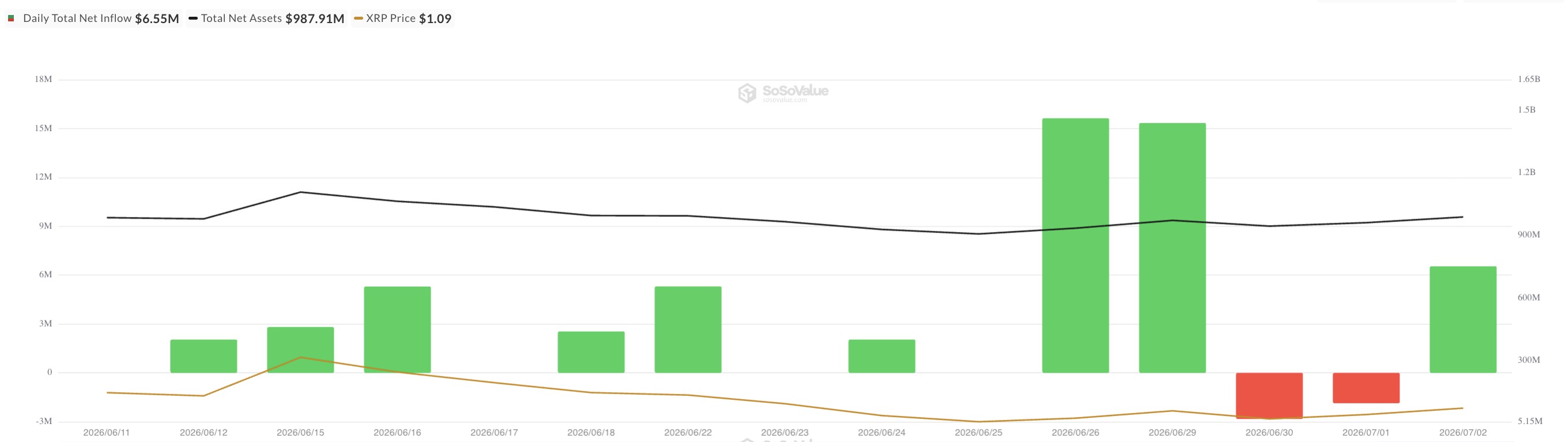
Traders calmly absorbed even the freezing of the CLARITY Act crypto bill, whose vote on Capitol Hill was postponed until the end of the summer because of the recess. Accumulation was also not disrupted by the scheduled release of 1 billion tokens from escrow contracts on July 1. The network absorbed the entire volume without a drawdown, against the backdrop of a three-month record in new wallet creation on the XRPL blockchain.
The coin is now trading at $1.09, pressing against key resistance at $1.10. Thin trading over the holiday weekend could easily tip the balance: if buyers lock in a breakout, the asset will have an open road toward the psychological $1.15 mark, justifying July’s historically strong status for XRP.
Adam Back declares collapse of Bitcoin’s censoring BIP-110 soft fork
Blockstream CEO Adam Back entered the ongoing debate around the BIP-110 proposal, calling the attempt to introduce transaction filtering into Bitcoin commercially stillborn. The well-known cypherpunk reacted harshly to the current disputes in the ecosystem, stating that the initiative had failed because of a lack of interest from investors and traders.
At the center of the conflict is a proposal to limit the network’s capacity for non-monetary data such as Ordinals and Runes. According to Back, the desire to artificially clean blocks in the name of imaginary security directly contradicts Bitcoin’s p2p nature.
He stressed that this filtering fork is already dead on arrival, as the market has completely rejected it and exchanges currently have no long positions in fork futures. Back’s words are also confirmed by current on-chain metrics: support for BIP-110 from mining pools has stalled at 0.31% of the total hashrate, making soft-fork activation through the UASF mechanism unrealistic.
Back compared the proposal’s authors to people who unsuccessfully tried to burn down a rented house, only to end up outside and now “living in a tent” of their own filtering coin. At the same time, BIP-110 supporters continue to strengthen the defenses around their “granite castle.”
The industry veteran concluded that the network’s antifragility had once again rejected poorly thought-out ideas, and urged censorship supporters either to adapt or finally split off into their own altcoin.
87 trillion trap: Why Shiba Inu fell out of the top 30
Shiba Inu (SHIB) has fallen out of the world’s top 30 cryptocurrencies, settling at 32nd place with a market capitalization of $2.55 billion. The meme token failed to withstand direct pressure from NEAR Protocol at $2.6 billion and the tokenized gold asset Tether Gold (XAUt) pushing from behind.
While retail traders remain passive, keeping SHIB’s daily trading volume at a modest $70.2 million, major players have started a tough positional battle as exchange reserves return to the critical level of 87 trillion coins, as per CryptoQuant.
This trillion-coin barrier has become a liquidity trap for the token. In late June, whales temporarily eased the pressure by moving 781 billion SHIB to cold wallets, but by early July they had replayed the scenario and returned a fresh batch of 493 billion tokens to exchanges.
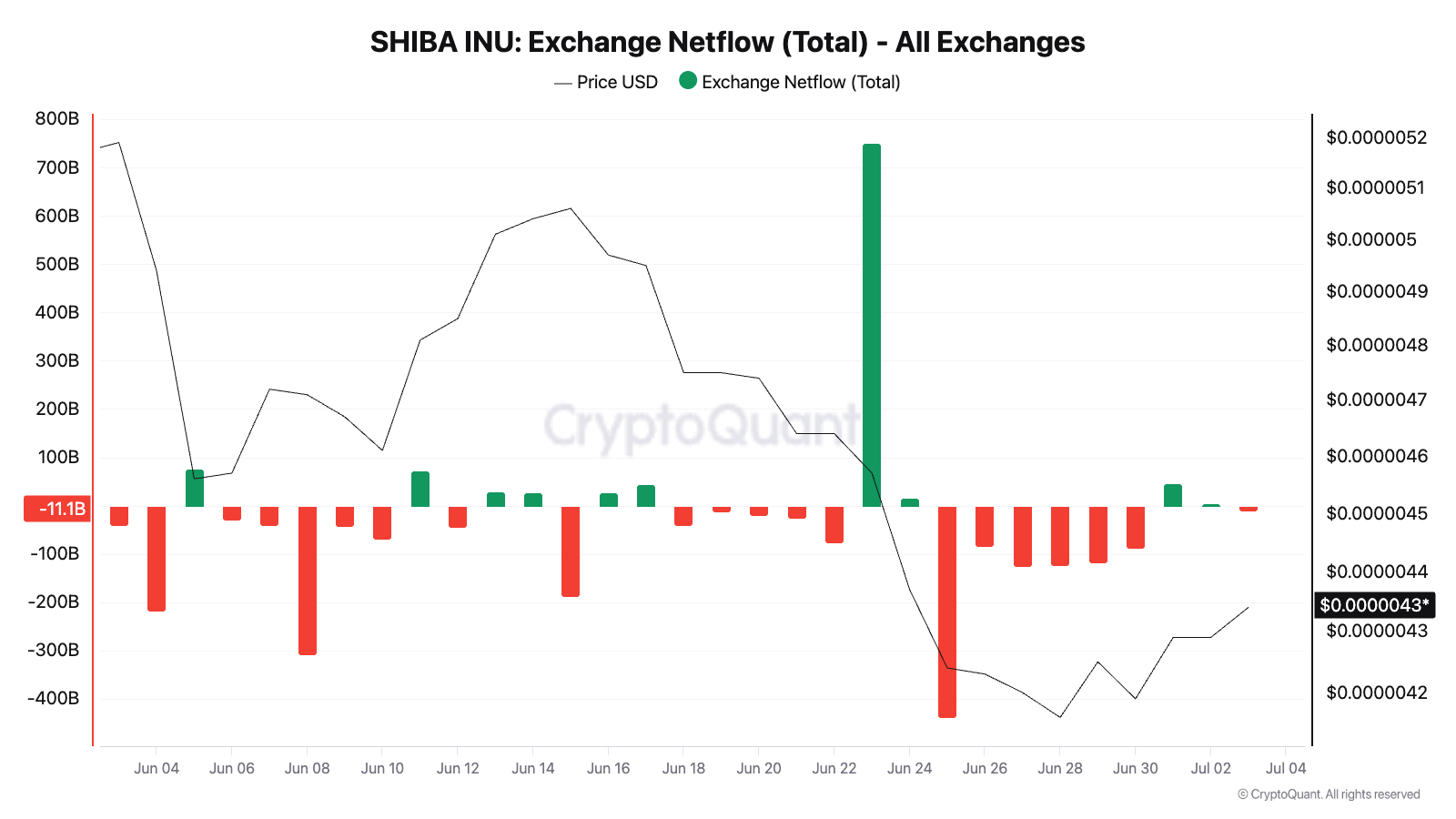
The rise in supply to 87 trillion is weighing on price action: investors see it as a sign that large wallets are ready to lock in profit on any local rebound, which firmly blocks growth in market capitalization.
Still, it is too early to write SHIB off. The gap from the coveted top 30 is a symbolic $50 million. Against the backdrop of Japanese competition between Mercari and Rakuten Wallet and expectations for a U.S. ETF from T. Rowe Price, the current drop looks more like a prolonged consolidation.
Whether the token returns to the top league depends on only one thing: whether July demand can absorb those trillions of coins hanging in exchange order books.
Crypto market outlook: Bitcoin accumulation and stablecoin pressure define July opening
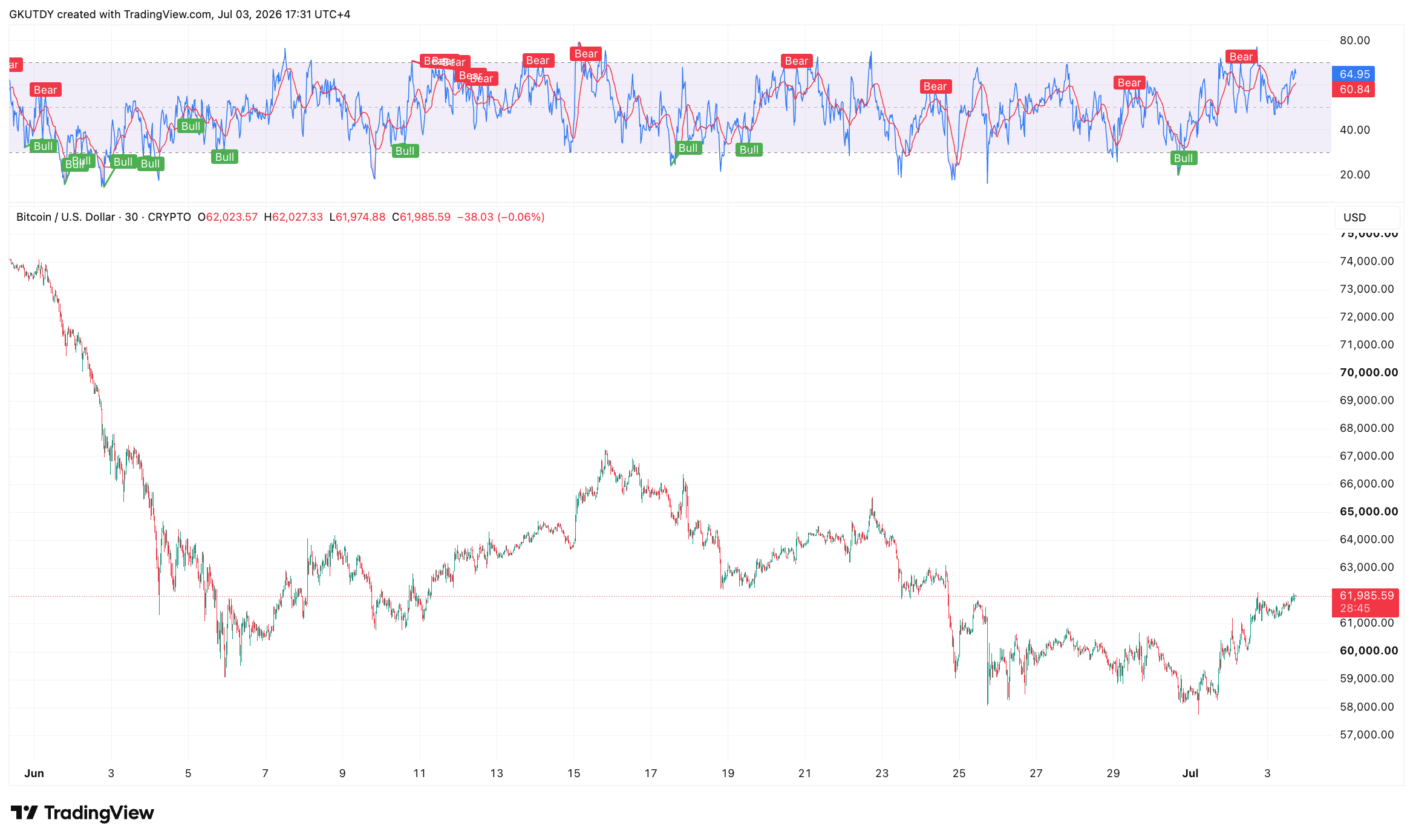
The crypto market enters the prolonged Independence Day weekend with Bitcoin recovering above $61,000 after ETF outflows stopped, whales rebuilt exposure near $59,000–$62,000, and stablecoin competition intensified against Circle’s USDC dominance.
Key checkpoints:
- Bitcoin accumulation phase confirmed: Whales added 270,000 BTC around $59,000 over two weeks, equal to roughly $16.7 billion in fresh accumulation. Long-term holders also shifted from distribution back to accumulation. The $59,000–$62,000 range is now the main investor positioning zone. Whale behavior and sentiment capitulation show larger holders are treating this area as a buy zone.
- ETF pressure eased before the holiday weekend: Bitcoin cleared $61,000 after a 10-day spot ETF outflow streak ended. U.S. spot Bitcoin ETFs recorded $221.7 million in net inflows on July 3 after the jobs report reduced fears of a fresh rate-hike shock.
- July 4 liquidity risk: U.S. markets are entering a prolonged Independence Day weekend. That leaves crypto exposed to thinner liquidity, weaker institutional participation and exaggerated weekend moves.
- Stablecoin competition is escalating: OUSD launch pressure hit Circle, USDG scaled to $100 million on Robinhood Chain, and non-USD stablecoins reached $1.1 billion in supply, with transfer volume up 16x since 2023.
- Open USD targets USDC dominance: A new Open USD consortium backed by more than 140 firms, including Visa, Mastercard, BlackRock, Coinbase and Stripe, went live with free minting/redemption and shared reserve yield for partners. Circle stock dropped 14–17% as investors priced in direct competition.
- What matters next week: BTC needs to hold the $59,000–$62,000 accumulation base and keep ETF flows positive. The upside trigger is continued ETF demand plus progress on U.S. crypto market-structure legislation; the downside risk is renewed miner selling, failed ETF follow-through or thin-liquidity weekend pressure.
You Might Also Like



Be the first to comment