

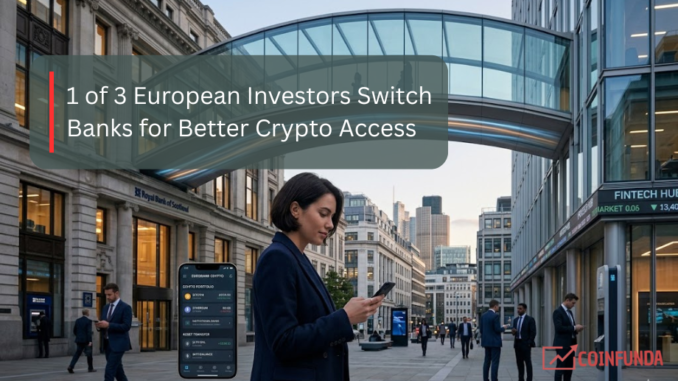

European Investors Switch Banks as Crypto Demand Expands
The latest trend where European investors switch banks highlights how digital assets are beginning to influence mainstream banking behavior across Europe. Traditionally, people changed banks because of:
- fees
- customer service
- loan access
- branch convenience
Now, a growing number of investors are evaluating banks based on crypto-related functionality, including:
- exchange compatibility
- stablecoin support
- digital asset transfers
- crypto-friendly policies
That shift may sound niche today, but it signals something larger: crypto is increasingly becoming part of normal financial expectations rather than an isolated speculative activity. Banks spent years treating crypto users like suspicious internet gamblers. Then millions of customers quietly started taking their deposits elsewhere. Remarkable discovery that clients dislike being treated like criminals for moving their own money.
Why Crypto Access Is Becoming Important
The reason European investors switch banks increasingly revolves around crypto access is simple: modern investors want financial flexibility. Crypto users often face problems with traditional banks involving:
- blocked transfers to exchanges
- delayed withdrawals
- compliance friction
- inconsistent policies
For many investors, this creates operational frustration rather than ideological conflict. They simply want:
- faster movement of capital
- access to digital assets
- smoother integration between traditional and crypto finance
Financial infrastructure that refuses to adapt eventually becomes inconvenient. Markets tend to punish inconvenience ruthlessly.
European Regulation Is Changing the Environment
The trend where European investors switch banks is also influenced heavily by Europe’s evolving regulatory framework. The European Union has moved toward clearer crypto regulation through frameworks such as MiCA (Markets in Crypto-Assets Regulation), which aims to standardize digital asset oversight across member states.
Clearer regulation reduces uncertainty for:
- banks
- fintech companies
- institutional investors
- crypto platforms
This encourages more traditional financial institutions to integrate crypto services rather than avoid them entirely.
Younger Investors Are Driving the Shift
One major reason European investors switch banks is generational behavior. Younger investors increasingly expect:
- digital-first banking
- integrated investment tools
- crypto compatibility
- real-time financial access
Many traditional banks still operate with systems designed around older financial assumptions:
- limited operating hours
- slow transfers
- fragmented international systems
Crypto-native users often view those limitations as outdated rather than normal. Human civilization built instant global communication and then somehow kept international banking transfers functioning like paperwork from 1997. Extraordinary consistency.
Fintech Firms Are Benefiting
The fact that European investors switch banks is helping fintech firms gain market share. Crypto-friendly fintech platforms increasingly attract users through:
- faster onboarding
- lower transfer friction
- integrated digital asset services
- modern mobile infrastructure
These platforms often move faster than legacy banks because they:
- face fewer legacy system constraints
- target younger demographics
- prioritize digital integration
Traditional banks now face growing pressure to modernize or risk losing financially active users.
Institutional Crypto Infrastructure Is Expanding
The broader reason European investors switch banks may accelerate further is because institutional crypto infrastructure continues improving globally.
Coinfunda recently explored how institutional crypto expansion through ETFs and tokenized finance is reshaping digital markets showing how digital assets are increasingly integrating into mainstream financial systems. As institutional participation grows, banking systems may eventually need to support:
- tokenized assets
- blockchain settlement systems
- stablecoin infrastructure
- digital asset custody
Banks that resist these transitions risk appearing structurally outdated.
Stablecoins Are Changing Expectations
Another important factor behind why European investors switch banks is the rise of stablecoins. Stablecoins increasingly allow users to:
- move value globally
- settle transactions quickly
- avoid traditional banking delays
Coinfunda recently analyzed how the stablecoin supply crossed $300 billion as digital finance infrastructure expanded highlighting how digital dollar systems are becoming embedded in modern finance. As users experience faster blockchain-based systems, tolerance for slow banking processes decreases rapidly. Convenience changes expectations permanently.
Traditional Banks Still Hold Advantages
Despite the trend where European investors switch banks, traditional financial institutions still maintain major strengths. These include:
- regulatory trust
- large-scale liquidity
- established customer bases
- financial stability infrastructure
Crypto-native financial systems remain volatile and fragmented in many areas. This means the future is more likely to involve:
- hybrid integration
rather than: - total replacement of banks
The industry is moving toward coexistence, not immediate disruption. Which disappoints revolutionaries but greatly reassures accountants. Civilization requires both.
Security and Compliance Still Matter
One reason some investors remain cautious even while European investors switch banks is security. Crypto access introduces:
- cybersecurity risks
- fraud concerns
- regulatory uncertainty
- compliance obligations
Banks moving into crypto services must balance:
- innovation
with: - operational safety
Financial systems evolve slowly because failure at scale becomes catastrophic quickly.
Why This Trend Matters
The reason the European investors switch banks trend matters is because it reflects changing expectations around money itself. Investors increasingly expect financial systems to be:
- digital
- flexible
- globally connected
- continuously accessible
Crypto is influencing those expectations even among people who are not deeply involved in speculative trading. That may become one of crypto’s most important long-term impacts:
not replacing finance,
but forcing traditional finance to modernize faster.
Conclusion
The growing trend where European investors switch banks for better crypto access highlights how digital assets are reshaping mainstream financial expectations across Europe. As regulation improves and institutional infrastructure expands, investors increasingly prioritize banks capable of integrating crypto functionality alongside traditional financial services.
While traditional banks still maintain major structural advantages, the pressure to modernize is clearly increasing. The future of finance may not belong entirely to crypto-native systems, but it increasingly belongs to institutions capable of adapting to a digital-first financial world.



Be the first to comment