



Key Takeaways
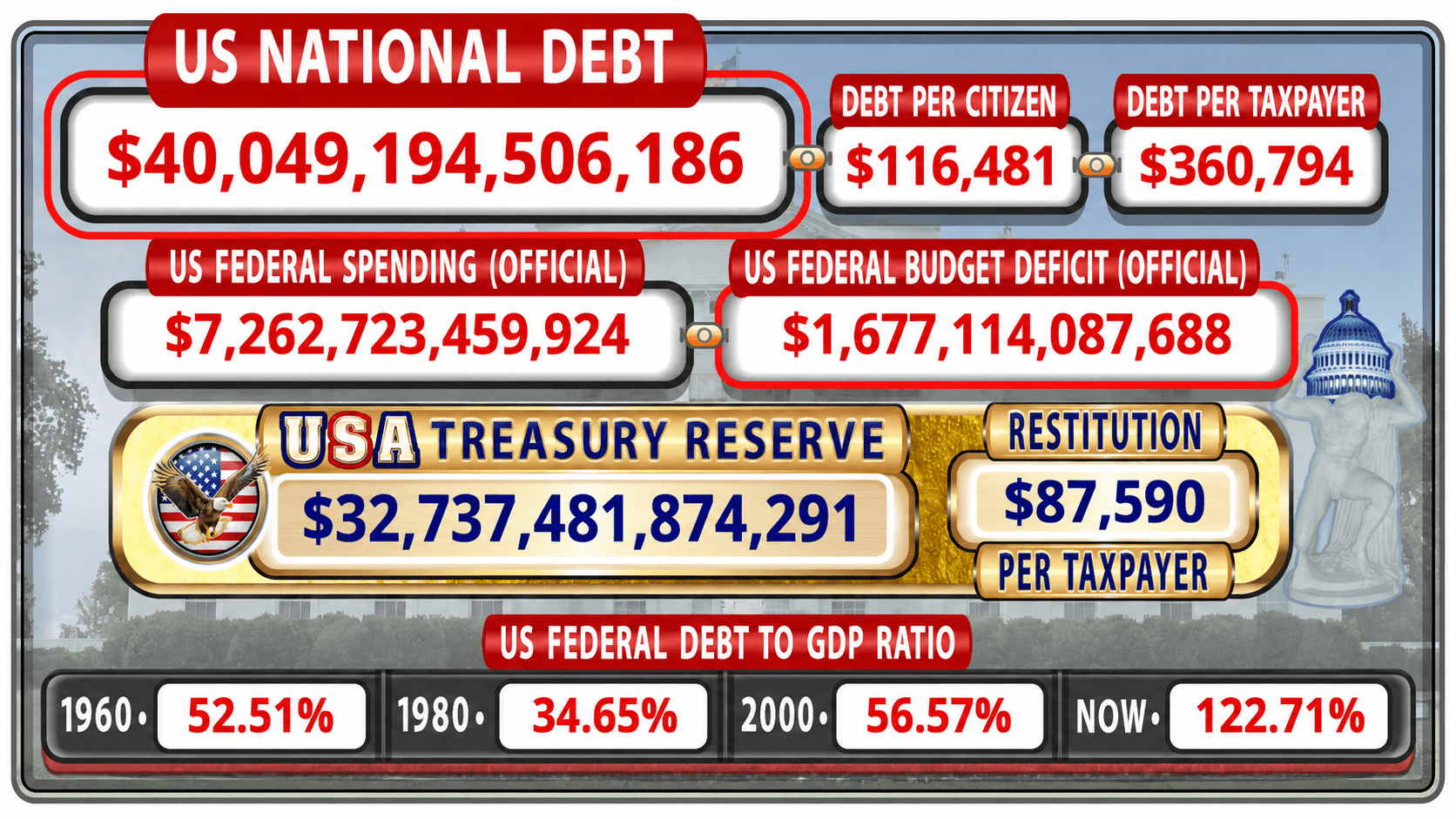
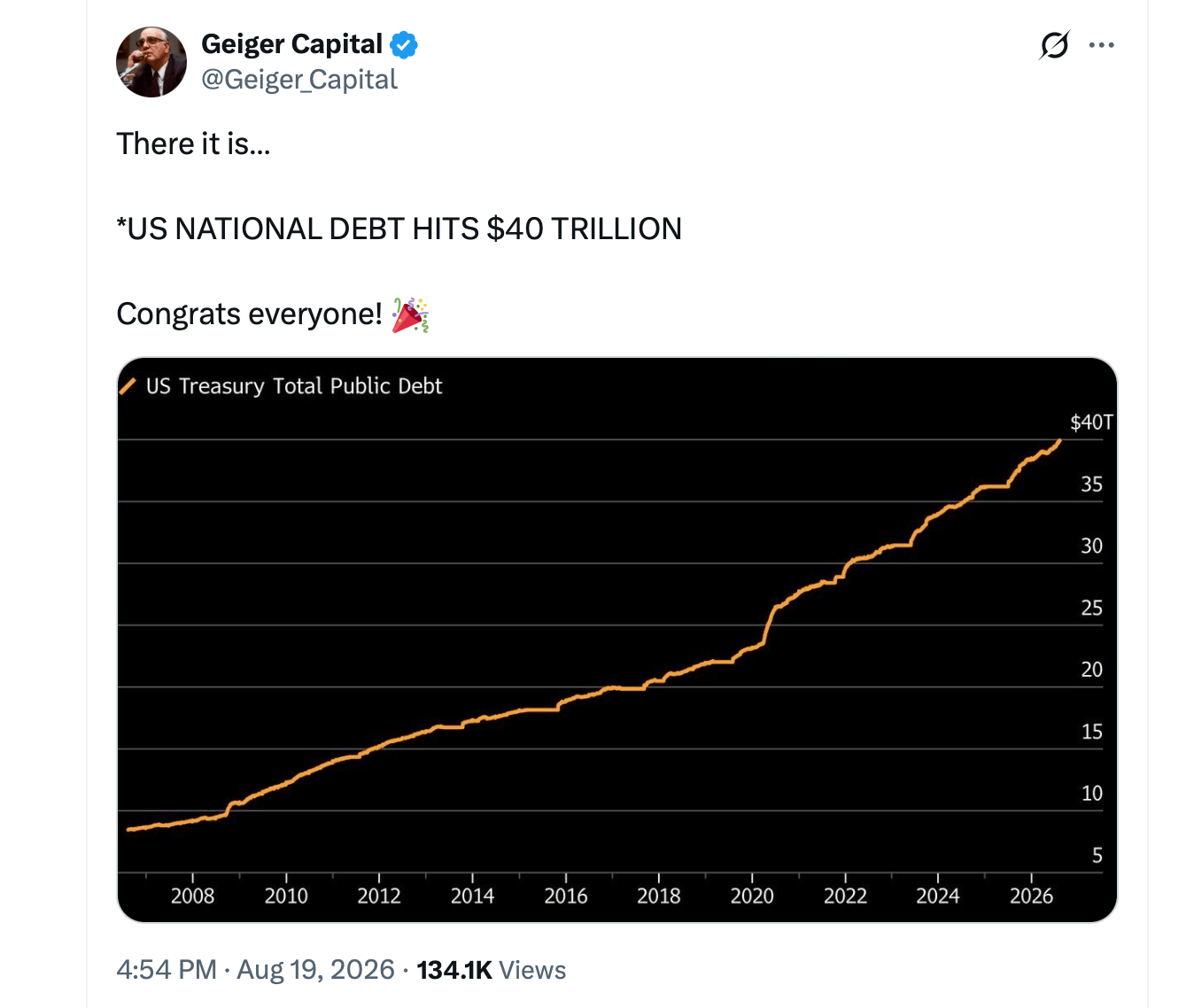
- U.S. debt reached $40.049 trillion Aug. 19 as federal interest costs climbed.
- Bitcoin neared $70,000 as Treasury buybacks helped ignite a roughly 7% move.
- Trump said he would hear bitcoin reserve proposals, but announced no purchase plan.
The tab has more than doubled from roughly $19.95 trillion when U.S. President Donald Trump first entered office in January 2017. More telling, Washington piled on the latest $1 trillion in barely five months after federal debt cracked $39 trillion in March.
There is plenty of blame to spread around. Pandemic spending under Trump and former President Joe Biden turbocharged borrowing, while Social Security, Medicare, tax policy, massive defense spending, and chronic federal deficits kept the machine running. Higher interest rates have now made that bill considerably harder to hide.
Interest Costs Turn Debt Into a Feedback Loop
Net federal interest costs are hovering near or above $1 trillion annually. The Congressional Budget Office projects roughly $1 trillion in fiscal 2026, with the interest tab potentially ballooning toward $2.1 trillion by 2036 under current law.
Here is where the math gets really ugly. Washington must refinance maturing debt while issuing still more debt to fund fresh deficits. Higher rates make rolling over old obligations costlier, swelling interest expenses, widening deficits, and forcing the Treasury right back into the market for additional borrowing.

The pain does not stay inside Washington. Treasury yields set the baseline for borrowing across the economy, so pricier government financing bleeds into mortgages, auto loans and business credit. Debt held by the public is already hovering around 100% of gross domestic product.
Bitcoiners See a $40 Trillion Advertisement
For Bitcoin supporters, $40 trillion practically writes the advertisement itself. Bitcoin has a programmed maximum supply of 21 million coins, while governments face no comparable ceiling on issuing debt or expanding the dollars ultimately required to finance those obligations.
That difference explains why every debt milestone revives the case for bitcoin as scarce, non-sovereign money. The deeper bet is that chronic deficits, mounting interest bills, and shrinking fiscal flexibility steadily make monetary debasement harder for investors to ignore.
Bitcoin supplied the perfect backdrop Wednesday, ripping from the mid-$64,000 range toward $69,000 to $70,000. The immediate spark was Treasury’s decision to expand longer-dated securities buybacks to at least $4 billion per operation, relieving pressure on long-term yields and helping force crypto shorts out of crowded positions.
Trump Leaves the Bitcoin Door Open
Trump then handed bitcoin supporters another headline. Asked about accumulating sizable amounts of bitcoin, he acknowledged the idea had been discussed and said he would listen to recommendations from advisers, including Securities and Exchange Commission Chairman (SEC) Paul Atkins and his team.
“Certainly it’s been talked about,” Trump remarked. “It takes a lot of pressure off the dollar. It’s been very, very good for the dollar.” Trump further noted on Wednesday that the U.S. would remain the leader in crypto, prediction markets, and artificial intelligence (AI).
That was not a promise to start buying bitcoin on the open market. The existing Strategic Bitcoin Reserve is primarily stocked with government-held forfeited bitcoin from criminal cases, while officials have already been tasked with exploring budget-neutral methods for adding more holdings. Members of Congress have also put forth legislation to forward this BTC reserve idea.
The real test is whether Trump’s rhetoric becomes policy. Market observers will watch for concrete bitcoin reserve proposals, while Treasury yields, monthly deficits, and looming debt-limit negotiations reveal whether America’s $40 trillion milestone was simply another flashing number or the opening act of a nastier fiscal reckoning.





Be the first to comment