



Ethereum [ETH] is expected to post a 70% return for Q3 2026, its strongest-ever quarterly performance. The ETH Open Interest reached $30 billion, and the average Long/Short ratio was 1.54 across popular exchanges, signaling a clear dominance in long positions.
Institutional buying and whale accumulation added to the list of bullish signals for the leading altcoin. The ETH/BTC was knocking on a key resistance level at 0.033.
AMBCrypto reported that a breakout past this level would add to the convincing bullish signals Ethereum exhibited. Cascading leveraged positions drove a swift rally higher, and Bitcoin [BTC] faced a correction within this rally at the time of writing.
Bitcoin was down 4.45% from the $87,395 local high it made on Monday, the 21st of September. Ethereum was down by 5.31% in under three days, too.

Rising volatility signals Ethereum trader opportunity
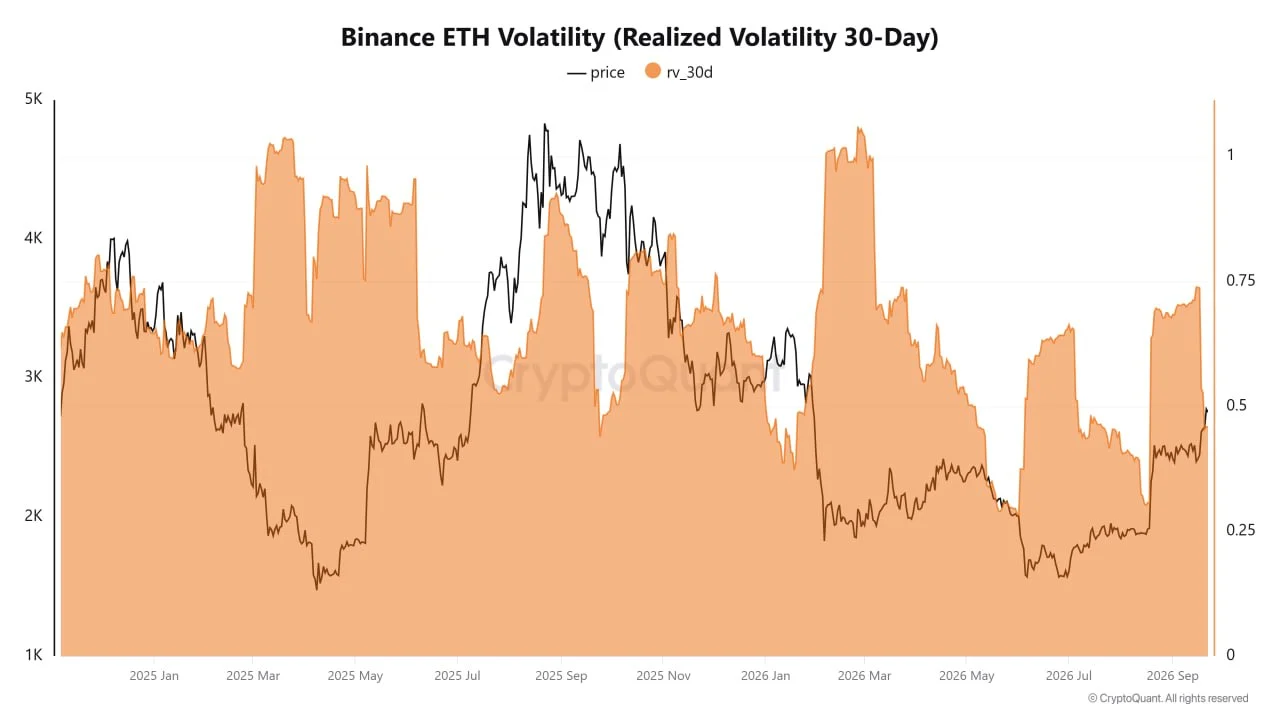
Recently, the Ethereum 30-day realized volatility rose to 0.73, the highest it had been since March. Since then, the realized volatility has dipped by 38% to 0.45, wrote crypto analyst Arab Chain.
This increased volatility followed the Ethereum range breakout in recent days. The decline in volatility signaled a momentary lull in price action, but it is not a signal that the uptrend has lost strength.
Rather, a six-month high in volatility only signaled the validity of the breakout past the $2,500 supply zone. Swing traders and investors have reason to maintain a bullish bias.
Long-term holders hold their ETH tightly
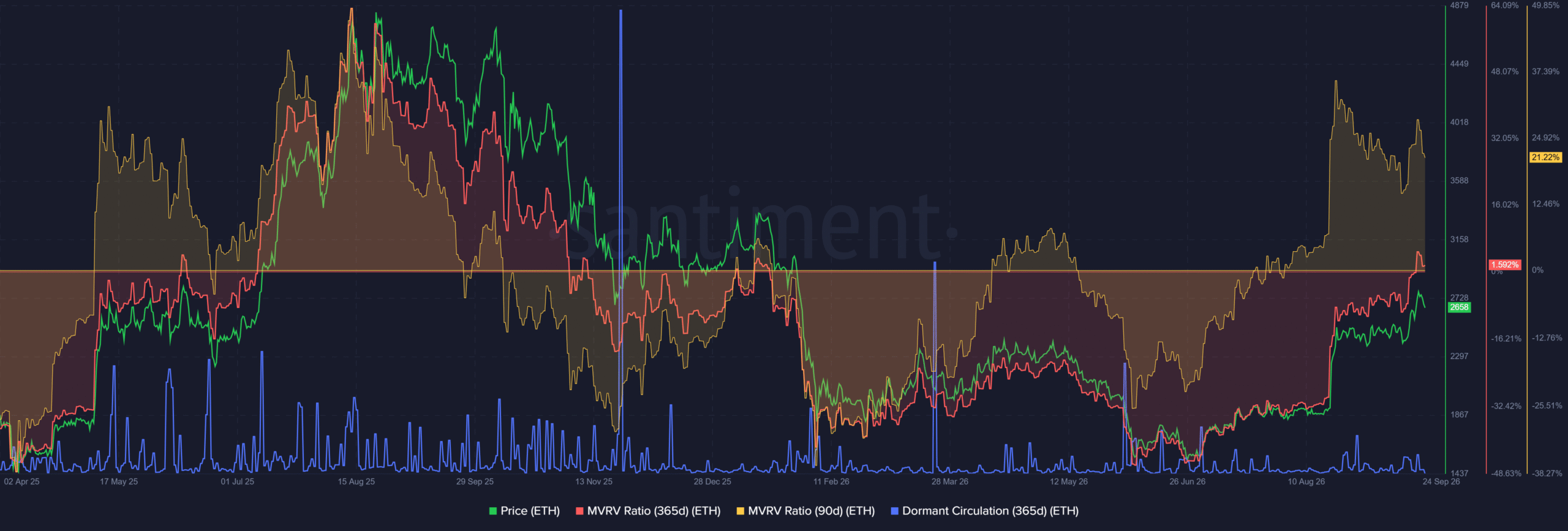
The MVRV ratio is used to assess if an asset is overvalued or undervalued. On the Santiment chart above, negative scores show whether ETH of a certain age is being held at a profit or loss, on average.
Like July 2025, the 365-day MVRV moved back into positive territory. Meanwhile, the 3-month MVRV ratio was already strongly profitable, once again like the July 2025 conditions.
Back then, strong ETF inflows and heavy demand for ETH from institutions drove a swift rally.
The dormant circulation had seen sizeable spikes in July 2025 to show distribution trends during the price uptrend. Yet, by comparison, though profit-taking inclination should be similar (based on MVRV), the dormant circulation was far quieter.
It suggested that compared to a year ago, 1-year+ Ethereum holders were far more comfortable holding the altcoin, showing firm bullish conviction and another sign of a bull run.
Final Summary
- The Ethereum 30-day realized volatility reached a six-month high when the altcoin broke out past the $2.5k resistance zone.
- The Ethereum long-term holder distribution trends, or lack thereof, were an interesting sign of bullish conviction.


Be the first to comment