



Bitcoin (BTC) traded near $82,000 around Friday’s Wall Street open as crypto markets stabilized alongside a rebound in South Korean stocks.
Key points:
- Bitcoin price volatility eased as South Korean stocks rebounded 2% on Friday, offering relief after a steep sell-off.
- Federal Reserve Chair Kevin Warsh gave no indication of further interest-rate hikes during a public discussion, as traders lowered the odds of a 25-basis-point increase in October to 15%.
- Analysts warned of difficult choices for Washington as the 10-year US Treasury yield climbed back to 5.13% and US stocks traded in a narrow range.
Traders see dovish edge to Warsh comments
Data from TradingView showed BTC/USD holding most of its reclaimed ground after bouncing at $80,000 on Thursday.
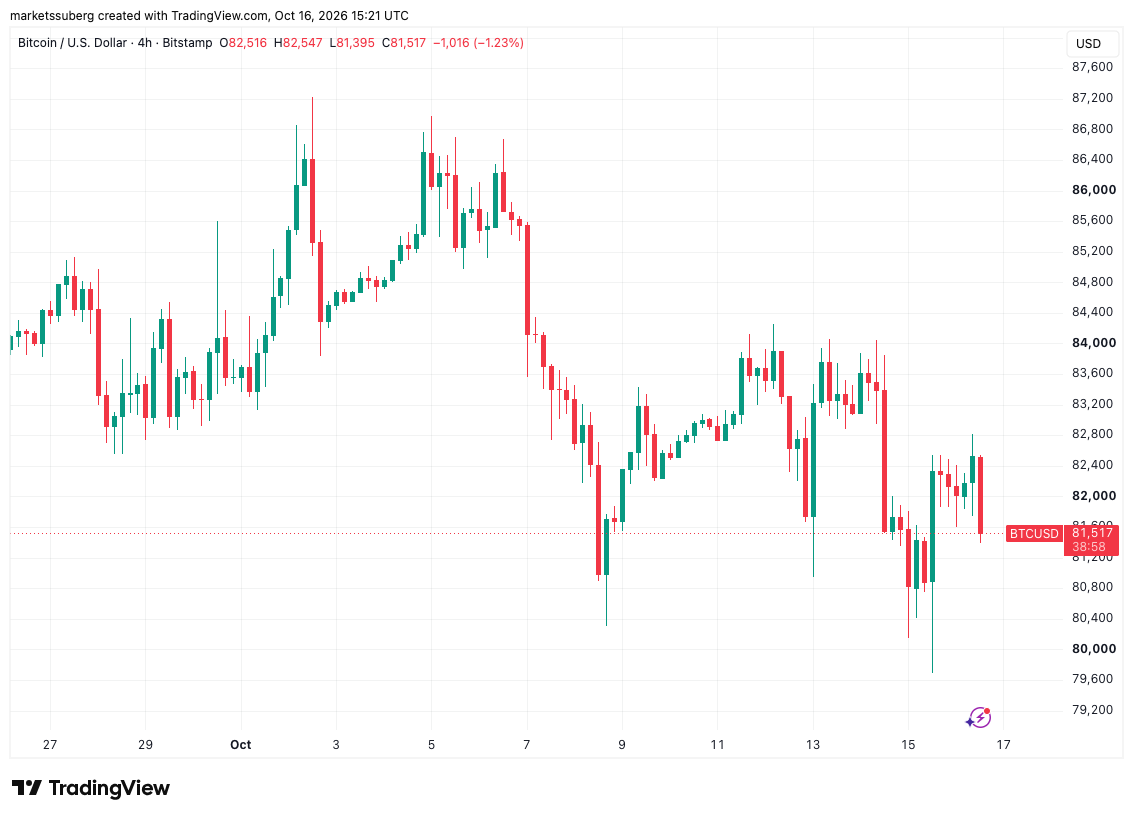
BTC/USD four-hour chart. Source: Cointelegraph/TradingView
The earlier decline followed a weeklong sell-off in South Korean tech stocks, although Friday’s Asian trading session brought some relief. The KOSPI Composite Index closed at 5,668, up 2% on the day but still down 8.3% for the week.
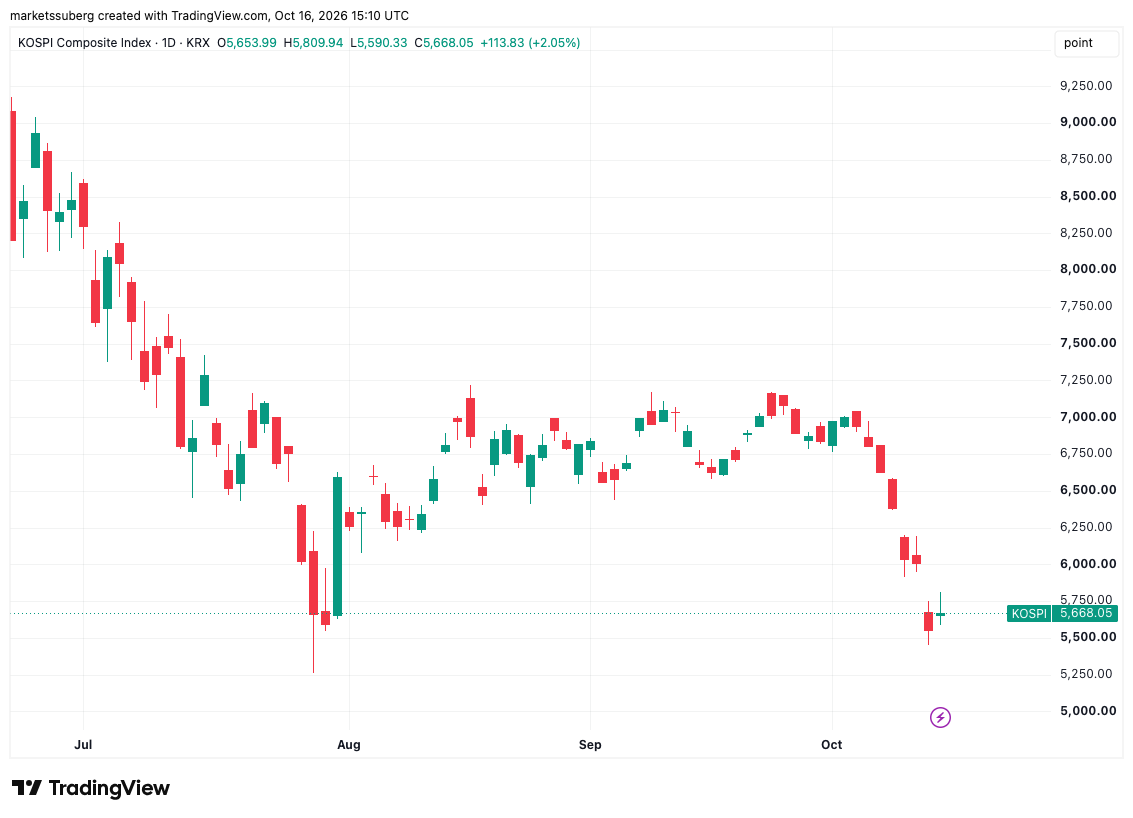
KOSPI Composite Index one-day chart. Source: Cointelegraph/TradingView
US stocks largely avoided the sell-off in Asian markets but were mixed on Friday, with the tech-heavy Nasdaq Composite Index down 0.5% and the S&P 500 up 0.5%.
Meanwhile, Federal Reserve Chair Kevin Warsh offered investors some relief by avoiding any mention of further interest-rate hikes during a discussion with International Monetary Fund (IMF) Managing Director Kristalina Georgieva.
“I don’t prejudge meetings. I don’t believe in saying now what I might do at the meetings that we have in the balance of this year,” he said.
Markets appeared to take Warsh’s tone as a dovish signal on rate hikes. Data from CME Group’s FedWatch Tool showed the probability of a 25-basis-point rate hike in October falling to 15%, down from 27% the previous day.
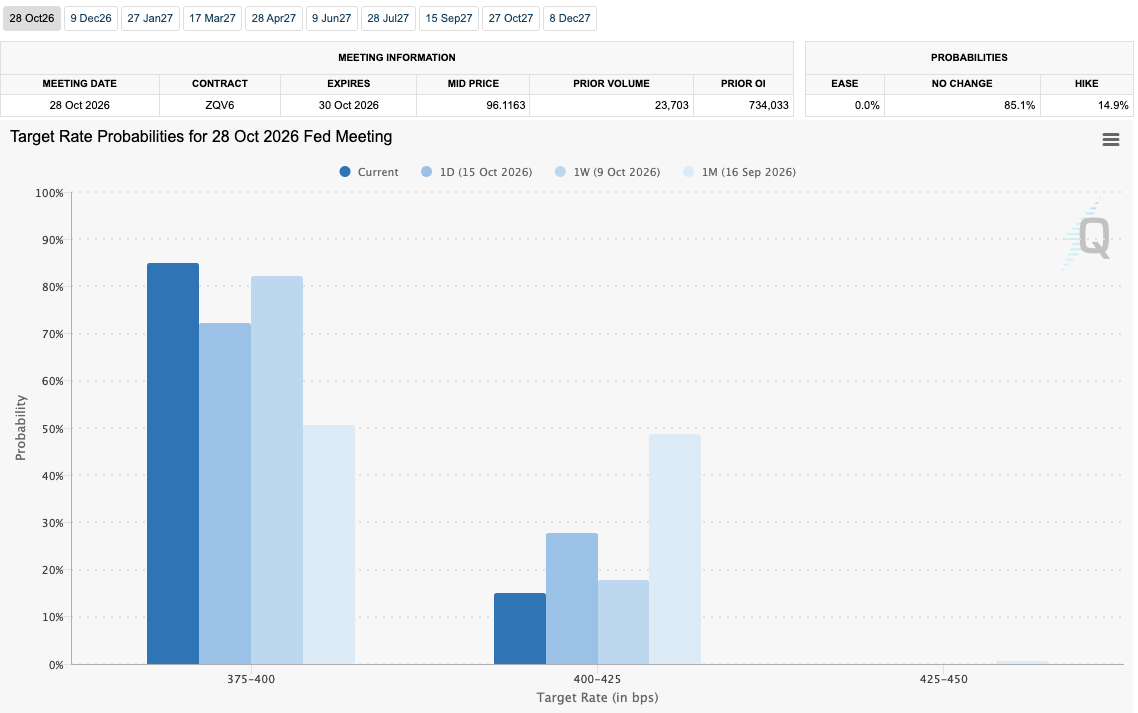
Fed target-rate probabilities for October FOMC meeting (screenshot). Source: CME Group
Economist Robin Brooks suggested that stress in the AI sector, a key driver of the Korea sell-off, could be at the heart of the Fed chair’s more aloof approach.
“Warsh gave no indication the Fed’s in any hurry to hike, so the October meeting is now pretty much off the table in terms of a hike,” he wrote in a blog post, adding:
“What’s helping the Fed is fears of an AI blow-up, which is making markets more receptive to a dovish message.”
US bond yields eye rebound as stocks halt upside
Elsewhere, US bond yields began rising as stocks steadied, prompting suggestions that the US treasury may ultimately be forced to choose between taming the bond sell-off and keeping stocks bullish.
The US 10-year yield stood at 5.07% on Friday, having briefly attempted to reverse higher, reaching 5.13%.
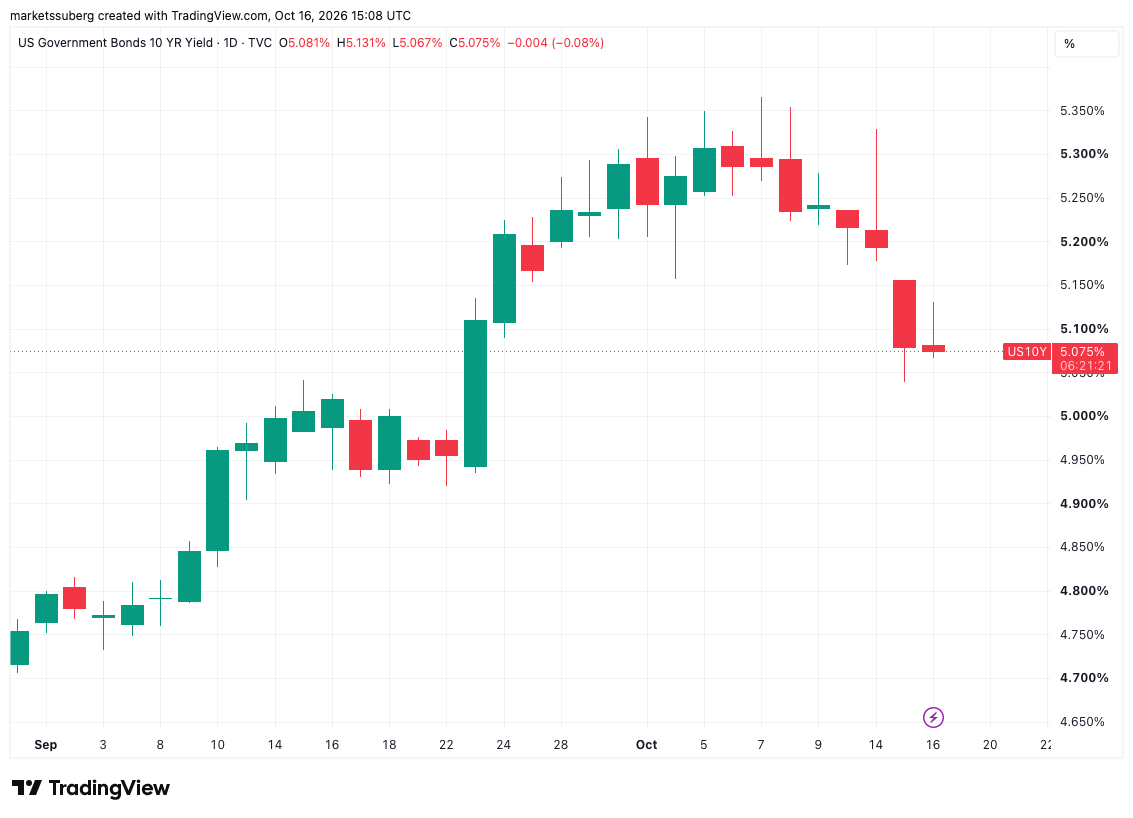
US 10-year bond yield one-day chart. Source: Cointelegraph/TradingView
Related: Bitcoin may seek 20-month trend line reclaim before new record highs: CryptoQuant
Market commentator The Kobeissi Letter noted that stock weakness has been the sole source of bond-yield corrections since August. In an X analysis published Thursday, Koebissi suggested equities may be in a paradoxical “‘bull-bear’ market.”
Without the US-Iran war, stocks would be far higher, it argued, adding that persistent inflation was driving investor demand for asset exposure — even as the Fed began a new rate-hike cycle.
“Even as the S&P 500 hits year #5 of its bull market, we believe a steep discount is currently priced into equities. This discount has functioned as a ‘stealth’ bear market, suppressing equity valuations in the world’s largest and fastest-growing companies,” it concluded, adding:
“This backdrop has the ability to catalyze a violent rally in the S&P 500 if and when it is ultimately priced-out.”
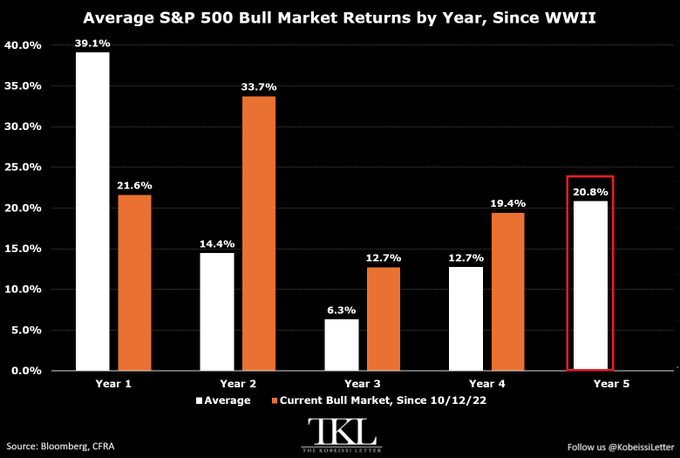
S&P 500 average bull-market returns comparison. Source: The Kobeissi Letter on X.com



Be the first to comment