



Major mining pools recorded the largest inflow of Bitcoin to Binance since August, but strong buyer liquidity fully offset the selling pressure.
According to on-chain analytics platform CryptoQuant, inflows from miners’ accounts to Binance surged to 19,866 BTC on September 21. This was the largest spike since August 25, when more than 25,000 BTC was transferred to exchanges. Despite the scale of the inflow, Bitcoin showed strong resilience, holding around $85,400.
You Might Also Like

The market used to fall, but now it doesn’t. What changed?
CryptoQuant analysts say the current activity is driven by classic business logic: “Historically, Bitcoin miners often monetize part of their production during strong markets to cover significant operating and capital expenses.” With the market strong and prices high, producers are taking profits. As the experts note, “this behavior is broadly comparable to that of gold producers, who often sell part of their production when prices are stronger.”
The resulting fiat proceeds go toward electricity bills, data center infrastructure maintenance, taxes, and large-scale upgrades to fleets of ASIC miners.
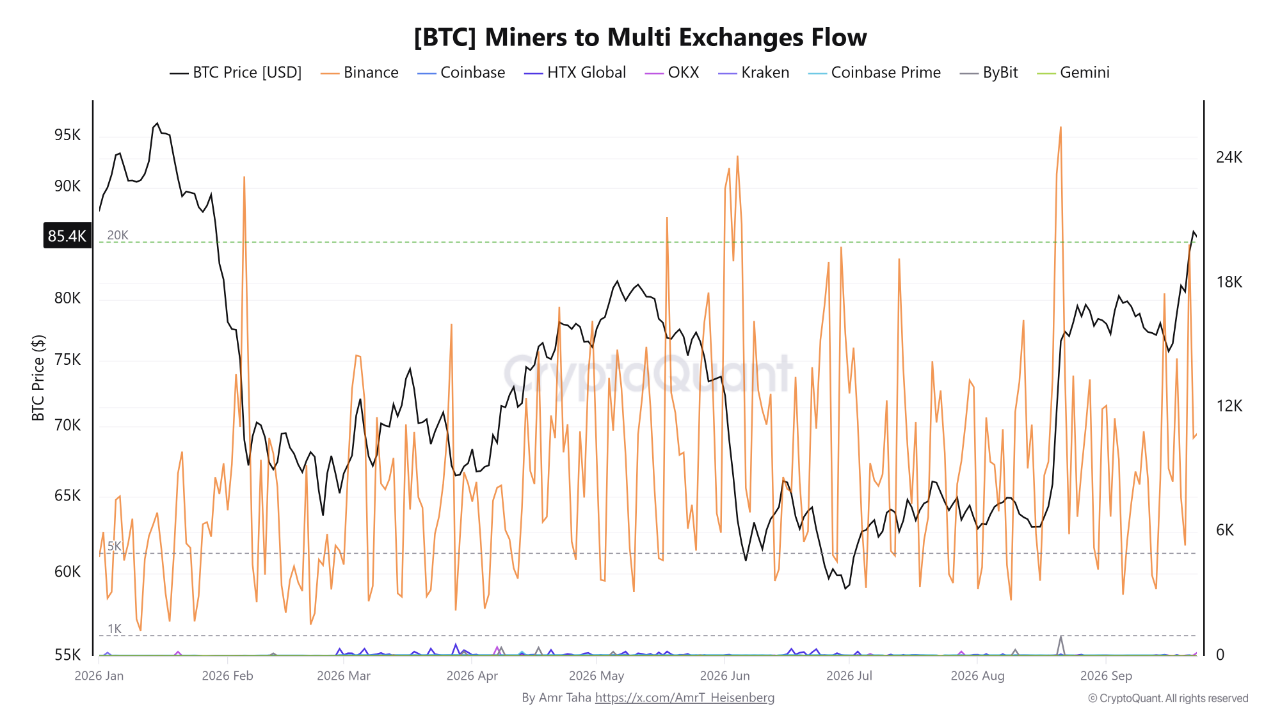
Historical data shows that Binance remains a key liquidity hub for mining pools. While liquidity flows on alternative platforms such as Coinbase Prime, OKX, Kraken, and Gemini remained within average ranges, Binance saw a series of sharp spikes.
You Might Also Like

The main takeaway from this latest episode is a change in market structure. CryptoQuant emphasizes: “Since 2024, most instances of miners transferring around or more than 20,000 BTC to exchanges have not been accompanied by an immediate sharp decline in Bitcoin’s price.”
The September spike tested the market’s resilience rather than signaling a bearish sell-off. Analysts conclude that the incident “is more notable as a test of price resilience than as an independent bearish signal.” Buyers’ ability to absorb nearly 20,000 BTC of supply without a price drop confirms that $85,400 has formed a strong new support level.



Be the first to comment