



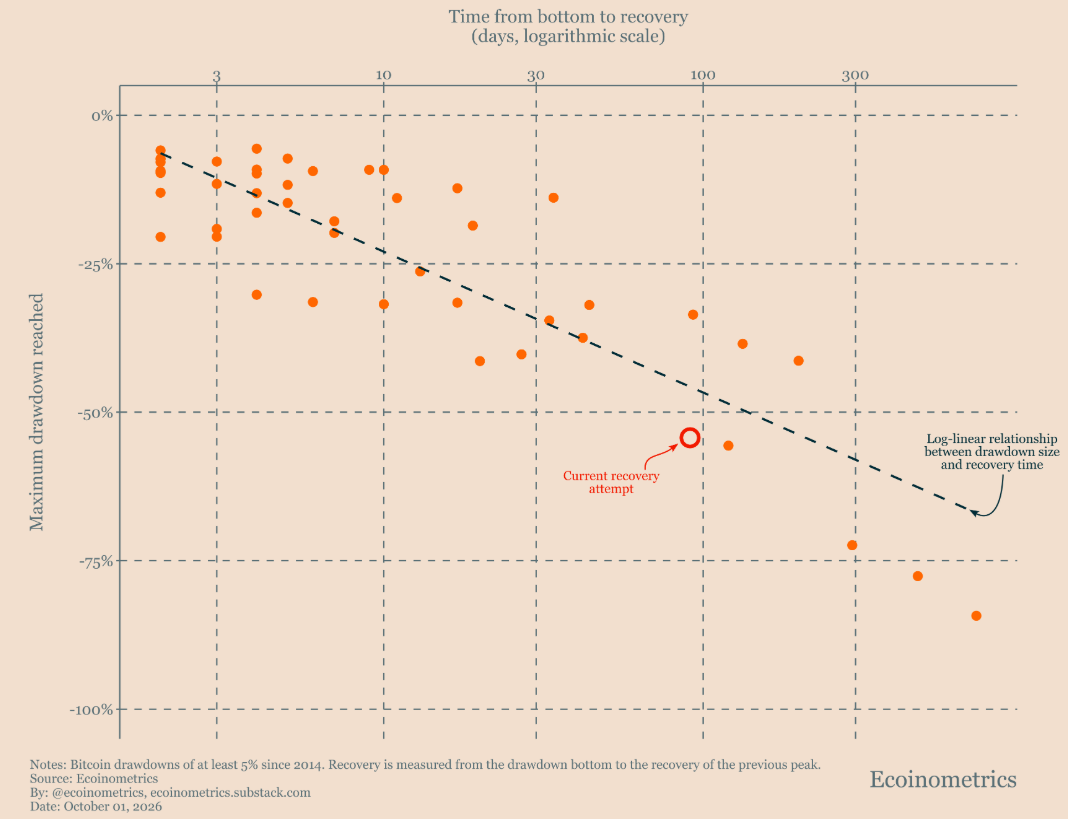
Bitcoin is up 46% from its July low and could reclaim its all-time high (ATH) of $126K by Q1 2027. According to Ecoinometrics, historical drawdowns and recoveries suggest Bitcoin could take 60 to 230 days to reclaim its previous ATH.
Assuming the $57.8K low on the 1st of July marked the bottom, the rebound would be approximately three months old. The longer recovery timeline would stretch into February 2027. The research firm added,
Bitcoin is currently around 90 days past the bottom and still about 30% below its all-time high. By historical standards, this recovery does not look mature yet. If the trend holds, there is still room for it to develop well into Q1
This is a very aggressive target compared to Citigroup analysts, who expected BTC to hit $113K by Q3/Q4 2027. The asset traded at $85K at press time.
What’s currently weighing Bitcoin down?
On-chain data supported the Ecoinometrics outlook. According to prominent Bitcoin quant analyst Frank Fetter, Bitcoin’s ‘expansion’ phase could kick off in early 2027.

The analyst cited the Choppiness Index, which distinguishes sideways conditions from trending markets.
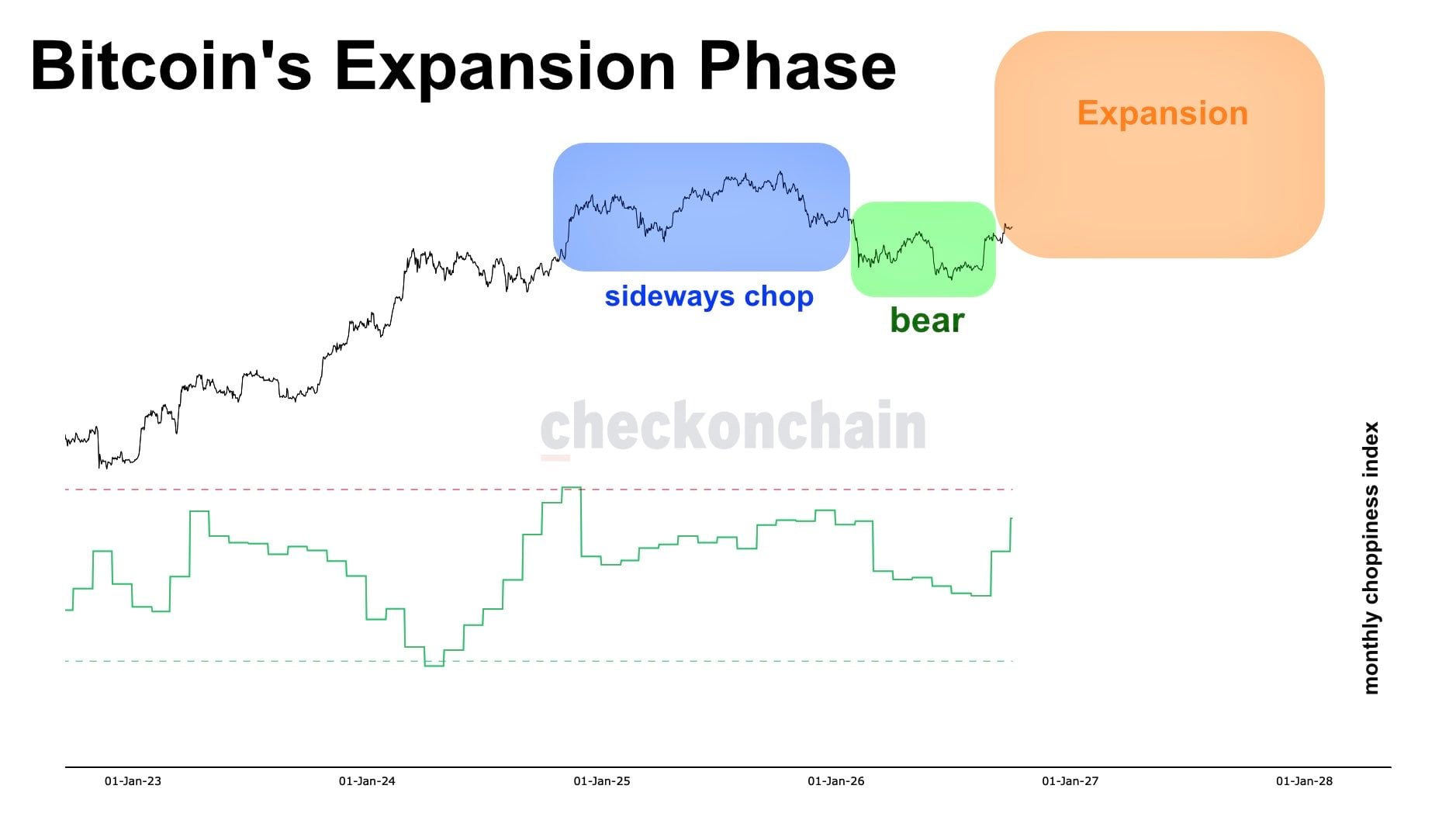
Per the attached chart, expansion momentum increases if the Choppiness Index retreats. As of writing, the index was near a peak, and the metric’s pullback would suggest an accelerated BTC expansion phase.
Which raises a crucial question: what’s currently delaying the expansion or recovery phase?
Simple answer: the macro landscape, specifically inflation.
Why is inflation holding Bitcoin back?
According to Ecoinmetrics, headline US inflation has been sticky and hasn’t trended down as expected.
The Bitcoin setup is improving, but persistent inflation still puts a limit on how aggressively we should lean into it simply because of this looming macro risk.
Both US inflation and labor market status inform Fed rate decisions. Last Friday’s jobs report reinforced a cooling labor market and diminished Fed rate hike fears ahead of the FOMC meeting on 28th of October. This sparked a recovery across equity markets, but Bitcoin didn’t join the broader market rebound.
Another inflation data release (CPI) scheduled for 14th October would confirm whether the Fed will hold interest rates steady or hike by a quarter point.
While inflation has dictated Bitcoin’s demand, the asset has its own factors that have weighed on its recovery.
Who is selling into Bitcoin’s recovery?
Notably, 2025 top buyers are at break-even and driving the current selling pressure, according to Glassnode.
Those who bought the 2025 rally are selling the most coins per day this year. Those who bought the decline are not.
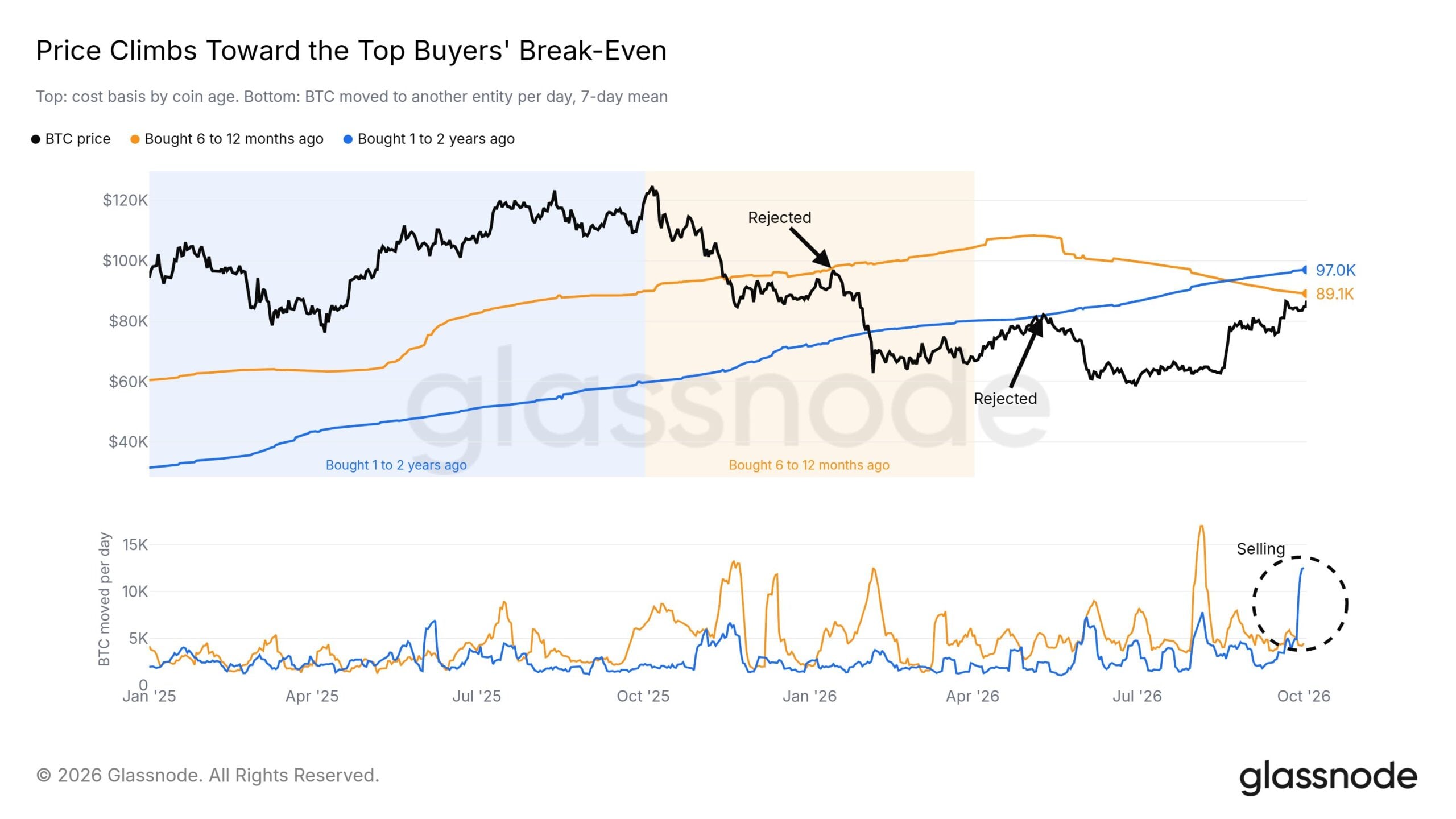
As such, $89K and $97K will be key resistance levels that must be cleared for Bitcoin’s expansion phase to extend.
Besides, Bitcoin’s overall demand is still negative despite the improved U.S. spot BTC ETF flows in the past few weeks.
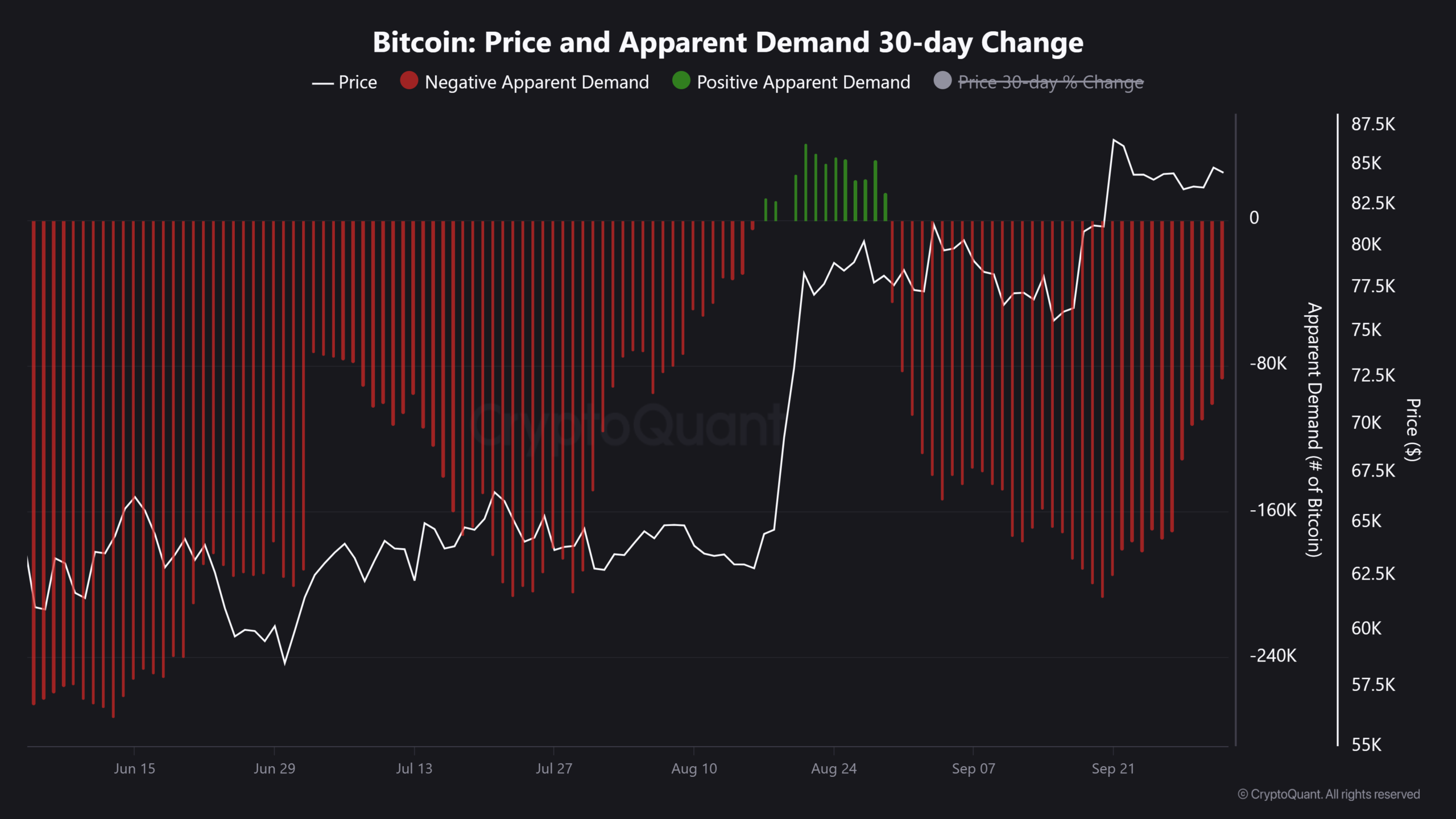
Overall, Bitcoin’s recovery is still intact, but it must navigate through macro uncertainty and the 2025 top buyers’ dump.
Final Summary
- BTC price could reclaim $126K by Q1 2027, implying 50% upside potential from $85K
- Broader weak demand and pressure from 2025 top buyers are delaying full recovery






Be the first to comment