


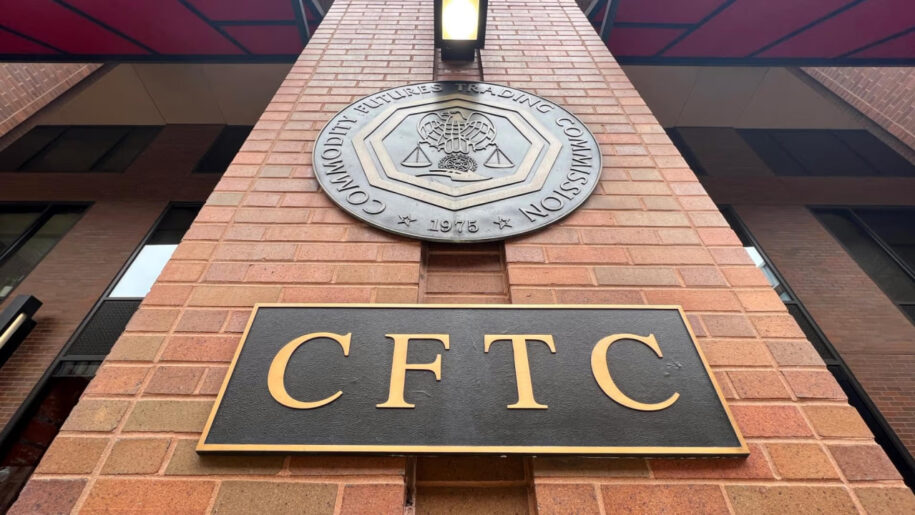
The CFTC has started writing rules for retail crypto trades involving leverage, margin or financing. The initiative could create a federal route for those markets, while ordinary cash crypto purchases would remain outside its reach.
Key Takeaways
The CFTC has opened a process, not a finished regime
The Commodity Futures Trading Commission published an Advanced Notice of Proposed Rulemaking on October 5, opening a 60-day period for public comment. The agency will use those responses to decide how a future framework for certain retail crypto transactions should work, so no exchange enters a new federal regime and no new customer protections take effect today.
The proposal focuses on retail trades involving leverage, margin or financing. The CFTC calls these crypto asset transactions, or CTXs.
Why leverage gives the CFTC a clearer role
Buying Bitcoin outright with fully paid funds is different from opening a position with borrowed money or leverage. The second type of trade gives the CFTC a clearer role under its existing authority over certain retail commodity transactions.
That legal boundary explains why the agency can begin this rulemaking without waiting for Congress. It also explains why the proposal cannot create federal oversight for every crypto purchase made on an exchange.
A “crypto asset market” could offer exchanges a federal route
The CFTC is considering a purpose-built category of registered venue called a crypto asset market. It would give exchanges that offer retail leveraged, margined or financed crypto trading a way to operate under a federal market framework.
The consultation asks what that framework should require from the venues that choose it. Its focus extends beyond the assets available for trading to the controls surrounding a customer’s trade and funds.
The CFTC is seeking input on how such venues should handle:
- Market manipulation and abusive trading
- Customer funds and conflicts of interest
- Market surveillance and operational controls
- Crypto-specific practices that could become federal standards
Reuters reported that specific leverage limits are absent at this stage. The agency is first asking how the products and venues within its jurisdiction should be treated before it develops detailed requirements.
“The American people deserve clarity, certainty, and consumer protections in the crypto asset markets,” CFTC Chair Michael Selig said in the agency’s announcement.
Selig is arguing for rules that act before a platform failure harms customers. The final framework will still depend on which exchanges use the federal route, the safeguards they accept and the CFTC’s ability to supervise them.
Congress still decides the wider spot-market question
The proposal follows the Senate’s failure to advance the CLARITY Act, which would have given the CFTC a wider and more durable role in overseeing crypto spot markets. The agency is instead working with the authority it already has over a narrower class of retail transactions.
That leaves two regulatory paths. A venue offering retail leverage or financing could seek a federal framework through the proposed crypto asset market category. Ordinary spot platforms would continue to operate mainly under state rules, alongside the CFTC’s existing anti-fraud and anti-manipulation powers.
The comment period will define the proposal’s next shape
The next argument will concern the practical boundaries of the federal route: which platforms would use it, what safeguards they would accept and whether state regulators see it as an improvement or an overlap. The CFTC has opened a path for leveraged retail crypto trading, while the wider question of who oversees the cash spot market remains with Congress.
This article is for informational purposes only and does not constitute legal, financial or investment advice. The CFTC proposal is subject to public comment and may change before any final rules are adopted.

Kosta has reported on cryptocurrency markets and blockchain infrastructure since 2020, bringing over six years of hands-on experience in the crypto industry built through daily tracking of markets, trends, and emerging blockchain developments. Specializing in Bitcoin on-chain analysis, institutional ETF flows, and digital asset price action, his work at Coindoo has been cited by other news agencies and consistently covers market developments with a focus on data-driven reporting across Bitcoin, Ethereum, Solana, and XRP.
Over the years, Kosta has contributed to multiple crypto media outlets in different regions, authoring over 6,000 articles across the sector. His reporting spans cryptocurrency markets and the broader fintech industry, tracking not only price action but also the technological and regulatory forces shaping the ecosystem.
To support his analysis, Kosta actively leverages on-chain data and metrics from leading platforms such as Santiment, Glassnode, and CryptoQuant, enabling deeper, evidence-based market insights. He believes in the power of transparency and the data that underpins the blockchain ecosystem.
His academic background in Marketing Management from Denmark further complements his analytical approach, adding a strong understanding of communication strategy and content positioning to his work.



Be the first to comment