



Chainlink CCIP 2.0 has integrated Ethereum’s Fast Confirmation Rule (FCR), enabling cross-chain transactions to reach confirmation in seconds rather than waiting for Ethereum’s full transaction finality. The integration introduces a faster confirmation option for asset issuers, bridges and other cross-chain applications while retaining Ethereum’s validator-backed security assumptions.
Chainlink CCIP 2.0 Cuts Ethereum Confirmation to 12–24 Seconds
According to Ethlabs, Chainlink CCIP 2.0 is the first major bridge integration to bring the Fast Confirmation Rule into production. The implementation allows eligible Ethereum transactions to receive confirmation in approximately 12–24 seconds, compared with the usual 13-minute wait for full finality. The change could reduce delays for users and applications transferring assets between blockchain networks.
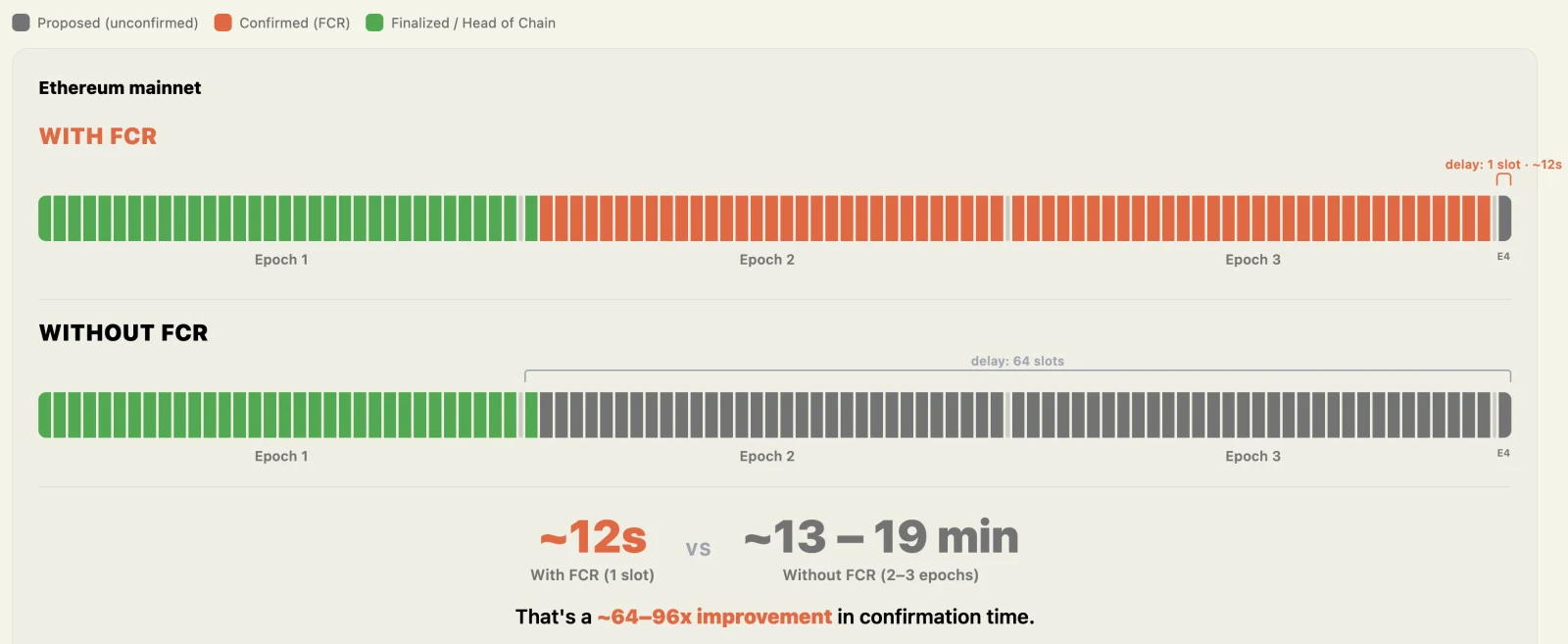
Ethlabs said the integration moves FCR from research and a formally verified specification into a production implementation. The team identified bridges, asset issuers, solvers, RPC providers, Layer 2 networks and exchanges as potential users. However, the faster confirmation applies to the FCR mechanism, rather than eliminating all processing and execution delays involved in cross-chain transactions.
Also Read: Aave Expands Chainlink CCIP Integration to Power Cross-Chain DeFi Infrastructure

Ethereum Fast Confirmation Rule Changes Cross-Chain Security
Ethereum’s Fast Confirmation Rule provides an earlier confirmation signal using validator attestations and assumptions about network synchrony.
The Ethereum consensus specification describes how the rule identifies blocks that can be treated as confirmed before the network’s usual finalization process completes. This gives applications an additional confirmation option rather than requiring them to rely exclusively on slower finality.
The distinction between confirmation and finality remains important. Ethereum’s specification warns that if its network synchrony assumptions are violated, a fast-confirmed block could be reorganized without adversarial behavior or validator slashing. Applications must therefore evaluate the risks and assumptions associated with using faster confirmation signals for high-value transfers.
Chainlink CCIP Connects 78 Blockchain Networks
Chainlink CCIP provides infrastructure for transferring tokens and messages between blockchain networks. Its official lists 78 supported networks, including Ethereum, Solana, Base, Arbitrum and BNB Chain. The network’s existing reach provides a potential distribution channel for faster confirmation, although the FCR integration’s availability depends on individual supported routes and implementations.
Chainlink’s security model uses decentralized oracle networks, independent node operators, rate limits and timelocked upgrades. These mechanisms are designed to reduce cross-chain risks, including unauthorized transfers and infrastructure failures.
The addition of FCR addresses transaction confirmation latency, while CCIP’s other security mechanisms continue to serve separate functions in protecting cross-chain transfers.
Faster Ethereum Confirmation Could Expand Institutional Transfers
The development comes as blockchain infrastructure providers work to make tokenized assets and cross-chain financial applications more practical. Faster confirmation can reduce the time users wait before a destination-chain application proceeds with a transaction.
This is particularly relevant to bridges and asset issuers handling transfers where confirmation delays affect liquidity and user experience.
The next stage will depend on implementation and adoption across CCIP integrations. Ethlabs said it is working with other infrastructure providers interested in adopting FCR, but broader production availability and usage will determine its practical impact. The integration does not itself establish a measurable increase in CCIP transaction volume or LINK demand.
Also Read: Mantle Migrates Super Portal to Chainlink CCIP to Strengthen Cross-Chain Security



Be the first to comment