



Hedge funds have reduced their exposure to U.S. spot Bitcoin exchange-traded funds by 39% during the first quarter, as professional investors pulled back from the market amid a steep decline in Bitcoin prices.
Summary
- CoinShares reported that hedge funds cut U.S. spot Bitcoin ETF exposure by 39% in Q1, leading a broader institutional pullback.
- Professional investors reduced combined Bitcoin ETF holdings by 17% to 261,000 BTC as Bitcoin fell 22% during the quarter.
- Citigroup said ETF flows drive roughly 45% of Bitcoin’s weekly returns and identified regulatory progress as a potential catalyst.
According to a CoinShares report based on quarterly 13F filings, hedge funds cut their Bitcoin ETF holdings by 31,400 BTC during Q1. The reduction formed the largest portion of a broader institutional retreat that saw professional investors lower their combined exposure from 313,000 BTC to 261,000 BTC, a decline of 17%.

The report showed that the value of Bitcoin ETF holdings reported by professional investors fell to $17.8 billion, down 35% from the previous quarter. At the same time, the share of total U.S. spot Bitcoin ETF assets held by 13F filers dropped from 24.7% to 20.8%.
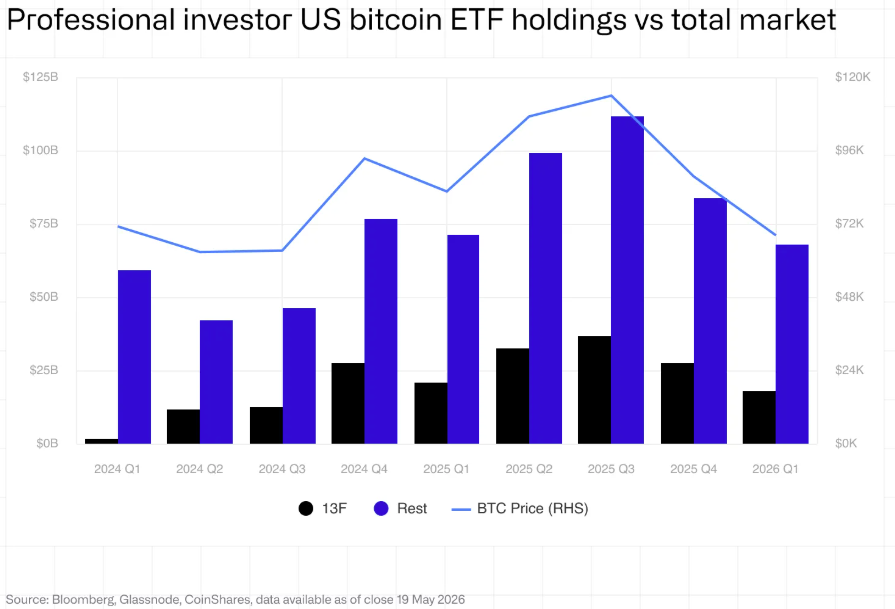
CoinShares digital asset analyst Matt Kimmell said the pattern resembles previous Bitcoin market downturns, when leveraged and tactical investors typically reduce positions as prices fall.
Hedge funds and brokerages led the selling
Data from CoinShares showed that hedge funds and brokerages accounted for roughly 96% of the decline in Bitcoin ETF exposure during the quarter.
While hedge funds reduced holdings by 31,400 BTC, brokerages cut another 18,800 BTC, representing a 53% decline from their previous positions. In contrast, investment advisors remained comparatively stable. CoinShares reported that advisors, who collectively held 150,300 BTC at the end of the quarter, reduced exposure by only 5.9%.
Banks moved in the opposite direction. According to the report, the sector added approximately 7,800 BTC worth of Bitcoin ETF exposure during Q1, more than doubling its holdings from the previous quarter.
The institutional pullback occurred alongside a sharp correction in Bitcoin. CoinShares noted that the cryptocurrency lost 22% during the quarter and briefly fell below $60,000 after extending losses that began late last year. At its lowest point, Bitcoin traded roughly 50% below its October 2025 record high above $126,000.
Additional analysis from Citigroup suggests ETF activity continues to play a major role in Bitcoin price performance. In a recent note, the bank estimated that spot Bitcoin ETF flows account for around 45% of weekly fluctuations in Bitcoin returns.
Regulatory developments remain a key focus
While ETF positioning weakened during the quarter, CoinShares highlighted several regulatory developments that could support digital asset adoption over time.
Among the measures cited in the report were ongoing efforts by U.S. regulators to clarify how oversight responsibilities should be divided between the Securities and Exchange Commission and the Commodity Futures Trading Commission. CoinShares also pointed to proposals related to the treatment of digital assets in retirement accounts.
Regulatory discussions have continued beyond the first quarter. Earlier this week, the SEC identified digital assets as a strategic priority through 2030 and stated in a draft policy document that it intends to establish a clearer regulatory framework for digital asset markets.
Attention has also remained on the CLARITY Act, a market structure proposal that would further define the responsibilities of the SEC and CFTC. CoinShares noted that the bill could create a more comprehensive framework for digital assets if enacted.
Separately, Citigroup said it currently assigns roughly a 50% probability to the legislation passing, although the bank believes the chances of approval this year have become less certain.
According to Citigroup, meaningful regulatory progress could improve investor sentiment, which has remained under pressure amid sustained spot Bitcoin ETF outflows.
Disclosure: This article does not represent investment advice. The content and materials featured on this page are for educational purposes only.



Be the first to comment