



TLDR
- Costco stock fell to $946.11, its lowest closing price since late January, marking seven declines in eight trading sessions.
- The drop followed a mixed Q3 earnings report where EPS missed by six cents, though revenue beat expectations.
- Analysts at Mizuho and Jefferies say Costco’s low-price strategy is key to member loyalty and long-term traffic growth.
- D.A. Davidson added Costco to its best-of-breed list, citing the warehouse model’s strong competitive moat.
- The stock trades around 42x forward earnings, but Wall Street still forecasts double-digit earnings growth this year and next.
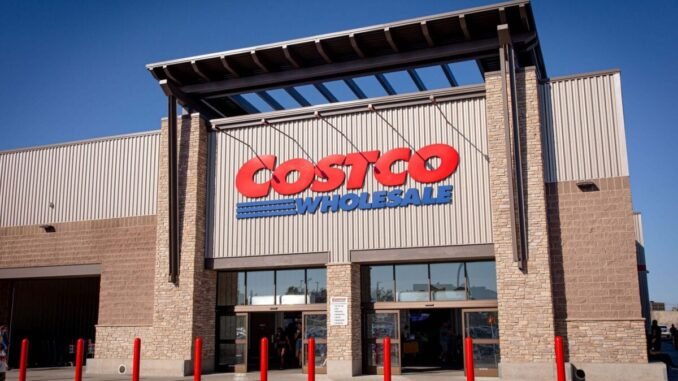
Costco Wholesale (COST) has had a rough stretch. The stock closed at $946.11 on Monday — its lowest close since late January — after falling seven of the past eight trading sessions.
Costco Wholesale Corporation, COST
That puts the stock down about 16% from its record closing high of $1,094.32, hit earlier this month.
Despite the selloff, Costco is still up around 10% year to date. But the recent slide has sparked a debate: is this a red flag or a buying opportunity?
The pressure started after Costco’s fiscal third-quarter earnings, released last Thursday. Earnings per share came in six cents below Wall Street estimates. Revenue, however, beat expectations, and the broader business showed continued strength.
Comparable-store sales rose 12% overall, driven in large part by strong fuel demand. Excluding gas, comps grew 6.6% — just a hair below the 6.7% analysts had penciled in.
What Analysts Are Saying
Mizuho analyst David Bellinger wasn’t spooked. He noted that Costco’s willingness to hold prices low is core to its identity — it’s how the company keeps renewal rates high and members coming back.

Jefferies analyst Corey Tarlowe backed that view. “Elevated gas engagement is reinforcing member loyalty and frequency, supporting both near-term comps and long-term ecosystem strength,” he wrote.
Yes, keeping prices low squeezes margins. But analysts see that as a deliberate trade-off, not a structural problem.
D.A. Davidson analyst Michael Baker took it a step further, adding Costco to the firm’s best-of-breed list following the selloff. He pointed to the warehouse club model’s competitive moat — barriers to entry, a focused product range, and predictable membership income.
Baker’s data tells an interesting story. Warehouse clubs make up just 5% of total U.S. retail, but have grown 6% annually since 2007 and 11% annually since 2018 — well ahead of retail and grocery overall.
“Costco has taken share from other warehouse clubs and in retail overall, growing 9% annually since 2007,” Baker noted.
The Valuation Question
Not everyone is ready to back up the truck. Baker himself flagged valuation as a concern. At roughly 42x forward earnings, COST isn’t cheap — even after the slide.
Some estimates put the trailing earnings multiple closer to 50x, which makes some investors uncomfortable given the current macro backdrop.
Still, Wall Street consensus calls for double-digit earnings growth both this fiscal year and next.
Costco has also returned $19.7 billion to shareholders through dividends over the past five years, plus another $3.2 billion in buybacks.
As of Monday’s session, COST was trading around $949.50.
🚨 Our MAY Stock Picks Are Live!
A new month means new opportunities. Our analysts have just released their top stock picks for May, highlighting companies with strong momentum that rank highly on our KO Score algorithm. We’re also now sharing trade ideas for both long-term and short-term investors, giving you more ways to spot potential opportunities in the market.
Sign up to Knockout Stocks today and get 50% off to unlock the full list and see which stocks made the cut.
Use coupon code Special50 for your exclusive discount!



Be the first to comment