


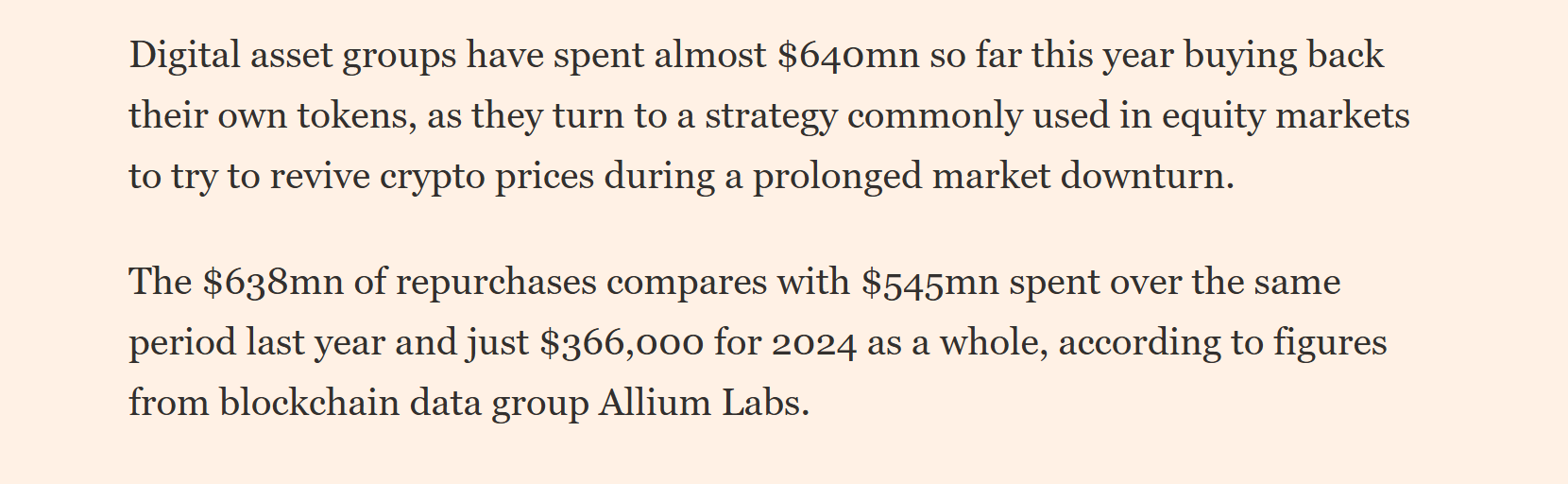
Token buybacks are becoming a much larger use of crypto protocol revenue. Against that backdrop, the revenue engine has deployed $638 million so far in 2026. This is a 17% increase from the $545 million deployed last year.
Thus, it’s worth noting that there is a growing commitment of capital to the purchase of tokens by project teams using their own revenues.
In fact, as compared to 2024, when it was $366,000, the current trend in higher expenditures does not indicate greater spread in the implementation of token buyback programs throughout the various cryptocurrencies.
Most of this growth is still because there are a limited number of high-revenue-generating protocols. These protocols allocate an increasingly large share of their fee-generated income towards repurchasing tokens.

This concentration is important since the long-term sustainability of buyback programs relies upon stable and recurring revenue rather than one-time draws on the treasury.
Therefore, until more protocols begin to generate enough fees, it is unlikely that there will be widespread adoption and use of token buyback programs by other protocols.
Hyperliquid and Pumpfun dominate crypto buybacks
Meanwhile, as the buybacks remain concentrated, Hyperliquid [HYPE] leads with roughly $370 million, while Pumpfun [PUMP] follows near $200 million through August.
Together, they account for nearly 90% of the total $638 million spent on buybacks so far this year. This leaves other buyback investors significantly behind, such as Chainlink [LINK] with $30 million and Sky at $30 million.
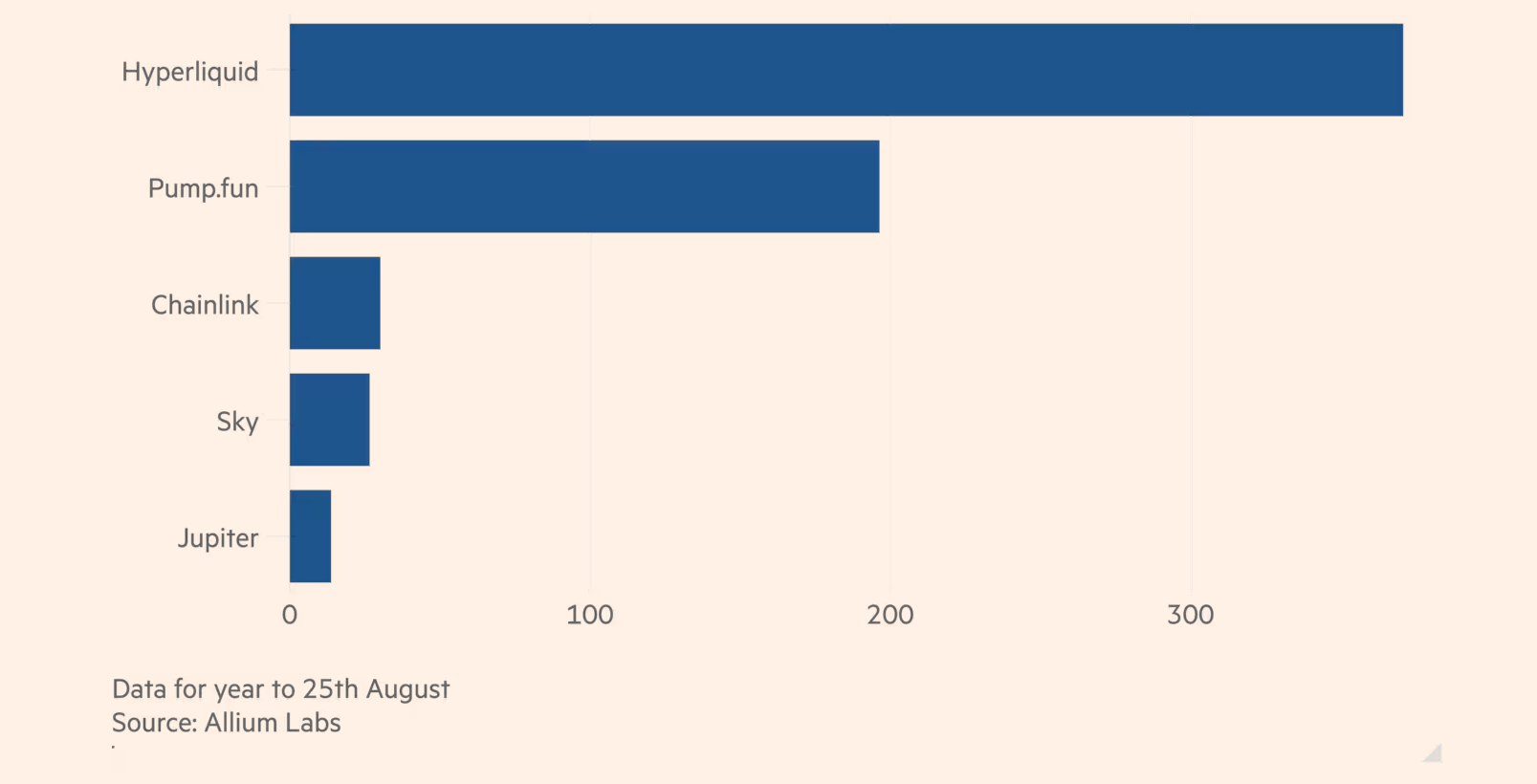
This is due to Hyperliquid dominating about 99% of trading fees generated toward recurring HYPE purchases. In turn, that allows strong usage to support the large-scale token repurchases.
That said, the ability to create such buybacks will be dependent upon their continued fee generation. More platforms will need to convert recurring income to continuous token demand for the adoption of buyback strategies.
Buyback yields face the dilution test
The rate of that concentration also leads to another question regarding if buybacks generate greater value than other token creation methods.
HYPE’s buyback yield on an annual basis is somewhere from 1.8% to 5.8%. This places them close to the 2% – 5% staking yield that is seen on many major networks.
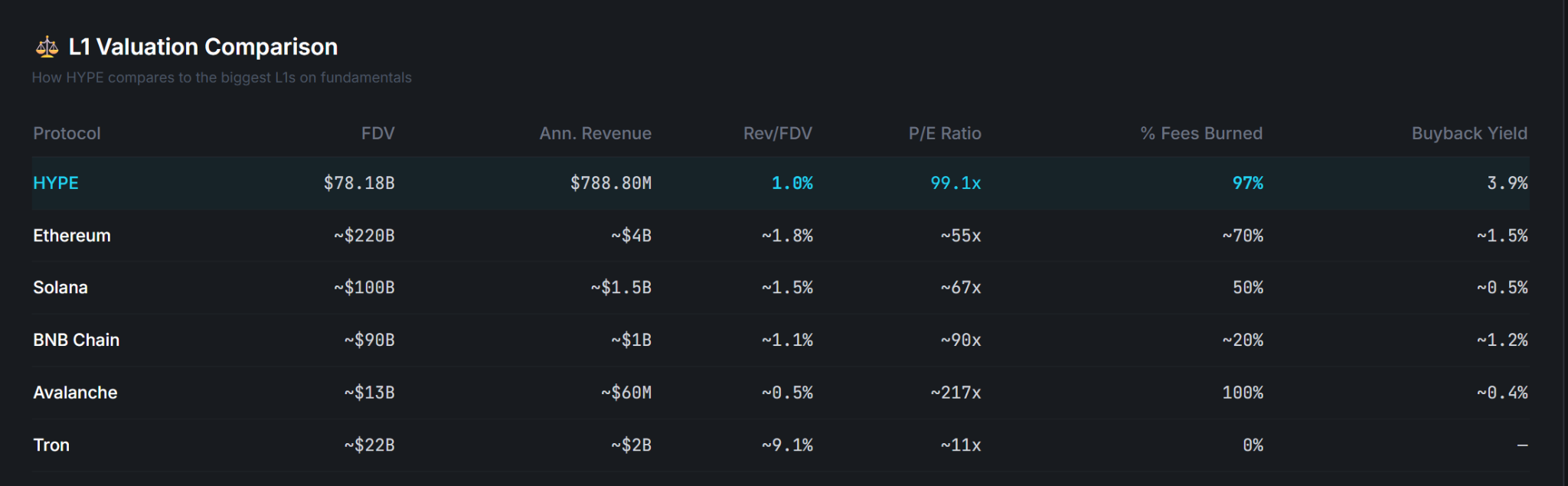
Still, PUMP can reach low double digits when platform fees rise. Yet, headline yields represent just one part of the overall picture of what happens with buybacks.
However, they may also result in a new token being issued for distribution.
Meanwhile, HYPE and PUMP remain forward inflationary despite substantial repurchases. In turn, this simply implies the fact that buybacks do not fully offset incoming supply. By comparison, burn-heavy tokens like BNB [BNB] can achieve net deflation.
Ultimately, buybacks create stronger value when recurring revenue removes more tokens than emissions introduce.
Final Summary
- Hyperliquid leads crypto’s $638 million buyback surge, but activity remains highly concentrated.
- Token buybacks create lasting value only when repurchases outpace emissions and recurring revenue sustains them.



Be the first to comment