



TLDR
- The Nasdaq fell 1.5% on Monday, dragged down by a 4.8% drop in semiconductor stocks
- South Korea’s KOSPI tanked nearly 9%, pulling U.S. chip stocks lower with it
- SK Hynix’s U.S. ADR debut turned ugly, falling over 9% on its first day of U.S. trading
- Bitcoin dropped over 2% to around $62,380 as traders raised bets on a July Fed rate hike to 50%
- Rising oil prices and U.S.-Iran tensions are stoking fresh inflation fears ahead of Tuesday’s CPI report
Wall Street had a rough Monday as chip stocks dragged all three major indexes into the red. Bitcoin and other cryptocurrencies also fell as traders shifted their rate expectations.
The Nasdaq closed down 1.5%. The S&P 500 dropped 0.8%, and the Dow Jones fell 138 points, or 0.3%. The PHLX Semiconductor Index took the hardest hit, dropping 4.8%.
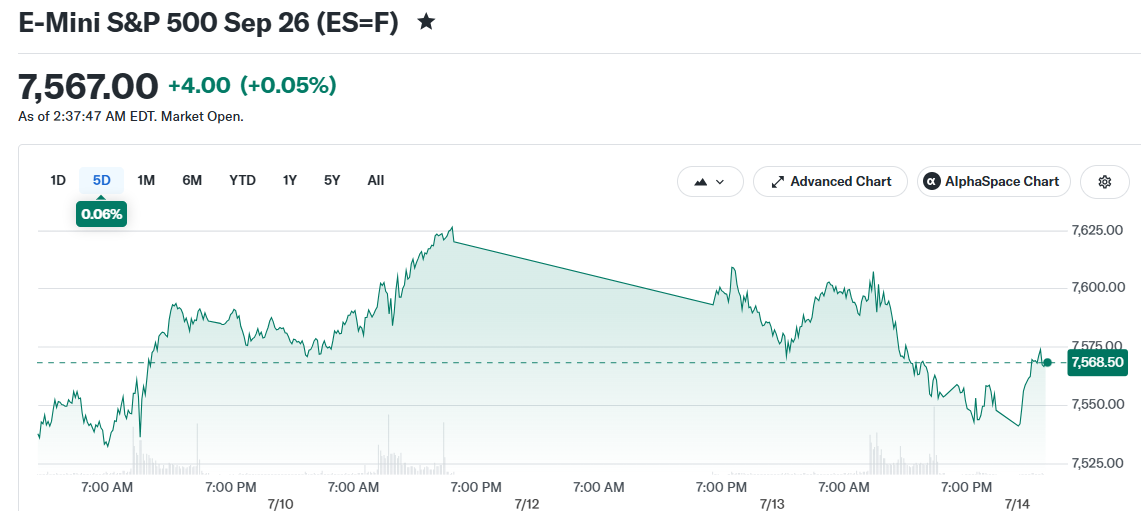
Strip out tech stocks, though, and the picture looked much calmer. The ProShares S&P 500 Ex-Technology ETF closed nearly flat.
Chip Stocks Hit Hard After South Korea’s Market Crash
The sell-off in semiconductors followed a dramatic session in South Korea. The KOSPI index ended Monday nearly 9% lower, sending shockwaves through global markets.
BREAKING: Korea Exchange (KRX) halted program selling for 5 minutes as KOSPI crashed -5%. pic.twitter.com/wfrubIF042
— Bull Theory (@BullTheoryio) July 14, 2026
SK Hynix made its U.S. trading debut on Monday via American Depositary Receipts. It was not a good start. The stock fell over 9%, mirroring its historic intraday drop on the Korean exchange.
Memory chip makers had been among the best-performing stocks of 2026. Monday’s session reversed some of those gains sharply.

Other chip-related names fell in sympathy. The sector-wide drop reflected just how closely U.S. investors are tied to global semiconductor supply chains.
Crypto Falls as Fed Rate Hike Odds Jump
Bitcoin dropped more than 2% in 24 hours to around $62,380. Ether, XRP, and other major tokens posted similar losses.
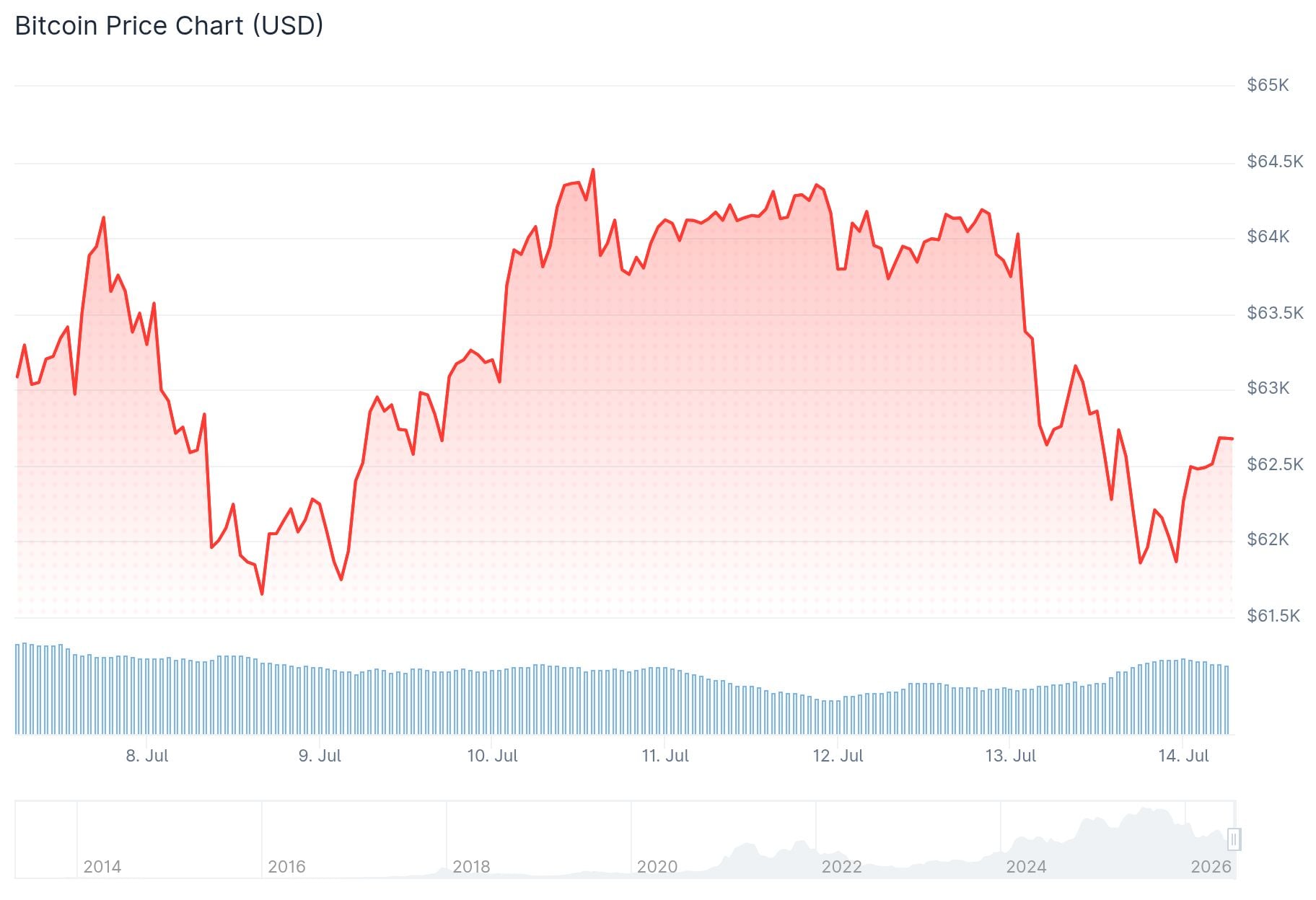
The sell-off in crypto came as money markets priced in roughly a 50% chance of a Fed rate hike in July. That figure was around 10% just days ago.
The shift followed comments from Fed Governor Christopher Waller, who suggested officials may need to raise rates to get inflation under control.
The two-year U.S. Treasury yield climbed to 4.29%, its highest point since early last year. That part of the yield curve moves closely with near-term rate expectations.
Rising oil prices are adding to the inflation concern. West Texas Intermediate crude has surged to nearly $80 a barrel from $67 at the start of the month.
The spike in oil is tied to escalating U.S.-Iran tensions. President Trump reinstated a blockade of Iranian vessels in the Strait of Hormuz and imposed a 20% fee on other cargo passing through the waterway.
Investors are now focused on Tuesday’s Consumer Price Index report. Economists expect headline CPI to come in below 4% annually, which would mark the first decline in both headline and core inflation since January.
Fed Chair Kevin Warsh is also scheduled to testify before Congress. Markets will be watching for any signals on the rate path.
Analysts at ING noted Warsh has room to hold rates steady even under pressure, and that any hike delivered could be reversed later with bigger cuts to follow.
Stop guessing and start investing with confidence. KnockoutStocks gives you the AI insights, market intelligence, and stock research you need to spot opportunities, cut through the noise, and make smarter investment decisions — all in one powerful platform.
Sign up today and get 50% OFF full access to our premium stock picks.
Simply use coupon code SPECIAL50 at checkout to claim your exclusive discount.



Be the first to comment