



What to know:
- Ethereum spot ETFs saw $82.4M net inflows June 8, including $17.8M from BlackRock clients.
- Inflows support market depth and give institutions compliant ETH exposure without direct custody.
- Growth comes amid ongoing debates on custody standards, staking, and compliance for digital assets.

Ethereum spot ETFs saw a net inflow of $82.4 million on June 8, which indicates the flow of institutional interest in gaining digital asset exposure through regulated investment vehicles did not stop. The figures highlight that more investors are buying into Ethereum-based financial products as blockchain technology is becoming a part of the traditional financial system.
Changes in Institutional Allocation
A large portion of the Ethereum ETF purchases made on that day were by BlackRock clients, indicating that asset managers and wealth platforms have remained active in the market. Purchase of regulated investment products backed by crypto enables institutional capital to gain exposure to ETH without having to deal with direct custody.
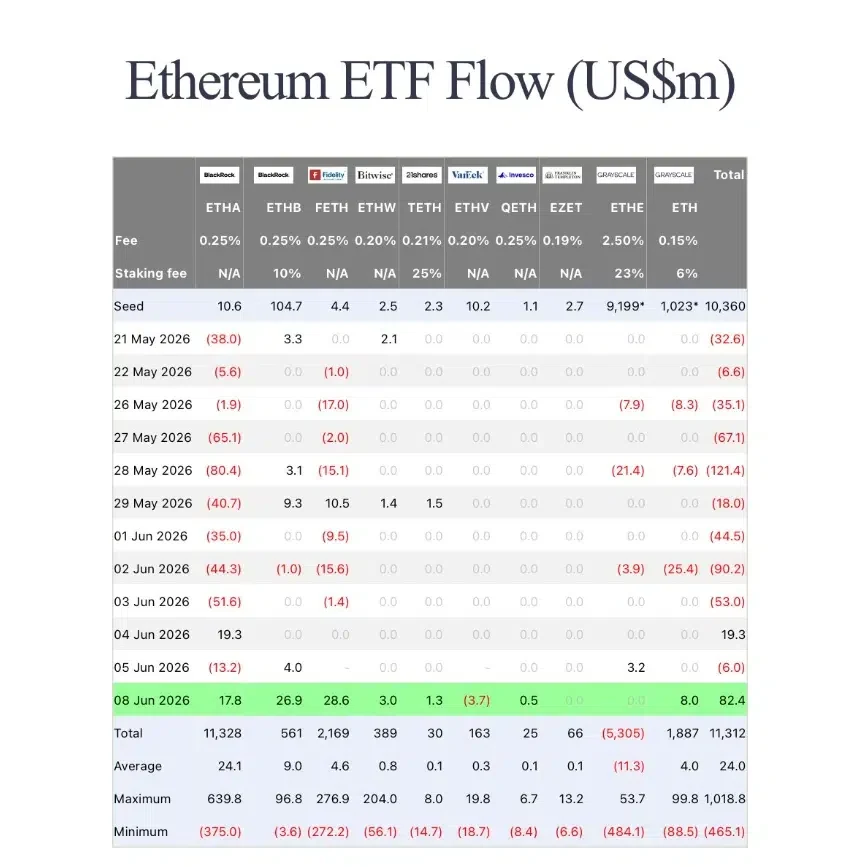

The growing popularity of regulated crypto investment products as a channel is also noted as a point of inflows. Portfolio managers are offered the compliance-friendly exposure that comes with Ethereum spot ETFs, and, at the same time, their investment aligns with the risk systems that are used in traditional markets.
Also Read: Key Ethereum Spot ETFs Reveal $53M Gain as BlackRock Adds ETH
Market Structure and Liquidity Effects
Basically, net inflows into Ethereum ETFs can have an impact on the liquidity in the market and order books on exchanges as authorized participants adjust their creations with the activity of the spot market. Of course, flows of ETFs do not directly control the usage of the Ethereum network, though continuous demand helps build market depth and can make large-scale transactions more efficient.
Also Read: Ethereum Spot ETF Inflows Hit 5-Day Streak Near $2,200 Price
Regulatory and Ecosystem Context
This rise is happening at a time when regulators are still debating the structures for digital assets and custody standards for spot crypto ETFs. Ethereum’s move to proof-of-stake, growing layer-2 adoption, and smart contract functionality are still a few of the things that institutions are considering when they think about long-term blockchain integration. That said, there are still issues like the ever-changing compliance requirements, handling of staking, and the general market risk sentiment influenced by macro that affects all digital assets.
Also Read: Bitmine ETH Treasury Grows With $213M Ethereum Buy


Be the first to comment