



Ethereum’s development has entered a new phase as researchers introduced ‘Lean Ethereum,’ a multi-year overhaul targeting the network’s long-term evolution. Rather than a single upgrade, the plan aims to replace the cores of the Ethereum [ETH] protocol over the course of approximately 3-4 years.
The plan introduces recursive STARKs, quantum-safe cryptography, multidimensional gas, and redesigned state architecture to improve scalability and security. Furthermore, developers expect H-star to become Ethereum’s final pre-Lean fork before broader changes accelerate.
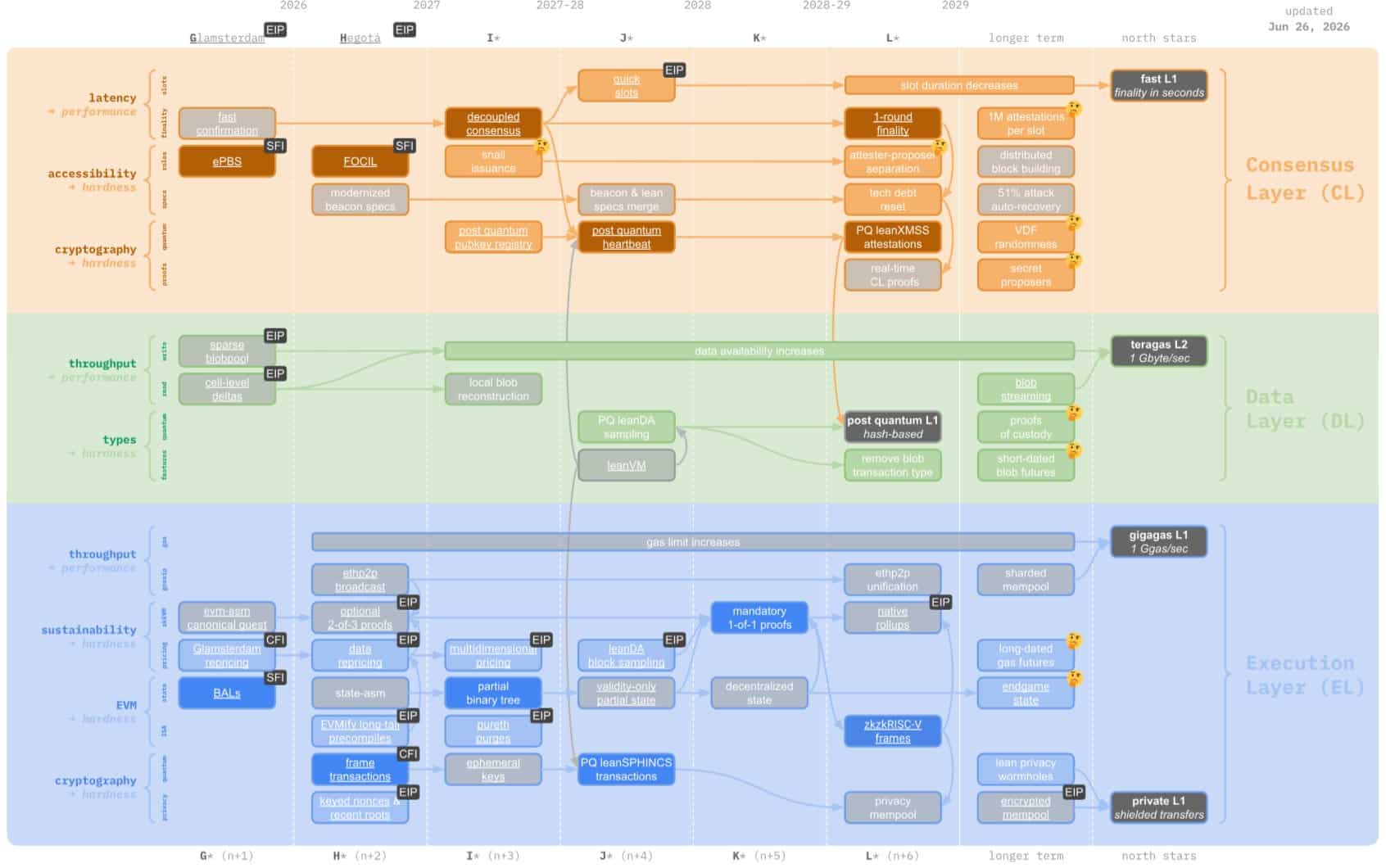
The roadmap also anticipates increasing the gas limits on the network. This includes using more scalable state architectures to improve finality speed and lower transaction costs.
Successful implementation of the Lean roadmap may allow it to scale the efficiency of the Ethereum network. Moreover, it will be maintaining backward compatibility, thereby allowing for continued growth throughout the next decade.

The infrastructure behind Lean Ethereum
Building on the Lean Ethereum roadmap, developers are now translating long-term goals into practical protocol upgrades. Currently, development is focused on post-quantum secure protocols as well as scalable state management.
These are two of the most significant long-term technical threats facing Ethereum. Rather than waiting for quantum computing to mature, developers have already launched PQ Devnets 0-4. These will test networks and evaluate quantum-resistant cryptography while preserving compatibility with existing wallets.
More importantly, Glamsterdam has laid down the technological groundwork for this future-proofing of Ethereum through ePBS, protocol simplification, and increasing gas limits above 200 million.
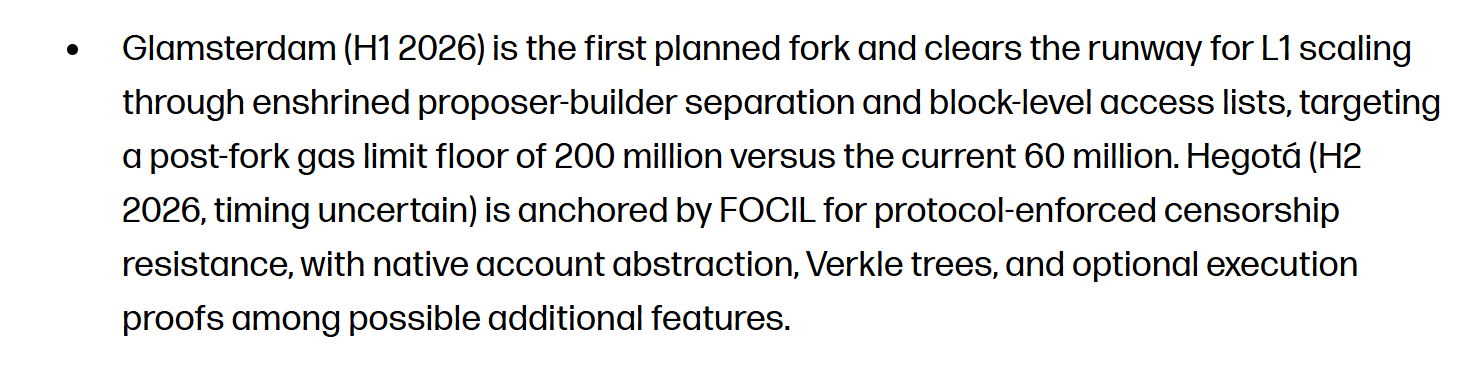
In addition to building the infrastructure needed to provide fast and secure transactions, developers are reworking how state is managed using Verkle trees, state expiration models, and scalable storage models. This involves reducing the cost of validation and shortening the time it takes for nodes to sync, while keeping decentralized functionality intact.
These are logical next steps since the underlying technology needs to mature before Ethereum can safely exapnd its scalability and decrease its costs over the next decade.
Together, both initiatives strengthen Ethereum’s long-term resilience while limiting disruption for existing applications.
Final Summary
- Ethereum is rebuilding its core protocol to deliver faster scaling, stronger security, and long-term network resilience.
- ETH aims to future-proof the network through quantum-safe upgrades and more efficient state management.





Be the first to comment