


AI tokens rallied hard, then cooled as traders questioned what’s real versus what’s just rotation. NEAR and FET sat at the center of this whipsaw, with quick spikes on product headlines, followed by choppier tape.
This piece gives you a practical checklist: what to verify before buying the dip, how to tell a durable catalyst from a headline, and how to size risk when profit‑taking shows up under the hood.
| Aspect | What to Know |
|---|---|
| Recent catalysts | NEAR AI announced private USDC payments for agents; FET/ASI launched an Agent Launchpad—both drew fast flows off the news. |
| Price action | NEAR and FET printed sharp intraday spikes during AI rotation, then faded as liquidity normalized. |
| On-chain context | Glassnode data shows realized profits outpacing fresh demand during the rally—classic cooldown risk. |
| Value capture | Headlines aren’t enough—map how each catalyst can drive fees, usage, or staking demand tied to the token. |
| Liquidity | Spikes are tradable, but market depth can vanish fast; plan orders and invalidations before chasing. |
| Time horizon | Rotation trades are days/weeks; product adoption plays are quarters. Choose one and size accordingly. |
| Risk factors | Smart‑contract risk, unlock schedules, regulatory headlines, and treasury sell‑pressure can all override narrative. |

Core Concepts
Editor’s note: In Q1–Q2 2026 I watched AI baskets rip on headlines, then stall as market makers widened spreads and on-chain profit-taking crept higher. A few desks I speak with traded the first NEAR and FET spikes well, but they only sized up when they saw usage or dev traction forming beneath the tape. That’s shaped my approach: treat the first candle as discovery, then demand proof that value can recycle to the token—fees, staking, or sticky liquidity. Anything else is attention risk, and in this tape it fades fast. — Darnell Whitaker
Narrative rotation can move prices without changing fundamentals. In AI tokens, the fastest money is reacting to product headlines and index flows. That creates windows for trades—but durability comes from shipped code, users, and a path to token demand.
Two questions frame the current NEAR and FET setup: what actually shipped, and how could that utility cycle back to the token? If you can’t connect those dots, you’re speculating on attention, not adoption.
On-chain and market structure data help filter noise. When realized profits surge relative to losses, it often signals distribution into strength. Pair that with liquidity checks and you’ll avoid chasing the top of a headline spike.
Glossary: signals you’ll see in this piece
- Narrative rotation: Flows chasing a hot theme (AI) across tickers, often reversing quickly once attention shifts.
- Realized P/L Ratio: On-chain metric comparing realized profits to losses; rising values can indicate profit‑taking into rallies.
- Agentic economy: Markets where autonomous AI agents transact, pay for compute/data, and coordinate with tokens or stablecoins.
- Confidential intents: Privacy‑preserving transaction instructions that hide amounts or counterparties while settling on-chain.
- Agent launchpad: A platform for spinning up tokens and liquidity for AI agents or micro‑applications.
- Liquidity depth: The volume that can be traded near the mid‑price without large slippage.
Step-by-Step Playbook
- Write a one‑line thesis: Specify how the catalyst could translate to users, fees, or staking demand for NEAR or FET—not just “AI number go up.”
- Confirm what shipped: Look for code, docs, or official posts. Treat previews and roadmaps as optionality, not core value drivers.
- Trace value capture: Map the flow from feature → usage → token demand (e.g., fees, burns, staking, collateral, governance requirements).
- Check on‑chain posture: If realized profits dominate and exchange balances rise, assume supply might meet you on spikes; scale entries.
- Probe liquidity: Review spot volume, spreads, and order book depth across venues. If depth is thin, predefine limits and don’t chase.
- Time‑box the idea: Rotation trades get days/weeks; adoption trades get months/quarters. Align stop‑losses and review dates accordingly.
- Size for error: Risk a small percent per idea; avoid doubling down just because “AI” is trending.
- Post‑mortem quickly: If the catalyst fails to move usage within your window, recycle capital without narrative attachment.
NEAR and FET: Signals That Matter Right Now
NEAR’s latest headline is a real product move: NEAR AI announced an integration with USDC and Confidential Intents to enable private stablecoin payments for AI agents on the NEAR stack (PR Newswire / NEAR AI). Privacy‑preserving, dollar‑denominated rails are a credible primitive for an agentic economy. The open question is whether this drives sustained transaction flow and developer adoption on NEAR in the next few quarters.
Price reacted fast. KuCoin’s news flash highlighted a sharp NEAR rally—about a 34% intraday jump on 23 May 2026 and roughly a ~50% one‑week gain around that period, with daily trading volume spiking to about $1.15B (KuCoin). That tells you attention and liquidity were present—useful for traders—but it doesn’t, by itself, guarantee a new adoption base.
On the FET side, the ASI Alliance introduced the “Agent Launchpad” on 20 May 2026—a platform for autonomous agents to issue tokens, raise liquidity, and auto‑list (Invezz). This is an explicit attempt to bootstrap micro‑economies for AI agents, a logical experiment if your thesis is that agents will transact with one another at scale.
FET also saw short, sharp intraday strength during the AI rotation; CoinMarketCap’s news feed flagged an ~11% spike on 26 May 2026 tied to sector rotation and product headlines (CoinMarketCap). The speed of these moves is the tell: fast money is active, but it can reverse just as quickly.
Crucially, on-chain context suggested supply meeting demand beneath the surface. Glassnode’s Week On‑chain (20 May 2026) showed the 30‑day SMA of the Realized Profit/Loss Ratio rising from ~0.4 in February to ~1.8 during the recent move—evidence that realized profits were outpacing fresh buy‑side demand (Glassnode). When distribution overlaps with narrative rotation, the next leg often needs more than headlines.
Pro tip: Treat first spikes on product news as discovery—then wait for proof of usage. If dev adoption or on‑chain activity doesn’t step up within your time box, assume the bid is narrative‑led.

Rotation vs Durability: How to Weigh Setups
Rotation trades are about reflexivity and positioning; durable trades are about cash‑flow, usage, or staking demand. The best AI setups pair both: a catalyst that first attracts attention, then converts to transactions or developer traction you can measure.
Below is a practical comparison of common approaches you can take in the current market.
| Strategy | Edge | When It Breaks | Best Used For |
|---|---|---|---|
| Momentum rotate | Rides flows from narrative baskets and headlines. | Profit‑taking and thin books create gap‑downs; late entries suffer. | Short‑term trades during sector‑wide attention spikes. |
| Catalyst swing | Positions ahead of confirmed product releases with dates. | Delays or vague deliverables; value capture doesn’t reach the token. | 1–4 week windows around shipping milestones. |
| Core accumulate | Builds over months where usage/fees/staking trend up. | Thesis drift; if KPIs stall, capital is trapped in underperformers. | Long‑only exposure to platforms showing steady adoption. |
| Wait for retests | Buys pullbacks once profit‑taking exhausts and liquidity returns. | Misses runaway legs; requires discipline and patience. | Risk‑aware entries after rotation peaks. |
How to apply this to NEAR and FET right now: treat the recent spikes as proof of attention, then seek second‑order signals. For NEAR, that could be developers trialing private USDC payments in agent workflows. For FET, it could be agents onboarding via the Launchpad with observable liquidity persistence beyond day one. Without those, the tape likely stays tactical.
Token Value Capture: Where Does the Demand Come From?
Investors often stop at “interesting product,” but tokens need explicit hooks. Ask these questions for each catalyst:
- Does the feature increase on-chain transactions that pay protocol fees or require staking?
- Are there incentives or mechanics that lock or sink the token (security, governance, or priority access)?
- Will users transact in the token or in stablecoins? If stablecoins dominate, what brings value back to the token?
- Is there a feedback loop—more usage leads to better liquidity, which attracts more developers, creating more usage?
For agentic rails (private USDC payments on NEAR), the near‑term monetization may favor stablecoin velocity. That’s fine if the chain captures fees or if staking demand grows with activity. For FET’s Launchpad, the unknown is whether agent micro‑tokens create durable liquidity or fragment it. Either scenario can work, but you need to see real users and volume that sticks.
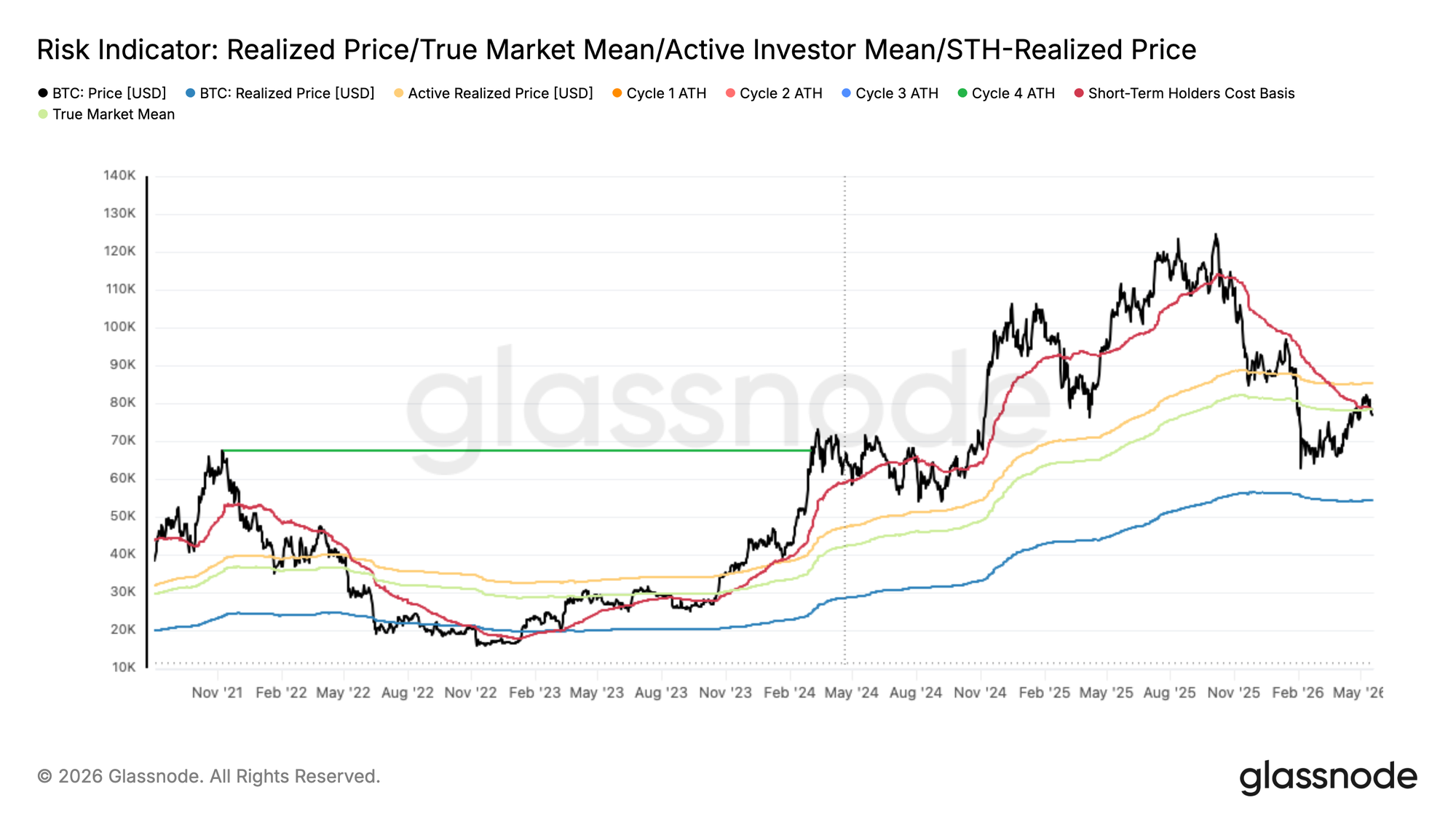
Glassnode chart (May 20, 2026) showing realized‑price / True Market Mean and a spike in the 30‑day realized profit/loss ratio — visual evidence that recent rallies were accompanied by profit-taking, not broad spot-demand. — Source: Glassnode
Pitfalls & Red Flags
- Headline without code: Announcements that lack repos, docs, or dev tooling often fade after the first spike.
- No token hook: Features that route value to stablecoins or third‑party rails without a tie‑back to the token can leave holders with attention risk only.
- Profit‑taking surge: When realized profits dominate, assume spikes invite distribution—scale entries or wait for retests.
- Liquidity air‑pockets: Thin books magnify reversals; avoid market buys during fast candles.
- Vague timelines: “Coming soon” guidance is not a catalyst; plan for slippage in dates and outcomes.
- Security and upgrade risk: New agent frameworks and privacy tooling can hide bugs; audit status and bug bounties matter.
For deeper coverage and daily context across stablecoins, infrastructure, and market structure, visit Crypto Daily.
Frequently Asked Questions
Are NEAR and FET still “AI plays” after the cooldown?
Yes, but the edge shifts from rotation to verification. Both have new product angles—NEAR with private USDC payments for agents and FET with an Agent Launchpad—but durability depends on measurable usage and token hooks.
What would confirm a more durable leg higher?
For NEAR: developer integrations of private stablecoin payments showing consistent on‑chain activity. For FET: agents launching via the platform with liquidity that persists beyond the first week. In both cases, rising activity that ties back to token demand helps.
How should I use on-chain data like the Realized P/L Ratio?
Treat a rising realized profit/loss ratio as a caution flag—if profits outpace new demand, rallies can be sold into. Pair it with liquidity checks to time entries or wait for retests.
Did the recent price spikes change the long-term picture?
They proved attention and access to liquidity, which are necessary but not sufficient. Without sustained adoption, these moves tend to normalize as fast as they erupted.
What’s the practical risk framework for trading these headlines?
Time‑box the idea, predefine invalidation, use limit orders in thin books, and keep risk per trade modest. Consider scaling rather than all‑in entries when on‑chain profit‑taking rises.
Does stablecoin‑first utility hurt token value?
Not necessarily. If the chain captures fees or if staking/governance requirements scale with activity, value can still accrue. The key is an explicit mechanism linking usage to token demand.
Where can I track catalysts and liquidity quickly?
Combine official blogs and repos for product updates with market dashboards for volume/depth, and reputable on‑chain analytics for profit/loss dynamics. Cross‑verify before reacting.
Disclaimer: This article is provided for informational purposes only. It is not offered or intended to be used as legal, tax, investment, financial, or other advice.




Be the first to comment