



NEAR has retreated roughly 19% from its recent peak near $6, slipping below $4.94 and approaching the rising channel boundary that has framed its September advance.
NEAR traded near $4.83 on October 14 at 16:01 UTC, down about 4% on its open daily candle. It had climbed to $5.18 earlier in the session before falling to a low near $4.8, leaving the attempted recovery short-lived.
The decline came during a broader crypto pullback after US inflation rose to a higher-than-expected 3.7%. A stronger inflation reading can reduce expectations for Federal Reserve rate cuts, potentially keeping borrowing costs elevated for longer. Higher yields can also make interest-paying assets more attractive relative to riskier investments, adding pressure to crypto.
NEAR was not alone in testing technical support. Zcash fell about 4.4% and approached Fibonacci support after slipping below its 50-day moving average. The simultaneous declines are consistent with wider market pressure, although they do not establish inflation as the sole cause of either move.
The retreat from $6 brings channel support closer
Since mid-September, NEAR has traded within an ascending channel, with pullbacks followed by recoveries toward higher prices. The latest rally reached almost $6 near the upper boundary before reversing sharply. Price is now back in the lower part of that channel, roughly 19% below its peak.
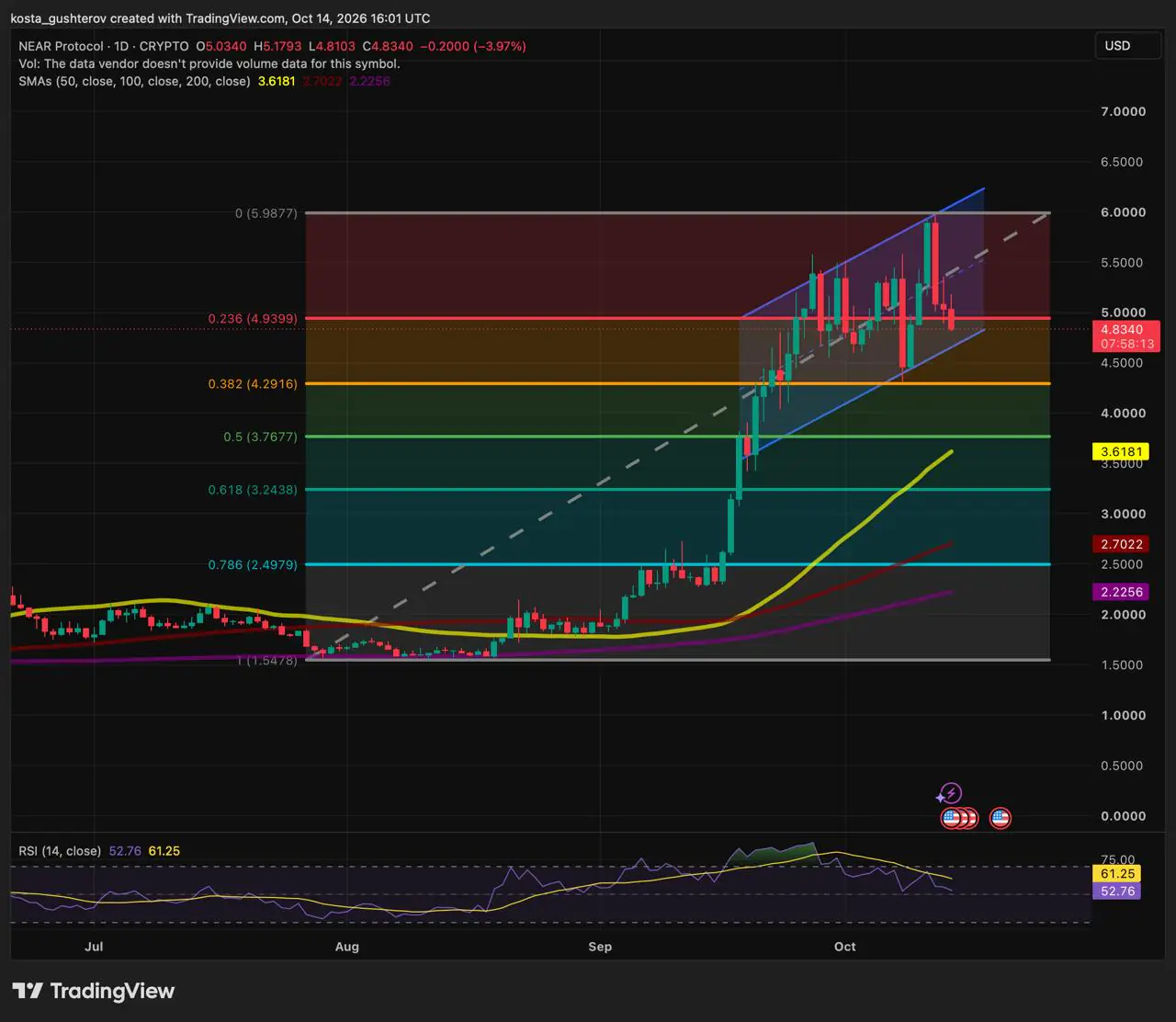
The rising lower boundary runs around $4.80 on the current chart. The latest candle is approaching it without a clear break beneath the line. Because the boundary slopes upward, the price needed to remain inside the channel increases over time.
An earlier October sell-off reached approximately $4.29 near the channel floor before NEAR rebounded toward $6. That recovery showed buying interest around the lower boundary. The current decline tests whether buyers can produce another rebound, this time from a higher support area.
$4.94 is the first recovery hurdle
The 23.6% Fibonacci retracement sits near $4.95, based on the advance from the $1.55 low to the $6 peak. Recent daily candles have repeatedly crossed this level, and NEAR’s latest decline has left it below the area again.
Holding the channel floor would help contain the pullback, but a recovery above $4.95 would put price back above the nearby horizontal level. Holding it during a subsequent pullback would provide stronger evidence of improvement than a brief intraday move above it.
Further up, the rising channel midpoint is an intermediate hurdle, roughly around $5.30-$5.50 across the recent sessions. The previous peak near $6 remains the higher resistance reference. Unlike that fixed high, the channel midpoint and upper boundary continue to rise over time.
Momentum has weakened during the retreat. Daily relative strength index, or RSI, was near 52.8, down from overbought readings and only slightly above its neutral midpoint of 50. Momentum remains marginally positive, but the reading does not confirm that the decline has ended.
A sustained channel break would put $4.3 back in view
A daily close below the lower boundary would weaken the ascending-channel setup. If a rebound then failed to recover the channel, the next downside reference would be the 38.2% Fibonacci retracement near $4.3.
That level also coincides with the earlier October sell-off low that preceded the rebound toward $6. Returning there would test an area where buyers recently reversed a sharp decline.
Below $4.3, the 50% Fibonacci retracement lies near $3.7. The rising 50-day simple moving average sits further down, near $3.62. These are separate references about $0.15 apart, with the moving average’s position changing each session.
The 50-day average remains above the rising 100-day and 200-day averages, reflecting the strength of the preceding advance. However, all three sit well below the current price and offer little immediate support if the channel breaks.
This article is provided for informational purposes only and does not constitute financial or investment advice. Technical levels and indicators are interpretive tools, not guarantees of future price movement.



Be the first to comment