


Wallet discovery, blockchain explorers and trading terminals are changing how token teams plan visibility after launch.
Key takeaways
- Token discovery is spread across screeners, wallets, explorers and trading terminals.
- Ranking systems respond to different combinations of market activity, attention and trust signals.
- Visibility should be measured separately from price performance or investment returns.
For years, “getting discovered” after a token launch largely meant appearing on a charting website and directing the community to one trading pair. That model is becoming outdated.
Sponsored
Crypto Prediction Markets

18+ · Gambling involves risk. Play responsibly.
Active traders now move through several interfaces before deciding whether an asset deserves closer attention. They may first see a pair on a DEX screener, compare liquidity and volume elsewhere, check wallet-native discovery, inspect an explorer and finally place a trade through a specialized terminal. Each surface adds another opportunity to be seen, but it also creates another set of requirements for token teams.
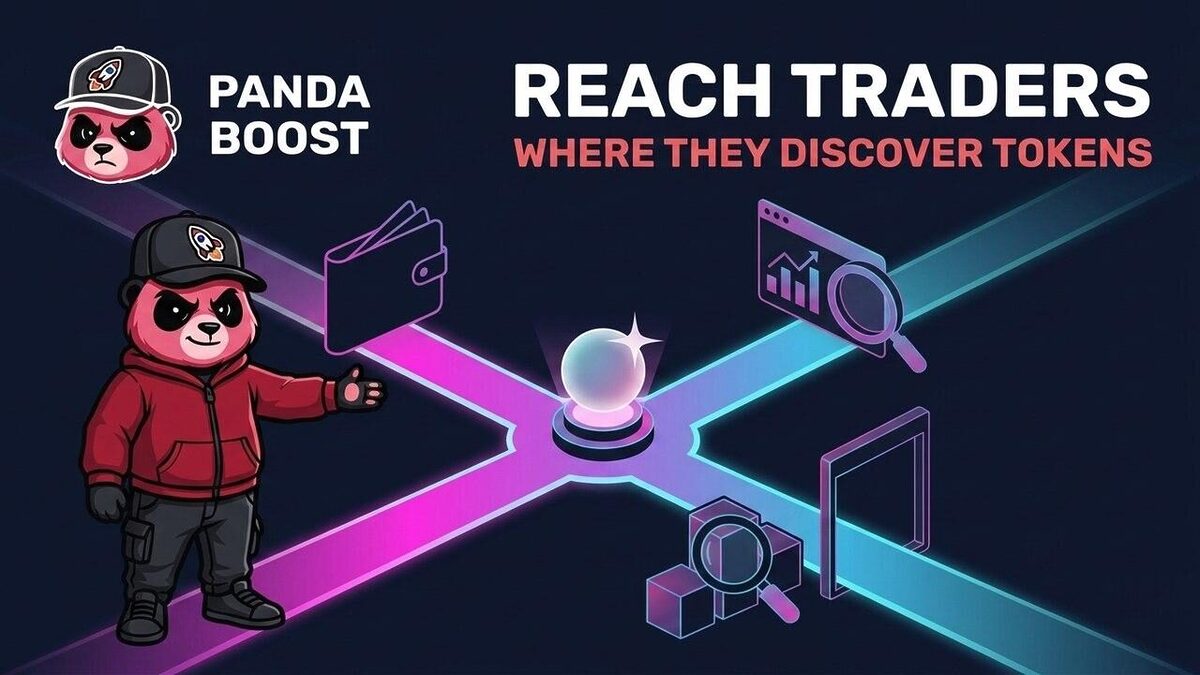
One token, several discovery surfaces
DEX Screener and DEXTools remain central to on-chain discovery, particularly when traders are watching new or fast-moving pairs. GeckoTerminal adds another pool-level view, while Phantom brings token exploration directly into a wallet environment. Solscan and other explorers support verification and research, and terminals such as Axiom, Padre and GMGN serve users who want discovery and execution closer together.
This does not mean a token should promote itself everywhere at once. The useful question is where its intended audience already spends time. A Solana community, for example, may follow a different discovery journey from traders focused on EVM markets, and even users on the same chain may prefer different interfaces.
A coherent campaign chooses the relevant surfaces first and then keeps the contract, pair and message consistent across them.
What ranking systems can observe
Trending lists are not fixed advertising slots. They are dynamic interfaces responding to changing inputs and competition.
DEX Screener explains in its Trending documentation that its score considers market activity, community engagement, and trust and credibility. The disclosed inputs include volume, liquidity, transactions, unique makers, holders, visitors, reactions and token information. It does not publish a fixed universal threshold that guarantees a position.
GeckoTerminal similarly combines on-chain context with attention. Its public API documentation describes trending pools as being determined through web visits and on-chain activity. Phantom’s Explore interface gives wallet users access to trending tokens and broader discovery features.
These examples show why visibility cannot be reduced to one metric. A pair needs to be usable, its public information needs to be complete, and campaign activity needs to reach the correct page or pool. The competitive environment can still change throughout the campaign.
Coordinating visibility without confusing the audience
The first operational task is verification. Teams should confirm the contract address, network, DEX and target liquidity pool before sending traffic anywhere. Promoting the wrong pool or dividing attention across several pair pages weakens the campaign and makes results harder to interpret.
The second task is readiness. Liquidity, volume, price conditions and token information should be reviewed against the requirements of the selected platform. If the market deteriorates during delivery, a live ranking can move or disappear regardless of how the campaign began.
Finally, visibility should be connected to a real reason for attention. Launch announcements, product releases, ecosystem integrations and active community events give traders context. Exposure without a credible next step may increase page visits without improving the quality of engagement.
Where PandaBoost fits
The PandaBoost platform is built for token launchers, marketers and agencies coordinating visibility across multiple crypto discovery surfaces. Instead of presenting trending as one generic service, PandaBoost offers platform-specific campaigns for DEX screeners, wallets, explorers and trading terminals.
The current lineup covers DEX Screener Trending, DEXTools Trending, GeckoTerminal Trending, Phantom Trending and Phantom Chat Trending, Solscan Trending, RugCheck Most Viewed, InsightX Trending, and Terminal Trending for Axiom, Padre and GMGN.
This structure lets a team select campaigns according to where its audience researches and trades. It also keeps the practical work centered on a verified token and intended pair rather than treating every platform as interchangeable.
PandaBoost’s explainer on how DEX Screener Trending works provides a useful example of that platform-specific approach. It separates DEX Screener’s disclosed signals from campaign requirements and makes clear that a live position can continue to move with the market.
Teams that prefer to verify delivery before making a paid order can start with 20 free DEX Screener reactions for the correct pair. PandaBoost currently provides the test to new users without requiring a card or wallet connection. The reactions demonstrate the service workflow, but they do not guarantee a specific trending rank.
Test the workflow: Get 20 free DEX Screener reactions for a token pair.
Measure exposure separately from performance
A visibility campaign should not be reported as proof of investment performance. Trending placement may help more traders encounter a token, but it does not guarantee purchases, price growth or returns.
Teams can evaluate the campaign using exposure-focused measurements such as the placement range, campaign window, visits to the intended pair and engagement with the token profile. Market outcomes—including price, volume and conversion—should be tracked separately and interpreted alongside broader market conditions.
That separation also improves decision-making. If visibility increased but engagement remained weak, the issue may be the message, token profile or audience fit. If the ranking changed after liquidity or activity fell, the team can identify an operational problem rather than assuming the platform failed.
A better post-launch workflow
Before launching a visibility campaign, token teams should:
1. Confirm the correct token contract and liquidity pool.
2. Complete public token information and security context.
3. Review the live eligibility conditions for each target platform.
4. Choose discovery surfaces that match the actual audience.
5. Coordinate the campaign with a genuine announcement or community event.
6. Monitor ranking conditions without treating visibility as a promise of price performance.
Token discovery is no longer concentrated in one place. The teams best positioned to navigate this environment will be those that understand each platform’s role, keep their campaign inputs consistent and measure exposure with realistic expectations.
DailyCoin’s Vibe Check: Which way are you leaning towards after reading this article?



Be the first to comment