



Author
Ahmed Barakat
Author


Share

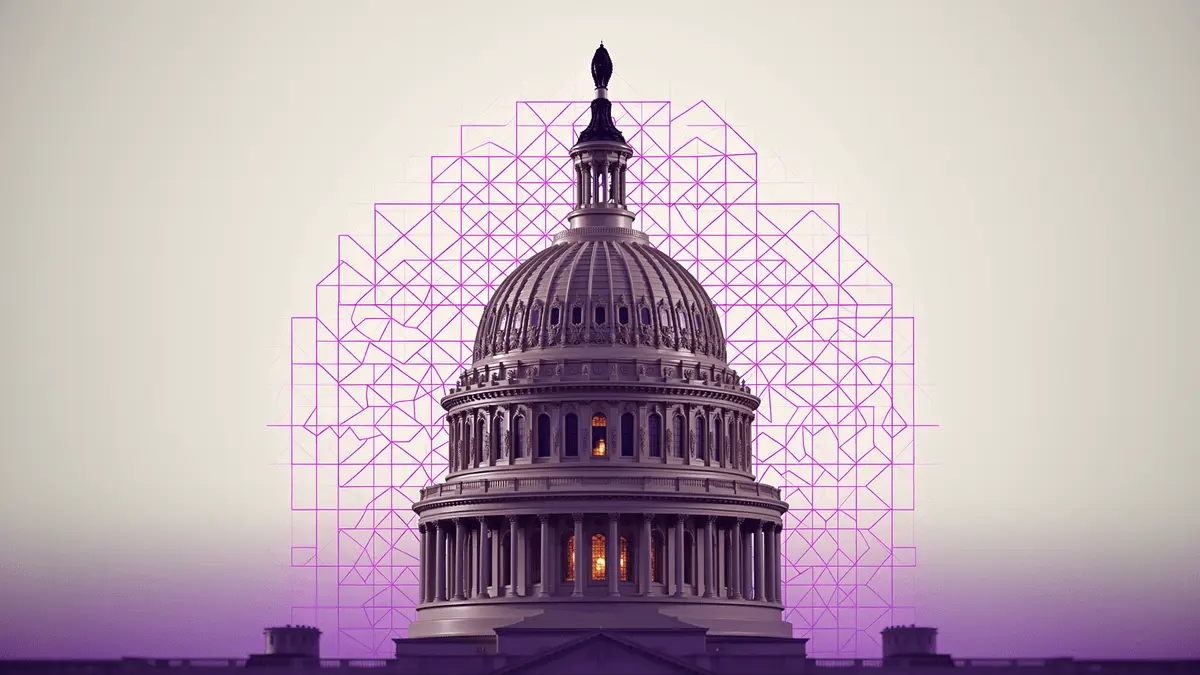
SEC Commissioner Hester Peirce said on the Searching for Mana podcast that she expects the CLARITY Act to pass the full Senate this summer, adding an authoritative internal voice to a timeline the market has treated as optimistic but far from guaranteed.
The bill cleared the House on a 294–134 bipartisan vote in July 2025 and advanced out of the Senate Banking Committee on a 15–9 vote in May 2026, meaningful procedural progress, but still short of a floor vote, a merged text, and a presidential signature.
That distinction matters. Peirce is not a neutral observer offering a general forecast, she is a sitting SEC commissioner and former Senate Banking Committee staffer who knows exactly how many gates remain.
Her saying this publicly signals that the agency’s leadership does not regard the summer timeline as aspirational cover, but as a live expectation.
The procedural math is tighter than the headline optimism suggests. The Senate Banking Committee text and a parallel Agriculture Committee bill, the latter focused on commodities and derivatives, must be merged before a floor vote. That merged text then needs 60 votes to clear cloture, a threshold that requires sustained bipartisan cooperation.
Democrats Ruben Gallego of Arizona and Angela Alsobrooks of Maryland joined all 13 Republicans in committee, which is an encouraging signal, but committee votes and floor votes are different arithmetic problems.
The urgency is not theoretical. More than 100 crypto firms and trade associations have signed a public letter pressing Senate leadership to move the bill forward, and Treasury Secretary Scott Bessent has framed passage as critical to maintaining U.S. financial leadership and the dollar’s reserve status.
Agency guidance is reversible, a future administration can undo every no-action letter and staff bulletin without legislation. Statutory clarity from this bill is not. That asymmetry is what makes the summer window consequential beyond a single news cycle for digital assets markets.
Discover: The Best Token Presales
CLARITY Act: How Crypto Oversight Gets Split Between SEC, CFTC, and the Howey Test
Peirce outlined the bill’s core mechanics plainly. The CLARITY Act would divide jurisdiction over crypto between the SEC and the CFTC based on a three-bucket classification framework.
Digital commodities, Bitcoin and Ethereum are the clearest cases, with Solana likely included, would fall under CFTC jurisdiction for spot market oversight, a structure that does not currently exist in statute. Assets that qualify as investment contracts would remain under SEC oversight. Permitted payment stablecoins would sit under joint supervision.
The Howey Test clarification is the piece with the most direct market-structure implication. Under current law, whether a token constitutes part of an investment contract depends on a fact-intensive analysis that the SEC has applied inconsistently, leaving issuers and secondary market participants exposed to retroactive enforcement.
The CLARITY Act would codify a clearer standard for when that test applies to a given token, resolving the ambiguity that has kept major Layer 1 tokens in a classification gray zone and suppressed U.S. exchange listings.
Peirce has long argued the prior enforcement-first approach made honest builders indistinguishable from fraudsters; this provision would give developers a statutory framework to build against rather than a body of contradictory staff positions.
The developer liability protection in the bill addresses a separate but related risk. Under the prior SEC regime, software developers faced exposure when third parties used their protocols in ways regulators later deemed unlawful.
The CLARITY Act would shield developers from that liability in cases where a decentralized network lacks a centralized intermediary exercising control, a protection that directly affects DeFi protocol builders and open-source contributors who currently operate under meaningful legal uncertainty.
Peirce framed the window directly: “This is a rare window where you have a lot of regulatory goodwill.
Use that to build things that last, things that matter,” she said.
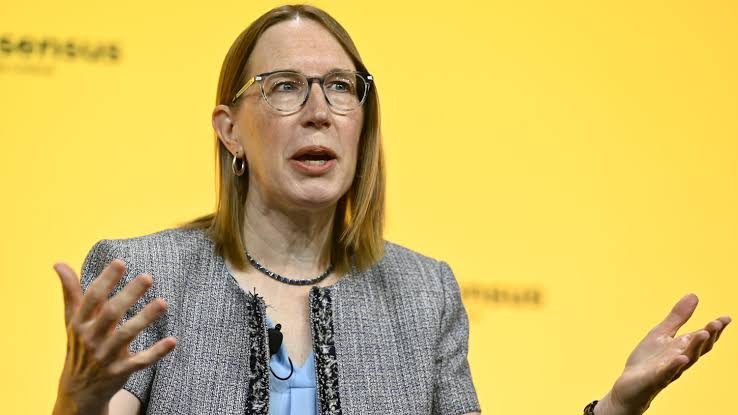
SEC Chair Paul Atkins reinforced the same directional signal in separate remarks to the Economic Club of New York and in a Fox News interview, saying President Trump had challenged the agency to make the U.S. the crypto capital of the world and faulting the prior administration for treating digital assets as suspect by nature.
Atkins pledged to bring innovators who had left the country back to build under American law, framing consistent with Peirce’s comments and indicative of aligned SEC leadership on the bill’s importance. The Trump administration’s deep financial exposure to the crypto sector adds political weight to that commitment beyond rhetoric.
Don’t Miss Out on Our $1,000 USDT Airdrop on ByBit


Be the first to comment