


Polymarket, the prediction market platform that became a household name during the 2024 US election cycle, has overtaken Hyperliquid in 24-hour fee generation.
The fee machines, compared
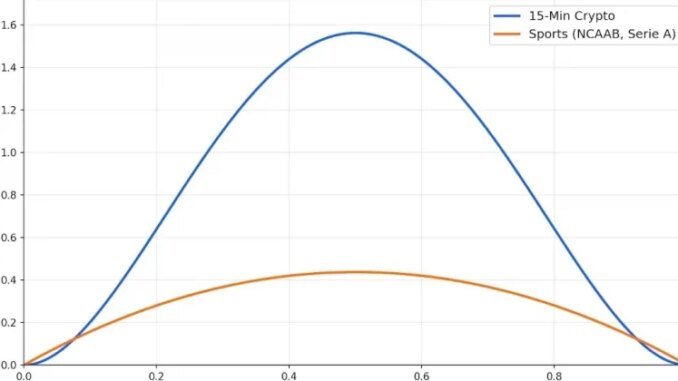
Polymarket runs a maker-taker fee model. Only takers, the side that removes liquidity from the order book, pay fees. Makers, who post resting orders, actually earn rebates. The fee rates vary depending on the market category, but the net result is roughly $1.2 million in daily gross taker fees.
After paying out those maker rebates, Polymarket retains around $573K in net protocol income per day. Annualize that and you’re looking at approximately $20.9 million in yearly revenue.
Hyperliquid’s prediction markets are marketed as “zero-fee,” a deliberate play to poach users from Polymarket by eliminating trading costs. Hyperliquid’s broader exchange ecosystem generates substantial income from its perpetual futures product, so it can afford to subsidize prediction markets as a loss leader.

Why Polymarket’s revenue matters more than you think
The broader prediction market sector is now estimated to be worth over $20 billion. Polymarket’s daily net income is about 60% of what Pump.fun generates and roughly 30% of Hyperliquid’s overall exchange income, according to recent protocol comparisons.
Polymarket plans to expand its fee policy across nearly all market categories by March 30, 2026. Right now, fees only apply to certain buckets of markets. Once the full rollout hits, the revenue ceiling gets meaningfully higher without needing a single new user to sign up.
What this signals for on-chain business models
Hyperliquid’s zero-fee prediction market functions as a customer acquisition cost: the bet is that once users are inside the Hyperliquid ecosystem trading prediction markets for free, they’ll eventually migrate to the higher-margin perpetual futures product.
Polymarket’s $573K daily net income comes from a product with genuine demand, generated without subsidizing usage through token emissions. The risk for Polymarket is event dependency — prediction markets surge during elections, geopolitical crises, and viral news cycles. The 2024 election was a major catalyst, and sustaining that engagement in a non-election year is the real test.
Polymarket’s fee expansion roadmap through early 2026 will show whether the platform can scale revenue without suppressing volume.



Be the first to comment