

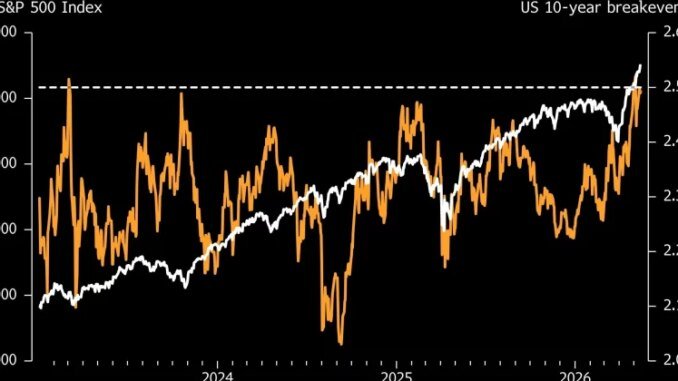

The S&P 500’s rally this year has been the kind of run that makes investors feel smart. Earnings came in hot, mega-caps kept delivering, and the broader market rode the wave higher. But Wall Street strategists are now flagging a familiar villain that could unravel the whole thing: inflation.
After months of relatively cooperative macro data, the inflation picture is getting murkier. Rising energy prices, climbing Treasury yields, and a market that’s suddenly repricing rate expectations have combined to create the kind of environment where rallies go to get tested.
The May 15 selloff told the story
On May 15, the major indexes took a hit that captured the shifting mood. The Dow dropped 1%, the S&P 500 fell 1.25%, and the Nasdaq slid more than 1.5%.
The catalyst was straightforward: surging energy prices stoked fears that inflation isn’t done being a problem. Higher oil prices feed directly into consumer costs, transportation expenses, and corporate margins. When energy moves, everything downstream moves with it.

Treasury yields rose in tandem, which is the market’s way of saying it thinks the Federal Reserve might need to keep rates higher for longer than previously hoped. For equity investors, that’s not just an abstract concern. Higher yields make bonds more attractive relative to stocks, raise the cost of corporate borrowing, and compress the valuation multiples that have been propping up growth names all year.
Earnings kept the lights on, but for how long?
The counterweight to all this anxiety has been a genuinely impressive earnings season. Companies have been beating Wall Street estimates at what analysts describe as unprecedented rates.
If input costs stay elevated because energy prices refuse to cooperate, margins get squeezed. If the Fed holds rates steady or pushes back on cuts, the financing environment tightens.
Rate expectations are the real battleground
Perhaps the most consequential shift happening right now is in interest-rate expectations. Traders are actively repricing central bank policy risks in response to the latest inflation pressures.
Earlier this year, the market was confidently pricing in multiple Fed rate cuts. That confidence has been eroding. Each hotter-than-expected inflation print, each uptick in energy costs, each basis point of yield added to the 10-year Treasury chips away at the rate-cut thesis.
Geopolitical tensions, particularly those affecting energy supply chains, add another layer of unpredictability. When energy is the inflation driver, the Fed’s toolkit becomes less effective because monetary policy can’t drill for oil.
Sectors that benefit from higher energy prices, like traditional energy stocks, could serve as natural hedges. Conversely, high-duration growth names, the ones most sensitive to rate expectations, face the steepest risk if yields continue climbing.


Be the first to comment