



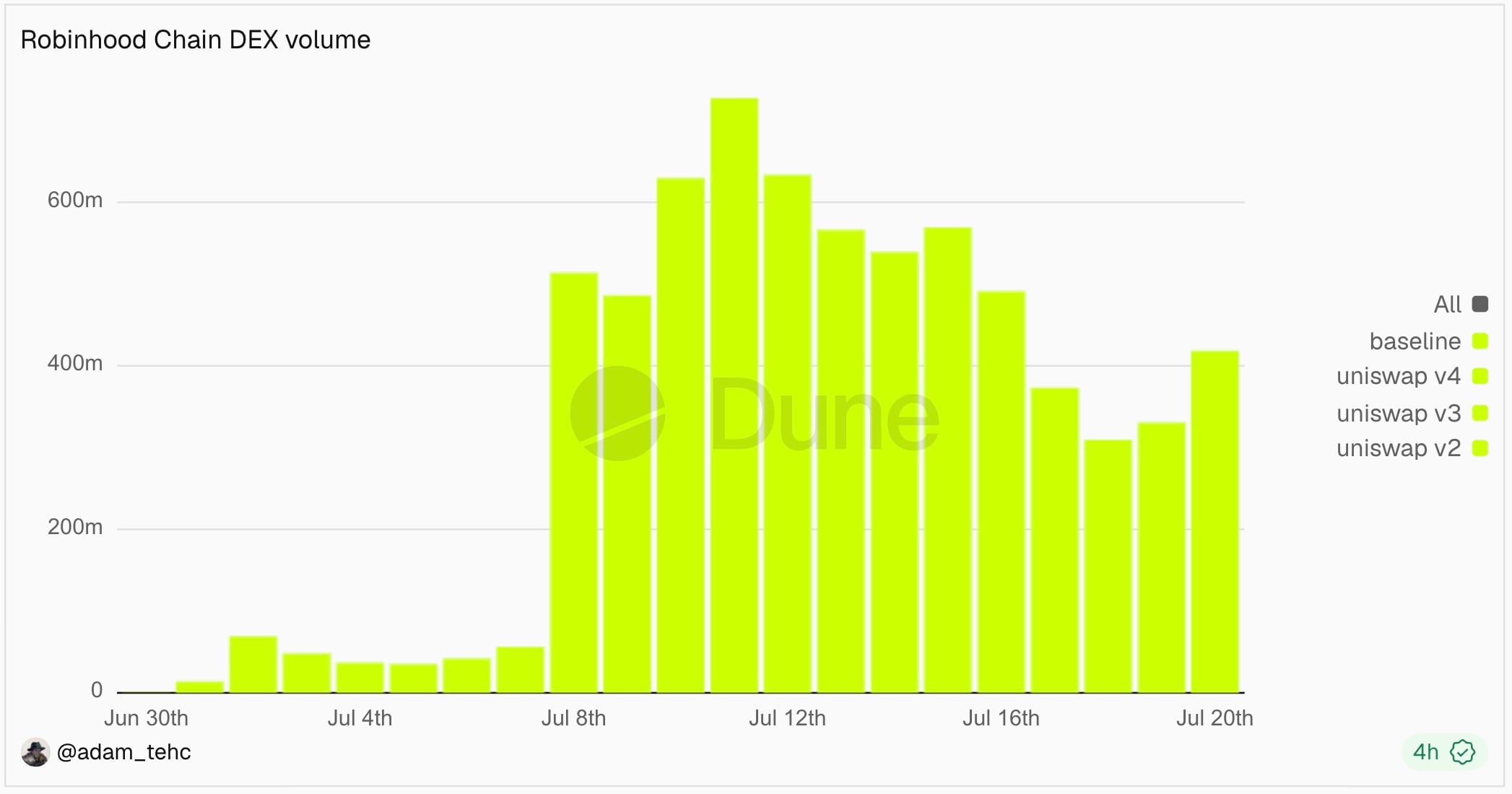
The new Robinhood Chain network took off again after a brief lull in mid-July. Onchain data from Dune recorded a sharp daily rebound as trading volume on decentralized exchanges within the ecosystem jumped to $428.7 million, returning the project to peak levels.
Over the past 24 hours, the network processed more than 3.3 million transactions, while the total number of unique wallets surpassed 1.68 million just three weeks after launch.
The latest surge in activity coincided with the official launch of agent accounts. The broker opened its platform to AI bots, allowing third-party algorithms to independently research the market and trade stocks directly through brokerage accounts.

Robots, memes and Robinhood’s money printer
The launch exposed Robinhood Chain’s main dilemma. Repeating the strategy used by Coinbase’s Base network, the broker is solving the “cold start” problem through hype around memecoins, which is also indirectly fueled on social media by company CEO Vlad Tenev himself.
Meanwhile, regulated products are being positioned as the long-term growth engine, including tokenized stocks and other real-world assets such as Apple and NVIDIA shares. Their total volume on the network has so far barely exceeded $17.7 million.

Still, the network continues to maintain strong financial indicators, with the total value of assets held on-chain reaching $700.9 million. However, most of this consists of stablecoins worth $433 million and deposits in the Morpho lending service totaling $200 million.
The broker simply embedded this DeFi tool directly into its main mobile application. Customers receive returns of around 7% annually through their regular brokerage accounts without even realizing that decentralized finance is operating underneath.
For ordinary investors, transfers cost next to nothing, averaging less than two cents. However, thanks to the enormous scale of operations and control over its own sequencer, Robinhood collected almost $2 million in fees while spending only around $12,000 to settle transactions on Ethereum.
You Might Also Like

As a result, the broker generated $1.75 million in net profit from operating the blockchain in just three weeks, demonstrating an extraordinary profit margin of around 90%.
Robinhood has built an ideal money printer that captures almost all fee revenue while retail traders keep circulating capital.
The only question is whether the fintech giant can move this crowd into serious tokenized real-world assets, or whether its blockchain will remain a high-tech speculation machine backed by a trusted brand, with the CEO himself acting as its main promoter.



Be the first to comment