

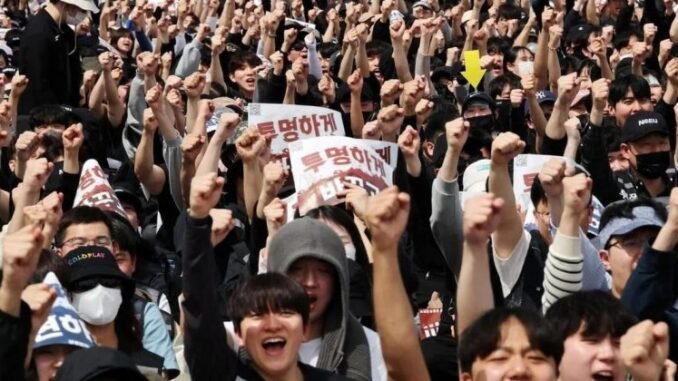

Samsung Electronics and its largest labor union are sitting across the table from each other in a dispute with global consequences. The stakes: a potential 18-day general strike starting May 21 that could knock out a significant chunk of the world’s semiconductor production.
The company’s chip division workers, numbering between 40,000 and 50,000, are threatening to walk off the job over disputes about performance-based bonuses and wage transparency. Analysts estimate that if production actually stops, Samsung could hemorrhage roughly ₩1 trillion, approximately $670 million, every single day.
What the union wants
The core demand is straightforward, even if the number is eye-popping. Union leaders want Samsung to legally reserve 15% of its operating profit for performance bonuses. They also want the removal of payout caps on those bonuses, plus greater transparency around how compensation decisions are made.
For context, Samsung is South Korea’s largest conglomerate and one of the most important links in the global technology supply chain. The company manufactures everything from memory chips to smartphone displays, and its semiconductor division is a linchpin for customers ranging from data center operators to consumer electronics makers worldwide.

Previous rounds of negotiations failed to produce an agreement. The union escalated to a strike vote, and the membership backed it.
The financial damage could be staggering
If the strike persists for its full planned duration, analysts estimate cumulative damages could exceed ₩30 trillion, roughly $20 billion. That’s not just lost revenue from halted production lines. It includes the cascading costs of restarting semiconductor fabrication equipment, which can take weeks to recalibrate after an unexpected shutdown, plus potential contract penalties and the reputational hit of being an unreliable supplier.
Markets have already priced in some of this risk. Samsung’s share price has dropped 9.3% amid the strike concerns, wiping billions off its market capitalization before a single worker has even set down their tools.
Samsung’s countermoves
Samsung isn’t sitting idle while the clock ticks toward May 21. On April 16, the company filed for an injunction to block the strike entirely. A court ruling is expected before the strike deadline.
Government intervention is also on the table. South Korean authorities have the legal power to prevent or limit industrial action in industries deemed critical to the national economy, and the Korean government has warned of the economic consequences while exploring legal avenues to prevent the strike from proceeding.
What this means for the chip market and investors
Samsung is one of only three companies in the world, alongside SK Hynix and Micron, capable of producing cutting-edge high-bandwidth memory chips at scale. A prolonged Samsung strike would tighten an already constrained supply market.
For Samsung investors specifically, the 9.3% share price decline suggests the market is treating the strike as a serious probability rather than a negotiating bluff. Investors should watch not just whether the strike happens, but what kind of deal eventually emerges. A generous settlement that guarantees 15% profit-sharing would meaningfully change Samsung’s cost structure going forward, particularly in years when operating profits are high.



Be the first to comment