



As of September 2026, analysis from Bitquery and Arkham Intelligence places the fortune attributed to Satoshi Nakamoto between 1.09 million and 1.17 million BTC. With bitcoin at levels bringing aggregate value near USD 100 billion, public discussion concentrates on figures.

My position differs: the relevant data point is not market value but the absence of on-chain movement. The immobility of coins associated with the Patoshi pattern is a structural variable for the market, governance, and security of the protocol. Ignoring it equals modeling bitcoin without one of its main contingent liabilities.
Attribution of coins to Satoshi relies on heuristics. The Patoshi pattern identifies a set of blocks mined between 2009 and 2010 through differences in the nonce, the structure of the coinbase transaction, and other parameters. Bitquery reconstructed the pattern and estimated 1.17 million BTC.

Heard of The Patoshi Pattern?
Some call it the most fascinating dataset in Bitcoin’s history, uncovering a unique mining fingerprint.
And, it was mapped by @SDLerner, @RootstockLabs Co-founder and Scientific Advisor. https://t.co/5qDLPWASuE
— Rootstock (@rootstock_io) May 4, 2026
Arkham Intelligence linked about 22,000 addresses and calculated 1.096 million BTC. The community should treat the figures as probabilistic estimates, not legal identity. No firm has demonstrated control of the keys. Serious discussion requires separating on-chain forensics from speculation about identity.
Bitquery data indicate that 99.86% of the coins in the pattern never moved. Approximately 1,550 BTC left the original set, mostly through housekeeping operations in 2009 and 2010. No transfers attributable to the pattern have occurred since December 2017.

The last operation directly linked to the stash is a transfer to Mike Hearn. For a market analyst, dormant supply reduces the available float. For a protocol auditor, the lack of recent signatures confirms that the keys have not been used in practice. Both readings are compatible.
If a portion of 1.17 million BTC reached exchanges, the impact would be material. The depth of books in spot markets and derivatives cannot absorb the volume without price dislocation. Risk does not depend only on a sale. A simple transfer to a known address would activate whale alerts, liquidations, and rushed hedging. The market should not value the coins as potential liquidity.
It should treat them as non-circulating supply with a low probability of movement but a relevant tail risk. Institutional VaR and stress testing models need explicit scenarios. Evaluation must distinguish passive holding from order execution. A movement to institutional custody does not equal a sale, but it alters expectations.
Bitcoin has no mechanism to confiscate, freeze, or redirect coins without cooperation from an economic majority. Any attempt to alter the property of UTXOs associated with Satoshi would require a controversial hard fork, coordination among nodes, miners, and exchanges.
I argue that social consensus would reject unilateral modification. Protocol neutrality is measured by the capacity to resist pressure on uncomfortable balances. If the community accepted rule changes for old coins, it would set a precedent for any address considered problematic. Satoshi immobility is, in practice, a test of credible neutrality.
The debate on quantum computing adds a layer. Many early coins use P2PK, with public keys exposed on the blockchain. A cryptographically relevant advance could allow derivation of private keys through Shor’s algorithm. The community discusses migrations to Schnorr, Taproot, and post-quantum schemes.
My position: quantum risk should not become an excuse to expropriate coins without consensus. A preferable path is to prepare opt-in activations, proof of reserves, and custody commitments for the rest of the market. Satoshi coins are a limit case, not a moral exception.
The absence of movement also raises custody and inheritance questions. If Satoshi died, the private keys could be lost, and effective supply would be lower. If Satoshi is alive, any decision to move funds would have legal, tax, and reputational consequences. ETF products, institutional funds, and regulated custodians operate with supply assumptions.

Uncertainty about 1.1 million BTC affects liquidity and collateral planning. Issuers should disclose sensitivity scenarios without speculating on identity. Transparency reduces the risk of panic. Succession plans, investment vehicles, and reserve auditors need to treat inactive supply as a separate variable.
The market assigns an implicit premium to bitcoin scarcity. Part of the premium rests on the belief that Satoshi coins will never move. The belief is reasonable, but it should not be confused with a cryptographic guarantee. Immobility is not encoded in the protocol.
It is a social expectation. If the expectation breaks, the impact would be larger than an equivalent sale from a corporate treasury, because it would affect the decentralization narrative. Analysts should separate market value from realizable value. Satoshi coins are not collateral, do not generate staking, and do not participate in DeFi.
Regulation of digital assets advances toward KYC, AML, and proof of reserves. Satoshi coins remain outside most registries because they have not moved. If they moved, they would trigger reporting obligations in multiple jurisdictions.
An exchange receiving pattern funds would apply enhanced due diligence. Governments could attempt sanctions or embargoes, but enforcement on private keys is technically limited. The best regulatory response is monitoring and cooperation, not symbolic measures. Legal certainty requires clear rules for inactive addresses.
The bitcoin decentralization narrative relies on verifiable facts: independent nodes, distributed miners, open development, and the absence of central control. Satoshi non-action reinforces the narrative. However, excessive dependence on a personal figure introduces narrative risk.
If the market needs Satoshi to never move funds in order to trust bitcoin, bitcoin neutrality is in doubt. Confidence should be based on consensus rules, cryptographic verification, and economic incentives, not on the conduct of a pseudonymous actor.
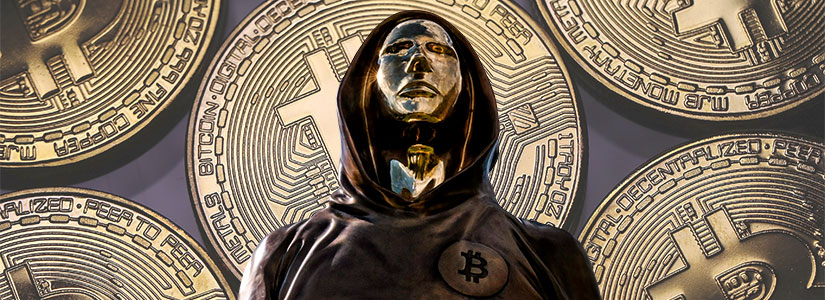
Three scenarios are possible. First: permanent immobility. The supply remains outside the float, the market discounts it, and the risk stays latent. Second: partial movement. A small transfer to an exchange or OTC desk activates volatility, but the market could absorb it. Third: massive movement. A coordinated sale or UTXO migration generates a liquidity crisis and a revision of assumptions.
In my reading, the probability of the third scenario is low, but the impact is high. Professional risk management requires preparation for tail events, not ignorance. Each scenario requires indicators: transfers to exchange addresses, UTXO changes, derivatives activity, option premiums, and OTC liquidity.
The Satoshi fortune, near USD 100 billion, is a contingent liability for the market and a test for bitcoin governance. The community should avoid two errors: treating estimates as certainty and using risk as justification to alter property.
The correct response combines on-chain research, institutional transparency, stress scenarios, and defense of consensus. Coin immobility is not a minor accident. It is a signal about the incentive architecture and the limits of collective action.



Be the first to comment