




TLDR
- Chuck Schumer introduced a bill to create an independent Anti-Corruption Bureau.
- The proposed bureau would have subpoena, enforcement, oversight, and reporting powers.
- The bill would let state attorneys general sue to recover corruption-linked funds.
- Trump family crypto ventures are estimated to have generated about $620M.
- CLARITY Act talks remain stalled over ethics rules and enforcement powers.
Senate Democratic Leader Chuck Schumer introduced legislation to create an independent Anti-Corruption Bureau, as President Donald Trump’s crypto-related income faces renewed scrutiny during CLARITY Act negotiations.
Schumer Bill Targets Executive Branch Corruption
The Anti-Corruption Bureau Creation Act would establish a seven-member federal agency with investigative, subpoena, oversight, enforcement, and public-reporting powers. The board would require Senate confirmation and fixed terms.
The proposal would allow the bureau to investigate corruption across the executive branch. The agency could also pursue recovery of money obtained through corrupt conduct involving presidents, senior officials, campaign figures, and major government contractors.
Schumer said the bill responds to concerns that public office can be used for private financial gain. He accused Trump of turning the presidency into a family business after returning to office in 2025.
Schumer said Donald Trump has “turned the presidency into the most profitable scam of his life.” He also said Republicans helped him “cash every check,” while Democrats want stronger guardrails around public office.
The bill would let private plaintiffs and state attorneys general sue in the name of the United States. Those lawsuits could seek recovery of funds tied to corruption by senior public figures.
Bureau Would Have Independent Funding
The proposed bureau would receive money through a dedicated Freedom From Influence Fund. The structure aims to protect the agency from presidential budget pressure.

The legislation would also create a special three-judge division of the D.C. Circuit. That division could appoint temporary bureau members if vacancies or obstruction threaten agency operations.
The bill would place the Federal Election Commission, Office of Government Ethics, and Office of Special Counsel under one structure. Supporters say that change would centralize anti-corruption enforcement.
Schumer said the bureau would have power to “follow the money” and “claw back corrupt profits.” The legislation is co-sponsored by Senators Jeff Merkley, Alex Padilla, and Andy Kim.
Several advocacy groups endorsed the bill, including Public Citizen, Common Cause, Campaign Legal Center, CREW, Protect Democracy, and Defend the Vote Action Fund.
The White House has denied that Trump has conflicts of interest. Democrats continue to point to Trump family business activity, including crypto ventures, as part of their broader ethics case.
Donald Trump Crypto Portfolio Draws Senate Attention
Trump’s family crypto ventures have become a central issue in digital asset policy talks. A wealth index estimate placed Trump family proceeds from crypto ventures near $620 million.
Those ventures include World Liberty Financial token sales, the Trump memecoin, NFTs, and a stake in a Bitcoin mining company. Recent financial disclosures also showed crypto-related income tied to WLF Holdco.
The disclosures listed more than $65.6 million from the sale of equity in WLF Holdco. They also showed $236 million in token-sale proceeds distributed by the same entity.
World Liberty Financial has drawn close attention because lawmakers are negotiating federal crypto market structure rules. Democrats have said the CLARITY Act needs stronger ethics language before it can win support.
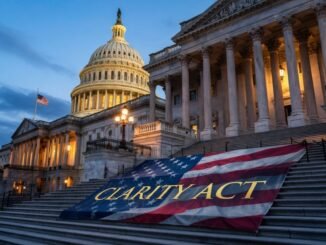
The CLARITY Act is a broad crypto bill designed to define market rules and agency roles. Senate talks remain slowed by disputes over ethics, enforcement, DeFi, stablecoin yields, and investor protections.
Trump reportedly agreed earlier this month to an ethics rule barring federal officials from issuing cryptocurrencies. The proposal would make the Department of Justice the main enforcer.
Some Democratic negotiators rejected that approach. Senator Angela Alsobrooks called the DOJ-centered proposal “an unserious offer” and said she would not support the bill in that form.
The ethics dispute remains one of the main barriers before a possible Senate vote in early August. Lawmakers must still decide whether enforcement powers should include state attorneys general




Be the first to comment