




TLDR
- Base case sees SOL reaching $350–$550 by 2031, driven by ecosystem growth and institutional participation
- Bull case targets $900–$1,500 if Solana captures major stablecoin payments and tokenization activity
- Bear case puts SOL at $80–$150 if adoption slows or competitors gain ground
- Probability-weighted 5-year price target sits at approximately $525 by 2031
- Solana’s speed and low fees position it well for consumer apps, DeFi, and payments
Solana has grown from an Ethereum challenger into one of the most active blockchain ecosystems in crypto. It’s known for fast transactions and very low fees, and it already hosts a wide range of live applications across payments, DeFi, NFTs, and gaming.
The question many investors are asking now is where SOL could be five years from now, by 2031.
Three price scenarios have been outlined based on how the ecosystem develops over that period.
In the base case, SOL reaches between $350 and $550. This assumes Solana keeps growing alongside the broader crypto market, attracts more developers, sees rising stablecoin usage, and benefits from increasing institutional access through products like spot ETFs. That price range would put Solana’s market cap at roughly $240 billion to $380 billion.
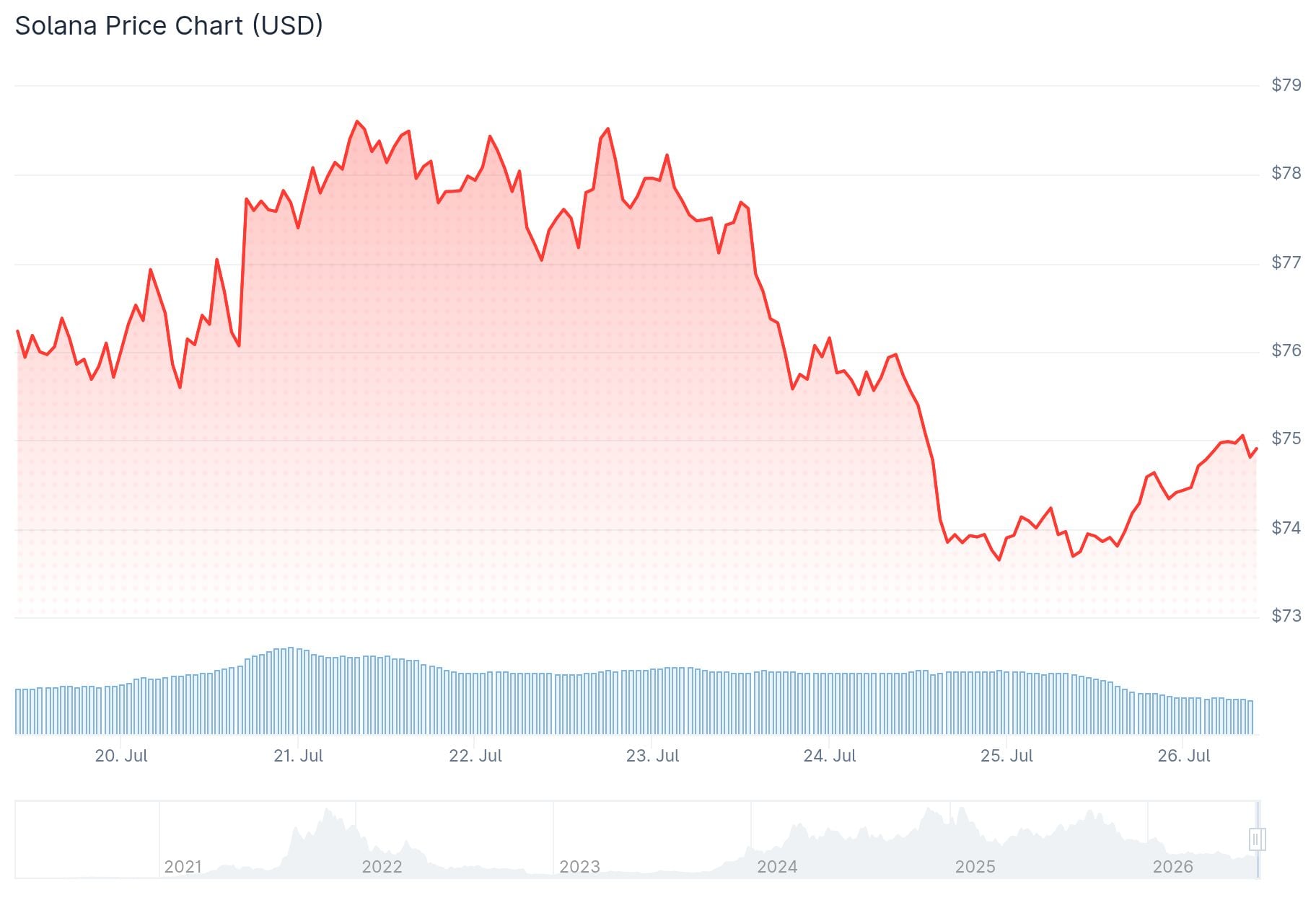
$SOL Is Sitting At The Most Important Level Of This Cycle#SOL is trading inside a high-confluence HTF demand zone where the previous breakout base, weekly support, and the 0.618 Fibonacci retracement all intersect.
This is the market’s decision point.
▶️ Hold $73 → Bullish… pic.twitter.com/3yJsuPBj1B— Crypto Patel (@CryptoPatel) July 25, 2026
The Bull And Bear Scenarios
The bull case targets $900 to $1,500 per SOL. This would require stablecoins to become widely used for everyday payments, tokenized real-world assets to move onto public blockchains, and institutional investors to increase exposure through regulated products. At those prices, Solana’s market cap could approach $620 billion to $1 trillion.
The bear case puts SOL at $80 to $150 by 2031. This scenario plays out if blockchain adoption grows slower than expected, or if Solana loses ground to Ethereum or newer Layer 1 competitors. Network reliability is also flagged as an ongoing area to watch, though improvements have been made.

Solana currently supports a high volume of on-chain activity, which sets it apart from many blockchain projects still looking for meaningful usage.
Key Strengths Driving Long-Term Outlook
Transactions on Solana settle in seconds. Fees stay extremely low. Developers continue building across payments, DeFi, gaming, and consumer products.
These qualities make Solana well-suited for high-volume applications that need speed and cost efficiency.
Institutional interest is also growing, with spot ETF products giving more investors regulated access to SOL.
The probability-weighted 5-year price target, combining all three scenarios, comes out to approximately $525 by 2031.
That figure reflects continued ecosystem expansion, rising developer activity, and broader crypto market growth over the next five years.



Be the first to comment