



StarkWare has performed a Bitcoin transaction that is claimed to be the first-ever quantum-proof Bitcoin transaction. It shows a significant move towards protection against possible future quantum computing attacks on BTC. It should be noted that it will not be necessary to fork the Bitcoin network to implement it.
This solution has been created by Avihu Levy, the head of the applications team at StarkWare. He uses the signature grinding approach that helps to avoid the risk of leaking private keys during a Bitcoin transaction while it is in the mempool.
StarkWare Targets the Bitcoin Mempool Risk
Transactions on Bitcoin can be pending in the mempool before they are mined and confirmed in a block. In the meantime, there could be some mathematical data that is revealed, which allows for an attempt to attack the encryption of the money by a powerful enough quantum computer.
This is where the signature grinding mechanism comes into play. Rather than picking up the first good enough signature, it creates many options and tries them all out until the signature does not reveal the public-key data.

It is a computationally intensive process that may take up to several hours. Nevertheless, StarkWare claims that it offers a solution for making transactions on the Bitcoin network resistant to quantum attacks without altering the Bitcoin protocol itself.
The transaction transferred 3.1 BTC utilizing the new method. The company sees this method as another opportunity for securing Bitcoin holdings against the evolving threat of quantum computing.
Also Read | Solana Price Breakout: $1.22B ETF Inflows Fuel Hope for $1,000 Rally
Unusual Transaction Required Miner Support
The transaction could not be carried out via ordinary Bitcoin nodes due to the unorthodox nature of the transaction. The transaction was instead submitted directly to a miner who agreed to accept it in a block, independent of the ordinary transaction process.
The transaction was carried out by MARA using its Slipstream system that enables non-standard Bitcoin transactions to be included.
As a result, the research conducted by StarkWare moved from being hypothetical to practical implementation on a Bitcoin transaction.
StarkWare Says a Permanent Fix Is Still Needed
Even with the success of the test, StarkWare does not consider signature grinding as the end-all solution to the quantum security problem faced by Bitcoin.
According to the CEO of StarkWare, Eli Ben-Sasson, this process is only reassuring, and the industry must prepare for something bigger. He likened the situation to having the lifeboats ready even when the whole ship should be ready in case of an emergency.
Furthermore, Levy has backed a proposed protocol-level change that will protect Bitcoin from quantum hacking at the level of all users within the network, without requiring any particular transactions.
It is not only the issue of theft of BTC that has raised this fear among users. If quantum computing becomes advanced enough to break Bitcoin’s cryptography, some coins may be rendered unspendable by users.
But for the time being, the transaction by StarkWare shows how quantum-resistant spending is possible without necessarily having to alter the rules of Bitcoin. The firm believes that a protocol-level fix will be necessary to bring quantum resistance to Bitcoin.
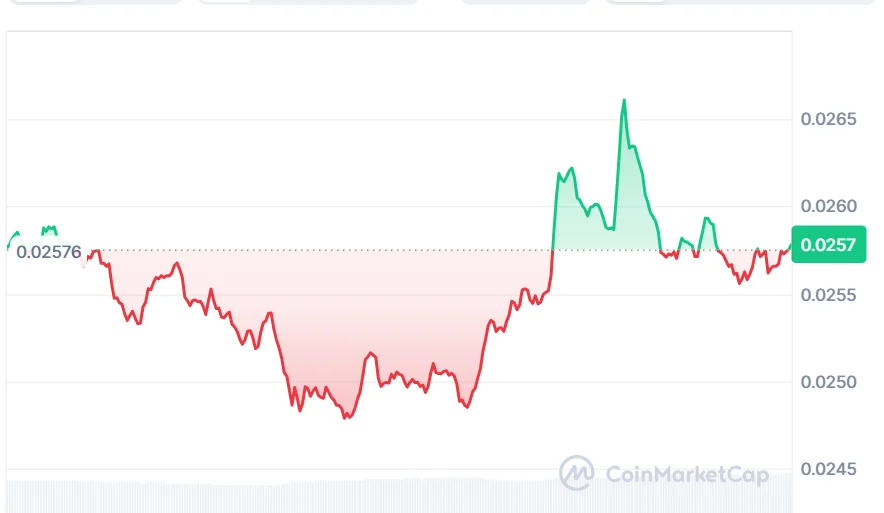
At the time of writing, STRK is trading at $ 0.02575 with a 24-hour trading volume of $ 19.14 million and a market cap of $ 179.59 million. STRK’s price decreased by 0.15% in the last 24 hours.
Also Read | Polygon Price Prediction: POL Targets $0.185 Amid Revolut’s EURR Launch


Be the first to comment