



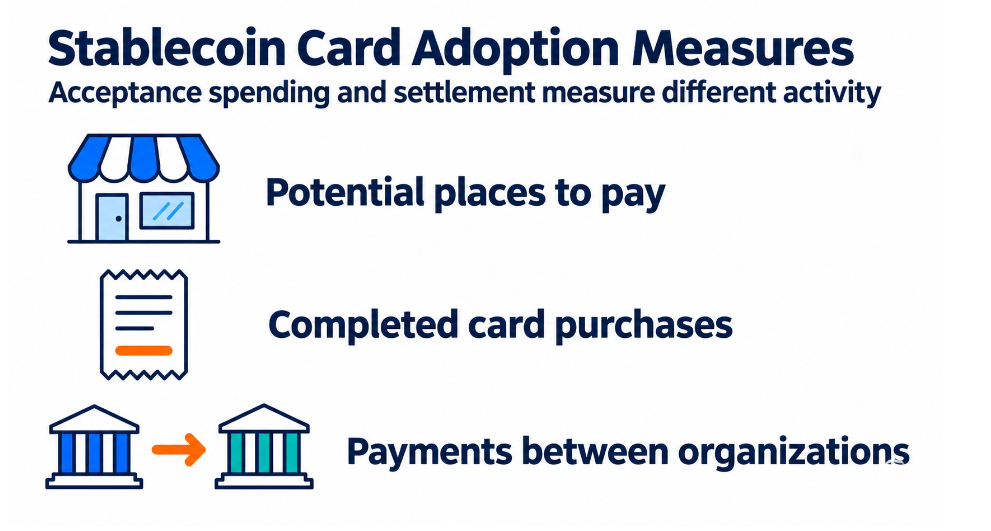
A stablecoin card can work at millions of shops without those shops ever receiving stablecoins. It can also reach that scale before many customers have used it. The acceptance network already exists; the new card connects to it. Actual use leaves different evidence: completed purchases, repeat customers, and spending over a stated period. A launch announcement may establish where a card could work while leaving unanswered how often people use it and what currency merchants receive.
In its April 30, 2025 announcement, Visa said cards issued through its arrangement with Bridge could be used at more than 150 million merchant locations accepting Visa. That figure described the existing network’s reach at the time. The release announced a way to spend stablecoin balances through that network, rather than retailers introducing cryptocurrency checkouts. It gave no completed-purchase total for the new card product and no count of regular users. The merchant number could therefore remain unchanged, even as use of those cards grew.
At the checkout
A grocery purchase can begin with a stablecoin balance while the supermarket processes an ordinary card sale. The customer selects the card, and the store charges for the groceries. The stablecoins can be converted into ordinary currency, so the merchant receives local currency, according to AlphaWire. The store can complete the sale without asking the customer to send tokens to a wallet. In this arrangement, stablecoins fund the purchase on the customer’s side; the retailer does not need to retain them.

If one supermarket branch receives a payment through that card and another never does, both can still belong to its acceptance network. Only the first has recorded use of the product. The branches also count as separate merchant locations, despite belonging to the same business. A total number of accepting locations cannot supply either a count of independent businesses actually paid or the number of customers making purchases. Those figures require transaction data for the particular card product.
Spending and participation
Money loaded into a card account may remain there unspent. A total combining account funding with purchases therefore measures more than retail spending. A report labeled simply “volume” leaves the activity unclear unless its definition identifies what was counted. The reporting period and included card products also set the boundaries of the result.
In a hypothetical month, ten customers spending $1,000 each would generate the same $10,000 total as a thousand customers spending $10 each. If the original ten doubled their spending the following month, the reported total would double with no increase in customers. That’s why it’s important for reports to break down this kind of detail, giving context to the numbers.
Purchase counts reveal frequency, but several transactions can belong to one person. Someone buying lunch daily may generate more transactions than several customers using their cards once. Issued-card counts include cards that may never be used, while active-card counts depend on the reporting window. One purchase during a year can qualify a card as active annually, while leaving it absent from most monthly counts. One customer may also hold several cards, so active cards and active people are separate counts.
Repeat purchases supply evidence that customers return. A growing monthly active-user total can still contain a changing population, with newcomers replacing people who stopped using their cards. Tracking the same customers across later months separates continued use from a succession of first purchases.
Spending comparisons also change when the sample expands. Adding providers to a dataset can lift its total, even if spending at the original providers stays flat. Reports covering the same products over equivalent periods can separate that expansion from changing activity. Deducting refunds can also produce a lower figure than reporting original purchases.
What settlement counts
In January 2026, Reuters reported that Visa’s stablecoin settlement volume had reached a $4.5 billion annualized run rate. This described settlement activity expressed at a yearly pace. It was not a completed year’s total of consumer purchases made with stablecoin-funded cards.
After a card purchase, payment organizations must fulfill their financial obligations to one another. That movement of funds is settlement. Participating organizations can use stablecoins for those payments, while the shopper and merchant use conventional currencies. Settlement growth can therefore come from organizations changing how they move money, without shoppers changing how they pay.
An annualized rate extends a shorter period’s pace across a year. It may express the scale of recent activity, but it does not show that the pace lasted twelve months. A completed annual total and an annualized rate can both carry a yearly dollar label while describing different periods of observation.
Spending and settlement can also cover different stages associated with the same underlying purchases. Adding the totals without identifying overlap can count the same economic activity twice. A combined figure would require evidence that the included payments were separate.
A provider’s monthly spending total and lifetime customer count cannot establish average monthly spending per active customer. That calculation needs an active-customer count for the same month, covering the same products. Using a lifetime count can include people who made no purchases during that month.
Reports on new developments in the stablecoin world should take all of these elements into account to ensure that numbers are given the correct meaning and provide useful information to readers everywhere.
Disclaimer: This is a paid post and should not be treated as news/advice.




Be the first to comment