


Domain rumors moved faster than any trailer last week. When fans noticed guildwars3.com shifting infrastructure, speculation spiked—then ArenaNet made Guild Wars 3 official days later. For Web3 MMO teams staring down trust headwinds, this wasn’t just gaming drama; it was a masterclass in how credible breadcrumbs prime a community without overpromising.
This article breaks down how AAA studios signal intent, why communities latch onto domain-level clues, and how Web3 MMOs can emulate those trust cues—safely and transparently. If you build or invest around on-chain games, use this to separate signal from noise and to architect your own credible launch footprint.
| Aspect | What to Know |
|---|---|
| What happened | ArenaNet announced Guild Wars 3 on June 5, 2026, after domain activity drew attention; the official post confirmed the sequel’s direction (ArenaNet / GuildWars3.com). |
| Domain tea leaves | guildwars3.com was updated June 5 and began pointing to AWS name servers, a pre-reveal signal fans cited as a tell (Mogaz). |
| Economic clarity | Studio head Colin Johanson said GW3 won’t use a subscription or paid battle pass, positioning it as buy-and-play—clear messaging that reduces confusion (PC Gamer). |
| Why it matters to Web3 | AAA-grade signals—domains, verified announcements, consistent economic messaging—shape expectations. Web3 MMOs need similar cues to cut through skepticism. |
| 2026 backdrop | Several studios have eased off blockchain features; Ubisoft began winding down Web3 elements in Champions Tactics in late May 2026 (BlockchainGamer.biz). |
| Action for teams | Codify a signaling plan: domain hygiene, verifiable newsroom, technical breadcrumbs, transparent economy, audit trails, rumor-response SOP. |

Communities are pattern-recognition engines. In MMOs, especially with multi-year arcs, players scour small breadcrumbs—domain records, CDN shifts, job listings—to forecast what’s coming. AAA studios understand this and leave a trail that’s professional, consistent, and verifiable. The result: rising attention without committing to dates or features prematurely.
Web3 MMOs face a harder version of the same game. Beyond typical launch uncertainty, they battle smart-contract risk, token speculation, wallet UX friction, and regulatory smoke. Without intentional signaling, rumor cycles fill the gap—sometimes fueled by market actors with misaligned incentives.
Recent events offer a blueprint. ArenaNet’s June 5 reveal for Guild Wars 3, backed by an official post and tidy economic message, followed domain updates that fans had already noticed (ArenaNet / GuildWars3.com; Mogaz). Even before features are detailed, clarity around business model reduces confusion and rumor amplification—contrast that with many Web3 launches where token or pass ambiguity drives speculation.
Equally relevant is the 2026 retrenchment in blockchain gaming. When large publishers pause or sunset wallet features, communities grow more cautious. Ubisoft’s decision to wind down Web3 elements in Champions Tactics underscored this climate (BlockchainGamer.biz). In a trust-deficit market, AAA-quality signals aren’t polish—they’re survival.
Glossary: Signals That Communities Read
- WHOIS / Registry Data — Public domain ownership and update records that can hint at studio control and timing.
- NS (Name Server) Change — Moving a domain to providers like AWS or Cloudflare; can precede site launches or infra consolidation.
- CDN/CSP Headers — Content delivery or security policy changes operators spot via network tools; weak signals of staging.
- Press Embargo — Coordinated time when outlets can publish; often aligns with site flips and social teasers.
- Proof-of-Ship — Verifiable changelogs, signed commits, and build hashes that show progress without hype.
- Buy-and-Play vs F2P — Economic framing that sets monetization expectations early and reduces rumor volatility.
Step-by-Step Playbook
- Secure the domain footprint early. Register exact-match and common typos, lock WHOIS privacy where appropriate, and set up DNSSEC. Publish a public registry contact that maps to your verified corporate entity.
- Stand up a verifiable newsroom. Host a /news or /press hub on your primary domain with signed blog posts, staff bylines, and mirrored posts on verified social accounts.
- Coordinate technical breadcrumbs. Time NS changes, SSL issuance, and staging-to-prod flips alongside official teasers so sleuths see real, consistent movement—not random noise.
- Be explicit about your economy. State if you’re buy-and-play, F2P, or hybrid; clarify whether any token exists and what it does. ArenaNet’s buy-and-play message for GW3 shows clarity lowers speculation risk (PC Gamer).
- Publish audit and repo trails. Share smart-contract audits, versioned changelogs, and code-signing policies. If closed-source, at least publish cryptographic proofs of build integrity.
- Set a rumor-response SOP. Maintain a fast, friendly clarification cadence. Acknowledge community sleuthing; confirm or refute with links to the newsroom and issue trackers.
- Instrument a public status page. Show uptime, planned maintenance, and deployment windows. For Web3, add indexer, RPC, and marketplace status to reduce confusion.
- Tag partners the right way. Announce exchanges, validators, and marketplace partners with reciprocal links and signed statements to prevent fake co-signs.
Signal vs Noise in Domain Clues
Not all breadcrumbs are equal. Communities often over-index on easily visible artifacts like WHOIS updates while underweighting harder, higher-confidence signals such as verified corporate filings or signed announcements. Here’s a simple way to triage.
| Artifact | Signal Strength | What It Hints | How to Validate |
|---|---|---|---|
| NS change to major provider (e.g., AWS) | Medium | Infra prep, staging, or consolidation | Check SSL issuance, HTTP headers, and matching subdomain activity |
| WHOIS update / registrar transfer | Low–Medium | Ownership housekeeping or new launch window | Cross-reference with corporate entity and past cadence |
| Official newsroom post | High | Confirmed direction or milestone | Verify signature, staff byline, and mirrored socials |
| Press previews with embargo | High | Coordinated marketing beat | Look for multiple reputable outlets publishing simultaneously |
| Trademark/ratings filings | Medium–High | Imminent marketing assets or launch regions | Confirm via official databases and company counsel notes |
ArenaNet’s sequence—domain updates fans noticed, then an official announcement—shows how mid-strength clues set the stage but don’t substitute for a signed reveal (ArenaNet / GuildWars3.com; Mogaz).
Pro tip: Pair every technical breadcrumb with a verifiable human signal (named spokesperson, signed post, partner co-statement). Machines whisper; people confirm.
Business Models Speak Louder Than Buzz
Monetization is a community signal. Players can forgive missing features but not monetization whiplash. When Colin Johanson said Guild Wars 3 would not include a subscription or paid battle pass, it mapped expectations instantly to buy-and-play norms (PC Gamer). That statement did more to anchor community sentiment than weeks of teasers might have.
For Web3 MMOs, this means making token and item policies explicit. If tokens exist, state their purpose (utility vs governance), issuance schedule, and whether gameplay progression depends on them. If NFTs represent cosmetics only, say so. If on-chain assets can be earned without purchases, outline the path. Ambiguity here invites speculation, scams, and regulatory headaches.
2026 Reality Check: Web3 Gaming’s Trust Deficit
Web3 gaming is still rebuilding credibility. In late May 2026, Ubisoft began winding down Web3 features for Champions Tactics, including a wallet freeze—an emblematic moment for a sector reassessing fit and UX (BlockchainGamer.biz). Whether one agrees with the pivot or not, the takeaway is clear: communities now demand stronger evidence before they believe.
The upside for serious teams is that proving legitimacy is straightforward—but not simple. It’s a craft: show up where it counts (domains, code, partners), speak plainly about money, and meet sleuths halfway with transparent breadcrumbs. Done consistently, these behaviors compound into trust—and into a community that defends you against rumor mills.
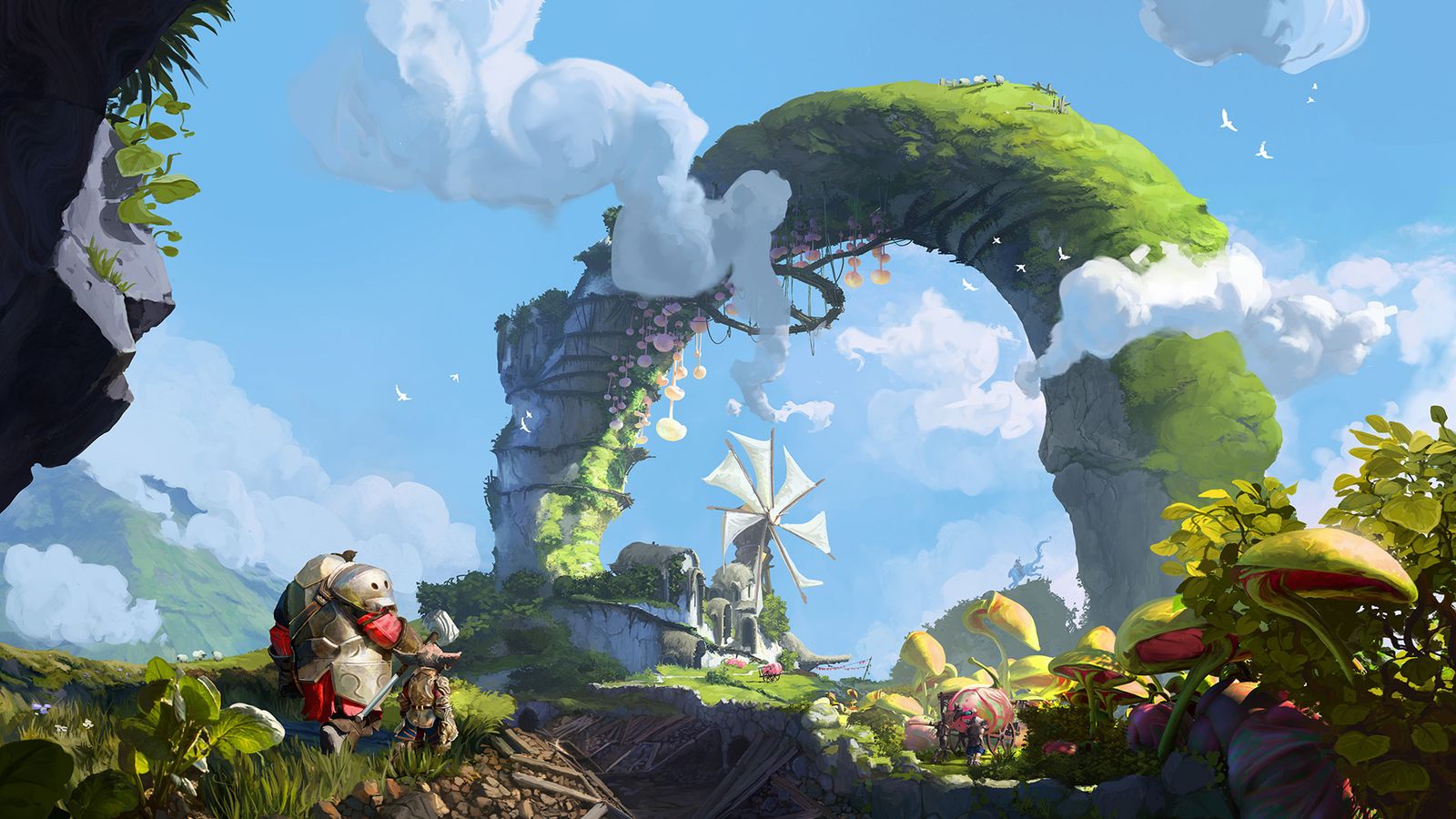
Official Guild Wars 3 concept art from the June 5, 2026 announcement page — visual proof of the live reveal and the kind of high-quality creative signals (art/trailer) that generate AAA-level community momentum. — Source: ArenaNet / GuildWars3.com
Pitfalls & Red Flags
- Lookalike domains and typo-squats. Attackers mimic your brand at the DNS level; preempt with defensive registrations and a public list of official URLs.
- Unverifiable partner logos. A slide full of exchange or publisher logos without reciprocal links or press notes is a red flag.
- Tokenomics hand-waving. Vague claims about “utility” or “future governance” without supply, unlocks, and usage clarity invite speculation and regulatory risk.
- Wallet-gated basics. If reading a roadmap or FAQ requires a wallet connect, assume the team prioritizes funnel metrics over transparency.
- Audit theater. One-page security badges without a full report link, scope, or remediation details aren’t meaningful.
- Date inflation. Repeated “soon” windows with shifting milestones and no signed changelogs usually indicates a marketing-led, not product-led, cadence.
For more analysis on how crypto, games, and markets intersect—and the operational details that make or break launches—visit Crypto Daily.
Frequently Asked Questions
Did ArenaNet confirm Guild Wars 3 before fans saw domain changes?
Fans spotted domain activity around guildwars3.com, including a shift to AWS name servers, then ArenaNet officially announced Guild Wars 3 on June 5, 2026 (Mogaz; ArenaNet / GuildWars3.com).
Is Guild Wars 3 using Web3 or blockchain features?
ArenaNet’s announcement and subsequent coverage focused on the game’s reveal and business model; there has been no official indication of blockchain integration. Treat any claims to the contrary as speculation unless confirmed by the studio.
What’s the significance of “no subscription or paid battle pass” for GW3?
It’s economic clarity. Studio head Colin Johanson framed GW3 as buy-and-play, which reduces confusion about ongoing costs and avoids monetization backlash common to MMOs (PC Gamer).
How can Web3 MMOs replicate AAA-level signals?
Secure domains with DNSSEC, maintain a signed newsroom, coordinate infra changes with official posts, publish audits and changelogs, and state token/NFT policies plainly. Pair machine-readable breadcrumbs with human confirmation.
Are domain moves reliable predictors of announcements?
They’re mid-strength clues. NS changes, SSL issuance, and CDN tweaks can precede reveals, but false positives happen. Look for convergence: verified announcements, partner co-statements, and reputable press embargoes.
What’s the 2026 context for Web3 games and trust?
Some major publishers have stepped back from blockchain features—Ubisoft’s Champions Tactics being one example—so communities scrutinize claims more closely (BlockchainGamer.biz). Strong, consistent signals matter more than ever.
Should I buy tokens based on domain rumors?
No. Domain activity is not investment advice and can be spoofed or misread. Evaluate fundamentals, verify announcements through official channels, and consider the full risk stack before making decisions.
Disclaimer: This article is provided for informational purposes only. It is not offered or intended to be used as legal, tax, investment, financial, or other advice.




Be the first to comment