


Ethereum’s explosive rally has stalled around a major resistance area, with price action now turning increasingly choppy near $2.5K. The broader recovery remains intact, but weakening short-term structure and a more hawkish macro backdrop raise the probability of consolidation or a corrective pullback before another sustained advance.
Ethereum Price Analysis: The Daily Chart
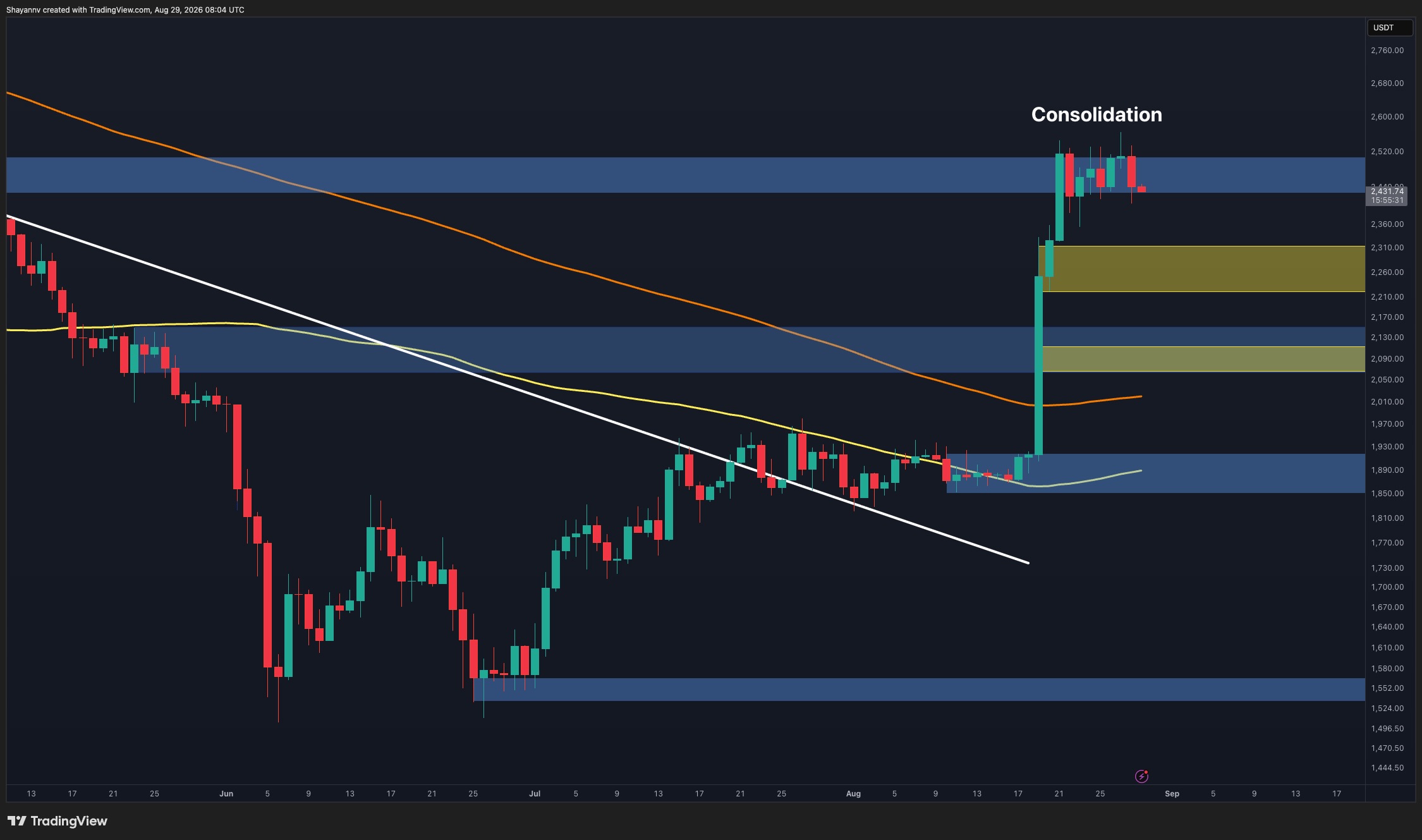
Ethereum is consolidating after its powerful breakout from the $1.85K-$1.92K base. The price has now reached the major $2.4K-$2.52K supply zone, where buyers have so far struggled to generate another impulsive continuation. The repeated rejection around this region suggests that supply is becoming increasingly relevant following the near-vertical advance.
As a result, choppy consolidation appears likely in the short term, while a corrective move should not be ruled out. The first notable support sits around the $2.21K-$2.31K zone. Below it, the $2.06K-$2.14K area represents the next important support region and could become relevant if selling pressure accelerates.
The macro environment is also adding pressure. Federal Reserve Chair Kevin Warsh’s latest Jackson Hole remarks emphasized that inflation remains too elevated and suggested that rates may need to remain restrictive or potentially move higher if inflation fails to make sufficient progress toward the Fed’s 2% objective.
Markets interpreted the comments as hawkish, with expectations for another rate increase rising after the speech. This backdrop appears to be weighing on risk sentiment and could make an immediate Ethereum breakout more difficult.
ETH/USDT 4-Hour Chart
The short-term picture is showing clearer signs of exhaustion. Ethereum has repeatedly tested the upper portion of the $2.4K-$2.52K resistance zone, producing three successive peaks around the same broad area.
This price action creates the potential for a three-drive pattern. Such a structure typically signals that the preceding directional move is losing momentum and can precede either a sideways range or a temporary reversal. More importantly, Ethereum has now slipped below the ascending trendline connecting the recent higher lows, adding weight to the possibility that the immediate bullish impulse is weakening.
The first downside area to monitor remains the $2.21K-$2.31K pullback zone. A correction into this region would still be compatible with the broader bullish structure and could allow the market to establish a healthier base. If that support fails, the second pullback zone around $2.07K-$2.11K becomes the next significant target.
Alternatively, holding the current $2.4K area and reclaiming the rising trendline would reduce the immediate bearish pressure. A convincing breakout through the $2.52K region would also invalidate the developing reversal setup and favor continuation of the broader bullish trend.

Sentiment Analysis
Ethereum’s Spot Average Order Size chart provides additional context for the current indecision. The metric distinguishes periods dominated by larger whale-sized spot orders from more ordinary market activity.
Most recent observations appear to be classified as normal orders, with no notable concentration of large whale transactions at the latest readings. This suggests that neither exceptionally strong whale demand nor aggressive whale supply is currently dominating the spot market.
The absence of substantial large-player participation fits the technical consolidation scenario. With limited evidence of strong directional conviction and relatively subdued participation, Ethereum may remain vulnerable to volatile swings within a range rather than immediately establishing another sustained trend. A meaningful return of large whale orders could therefore provide a more useful signal that stronger demand or supply is entering the market.

Disclaimer: Information found on CryptoPotato is those of writers quoted. It does not represent the opinions of CryptoPotato on whether to buy, sell, or hold any investments. You are advised to conduct your own research before making any investment decisions. Use provided information at your own risk. See Disclaimer for more information.




Be the first to comment