



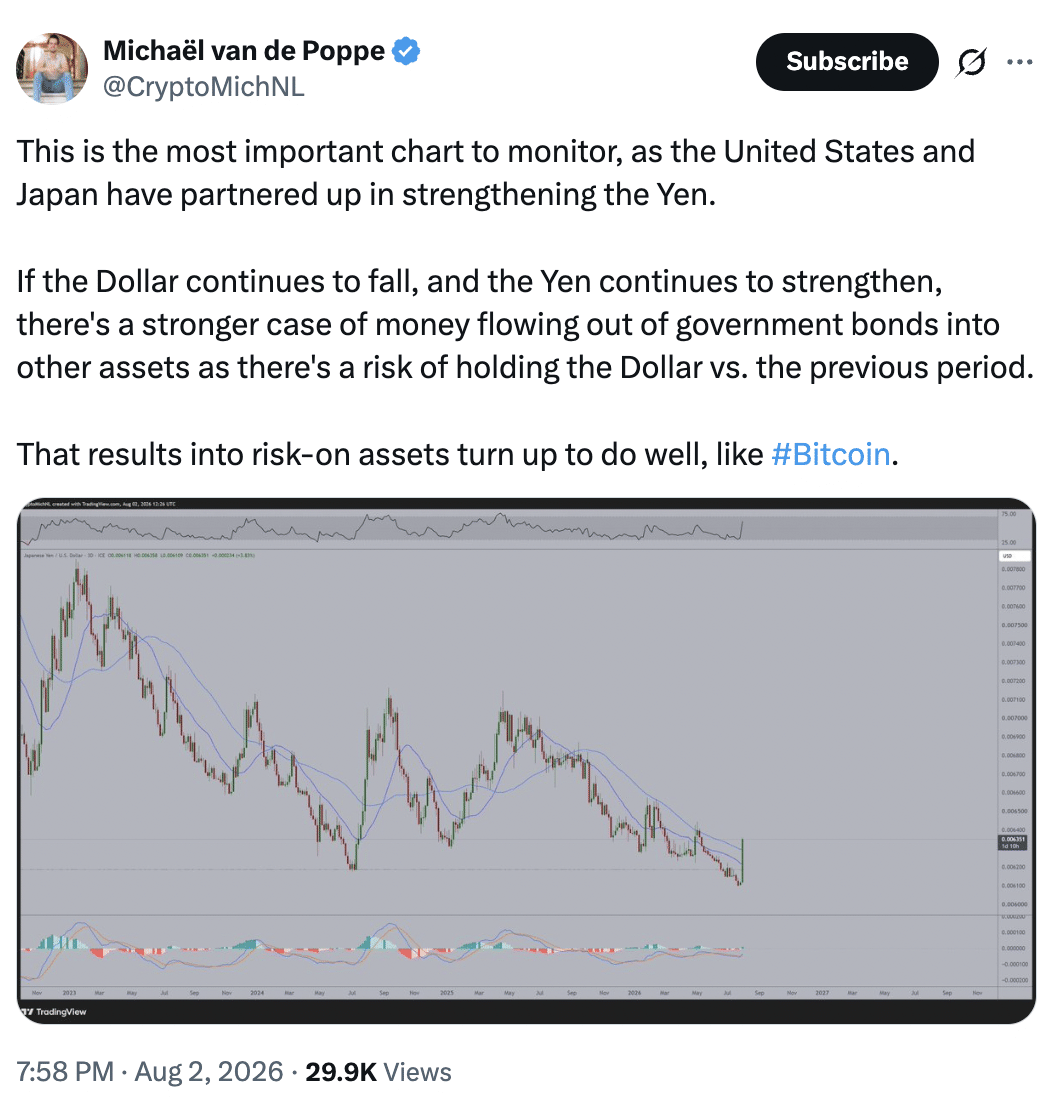
The United States has intervened to support Japan’s yen for the first time since 1998. For this, the Bank of Japan (BOJ), the U.S. Treasury, and Japan’s Ministry of Finance (MOF) are collaborating to enter currency markets supporting the Japanese yen in what could be a coordinated U.S-Japan foreign exchange intervention.
This happened because of Japan’s ultra-loose monetary policy and the large interest rate differential with the United States, which have kept the yen weak.
Usually, in such an intervention, authorities purchase Japanese yen and sell U.S dollars. This, in turn, would raise demand for the yen and lower the USD/JPY exchange rate.
President Trump weighs in
Remarking on the same, U.S President Donald Trump told Fox News,

They have a weakening yen and they wanted a little bit of help, and we’re always there for Japan. Japan has been very good to us — with the exception, of course, of Pearl Harbor.
He went on to add,
The fact is, our country is doing great. Everybody wants help from our country.
Why is the USD/JPY exchange rate important?
The key element here is the rate at which the yen may be appreciating. A steady hike would probably support riskier assets like Bitcoin [BTC], increase global liquidity, and devalue the U.S dollar.

However, a strong rally might cause the yen carry trade to quickly unwind, forcing investors to sell stocks, Bitcoin, and other assets to pay back yen-denominated loans. This could cause a sell-off in the market as a whole.
Many people in the cryptocurrency space are also keeping a careful eye on the USD/JPY exchange rate.
Bitcoin’s market dynamics
Naturally, this worry can also be reflected in the recent price action of Bitcoin, with the same dropping from $65,400 to less than $62,300. So far, this has resulted in about $648 million in liquidations.
In fact, according to Coinglass, the $60,000–$62,000 range is still a crucial downside liquidity zone, where further declines might lead to new long liquidations.
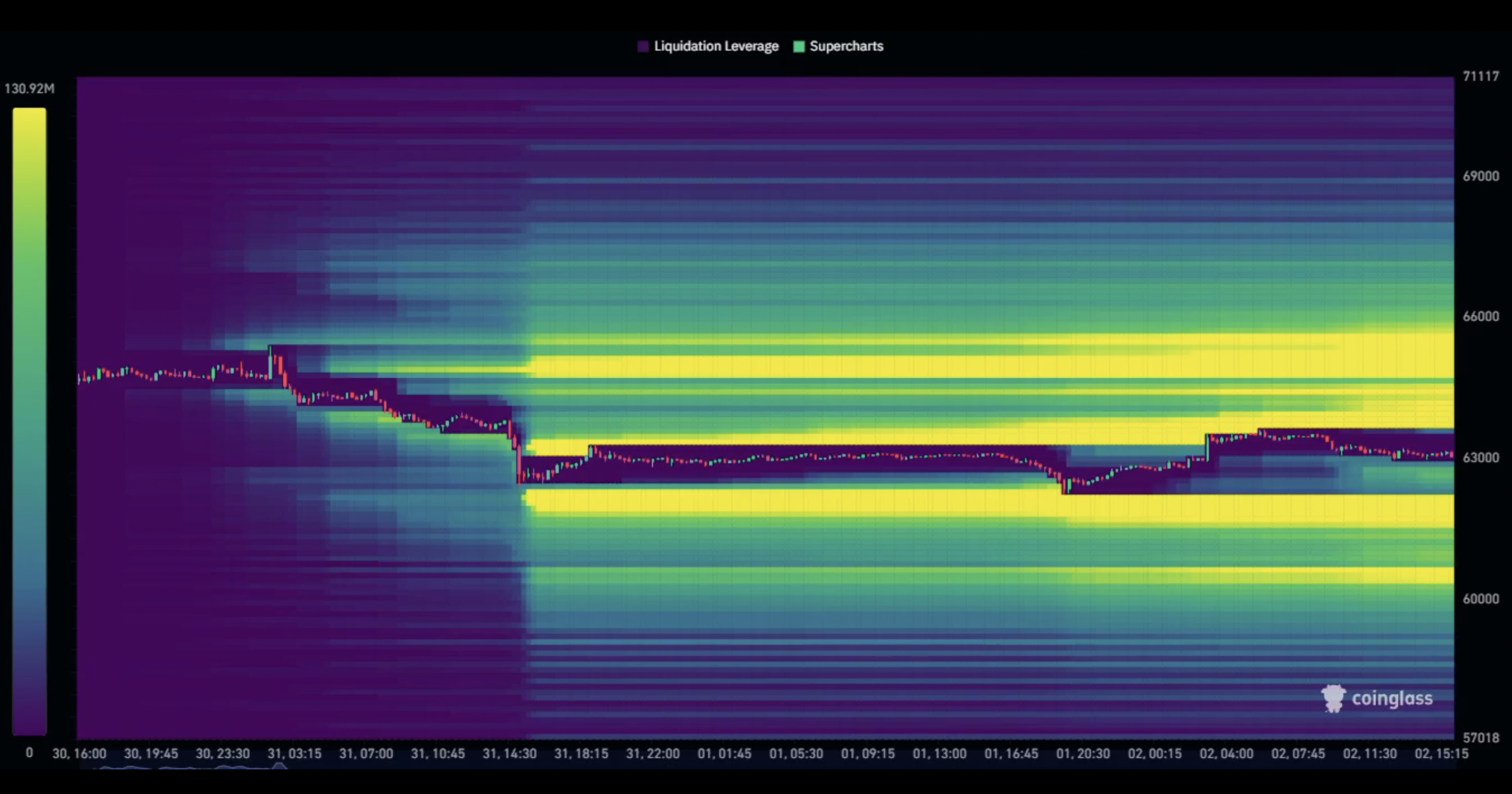
If Bitcoin recovers, a higher-probability target will be the even larger cluster of short liquidations that lies between $63,500 and $66,000. The rally could be accelerated if a move into that range sets off a short squeeze, which would force bearish traders to buy back Bitcoin.
What’s more?
Bitcoin has proven more resilient during the most recent wave of macro uncertainty.
During the Q2 2025 tariff-driven risk-off cycle, capital shifted significantly into gold and the XAU/BTC ratio increased by 76%. This time, Bitcoin has fared reasonably well in the face of tighter financial conditions and Middle East tensions.
This opinion was further supported by xWin Finance’s estimate that in a bull market, inflows into Japan’s spot Bitcoin ETFs could reach $18.4 billion.
Final Summary
- Unoted States has stepped in to pull up Japan’s yen after decades.
- The rate at which the yen will appreciate will determine its impact on Bitcoin.






Be the first to comment