



Bitcoin ownership is only as strong as the wallet holding it. Desktop wallets remain one of the most capable ways to manage Bitcoin in 2026 because they combine coin control, fee customization, multisig setups, and hardware wallet integration in one interface, without the screen-size limits of a phone.
Unlike mobile wallets, desktop wallets are built for people who want deeper control over their transactions. That includes choosing exactly which coins to spend, setting custom fees during a busy mempool, and pairing directly with cold storage devices like a Ledger, Trezor, or Coldcard.
This article covers the 7 best Bitcoin desktop wallets in 2026, based on security architecture, open-source transparency, and how each one has held up over the past year.
What Are Desktop Bitcoin Wallets?
A desktop Bitcoin wallet is software installed directly on your computer to manage your holdings. Unlike wallets hosted by an exchange, a desktop wallet stores your private keys locally on your machine instead of on someone else’s server. Most support sending, receiving, viewing transaction history, and generating new addresses, with some offering deeper features like coin control and multisig.
According to Globe Newswire, usage patterns back that up: mobile now accounts for the majority of crypto activity, while desktop remains the smaller share and is more often associated with deliberate users managing larger holdings or operating their own infrastructure rather than making everyday payments.
Desktop wallets tend to ask more of the user than a mobile app does. Setting up your own node, verifying downloads with a signature check, or configuring multisig all take a bit of technical comfort. Picking a wallet that matches your comfort level, not just its feature list, is the real decision here.
What Makes a Good Bitcoin Desktop Wallet in 2026
Not every wallet on the market deserves a spot on a “best of” list. Here is what separates a serious wallet from a basic one, and why each quality matters for your money.
1. Self-Custody Control
The most basic requirement is self-custody, meaning you hold your own private keys instead of a company or exchange. If someone else holds the keys, they control the bitcoin. A real desktop wallet never puts you in that position.
2. Open-Source Code
A wallet that publishes its source code lets developers and independent researchers audit exactly what the software does. Closed-source wallets ask for trust with no way to verify it.
3. Hardware Wallet Support
Keeping your private keys on a dedicated signing device like a Ledger, Trezor, Coldcard, or BitBox02, rather than on an internet-connected computer, remains the safer setup for meaningful amounts. The strongest desktop wallets act as a clean interface for these devices without forcing a compromise.
4. Coin Control (UTXO Management)
Coin control lets you pick exactly which UTXOs go into a transaction. That matters for privacy, since it limits address linking, and for fee optimization when the mempool gets congested.
5. Multisig Support
Multisig requires more than one key to authorize a transaction. It is one of the strongest security setups available for larger holdings, and not every wallet handles it well.
6. Your Own Node Connection
Connecting your wallet to your own Bitcoin node keeps your balance and transaction history off third-party servers entirely. It is the last step toward full financial privacy.
The 7 Best Bitcoin Desktop Wallets in 2026
Here is how each wallet stacks up in 2026, starting with the strongest all-around option.
Sparrow Wallet
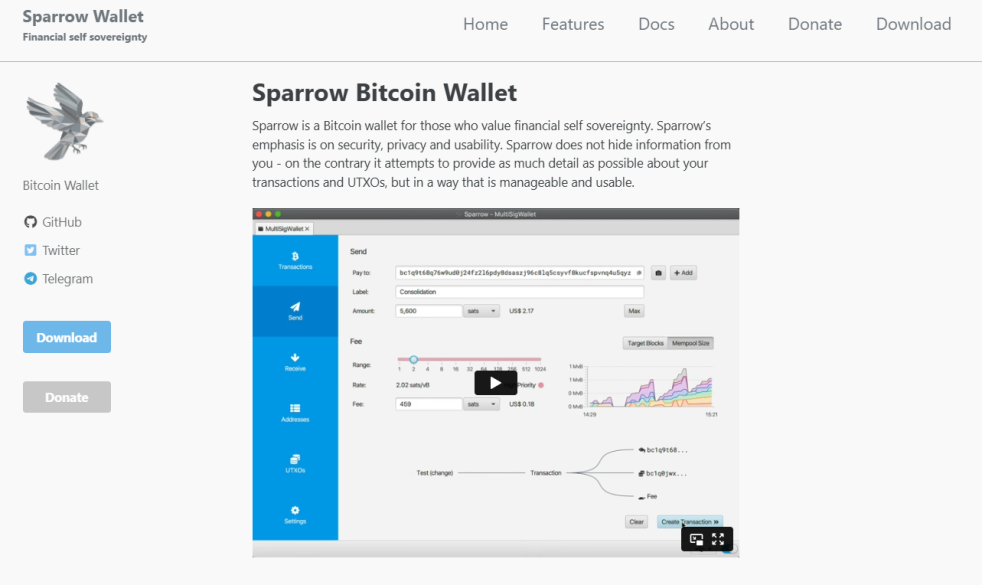
Sparrow remains one of the strongest Bitcoin desktop wallets in 2026 for users who want full control over their funds. It supports single-sig and multisig setups across common script types, coin control with UTXO labeling, hardware wallet pairing with Ledger, Trezor, Coldcard, and BitBox02, Tor connectivity, and a built-in transaction editor that lets you review transaction fields before broadcasting. The project also continues to ship regular updates, with version 2.5.3 released in late July 2026.
Sparrow’s depth is also its main trade-off. New users can feel overwhelmed by the transaction editor and server configuration options at first. For anyone serious about long-term self-custody, though, it is the wallet most experienced Bitcoiners recommend pairing with a hardware device.
Wasabi Wallet
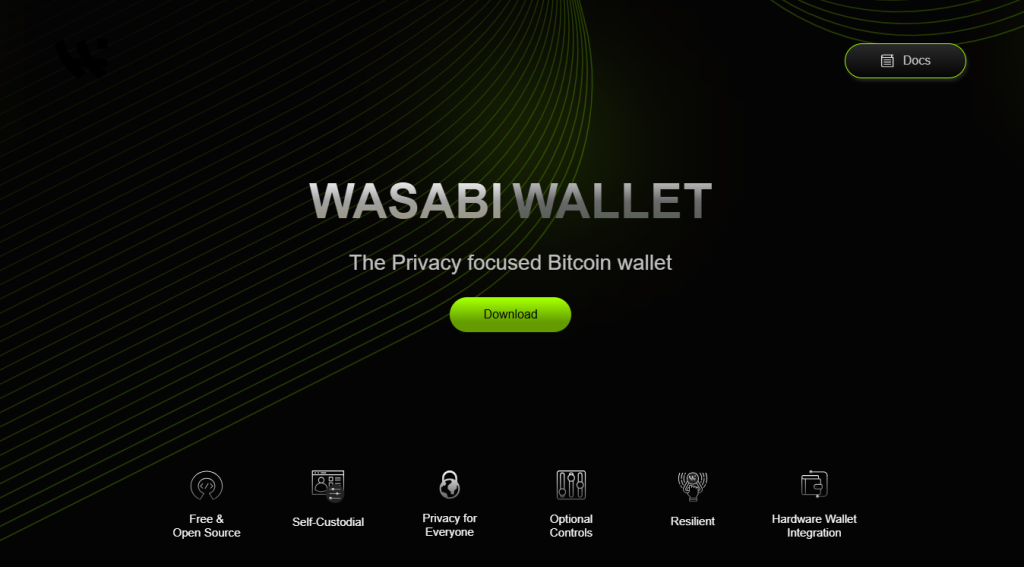
Wasabi is a Bitcoin-only wallet built around transaction privacy, but its privacy model changed in a way this list has to account for. In June 2024, zkSNACKs, the company behind Wasabi, shut down its own CoinJoin coordination service, citing regulatory pressure in the United States. Wasabi still functions as a full-featured wallet, and CoinJoin still works, but it now requires manually connecting to an independent, community-run coordinator such as Kruw’s instead of using a default service built into the app.
Wasabi remains fully open-source, supports Tor by default, and gives experienced users a genuine path to on-chain privacy. The setup now takes an extra step compared to a couple of years ago, and that step is worth knowing about before you pick this wallet expecting one-click privacy.
Electrum
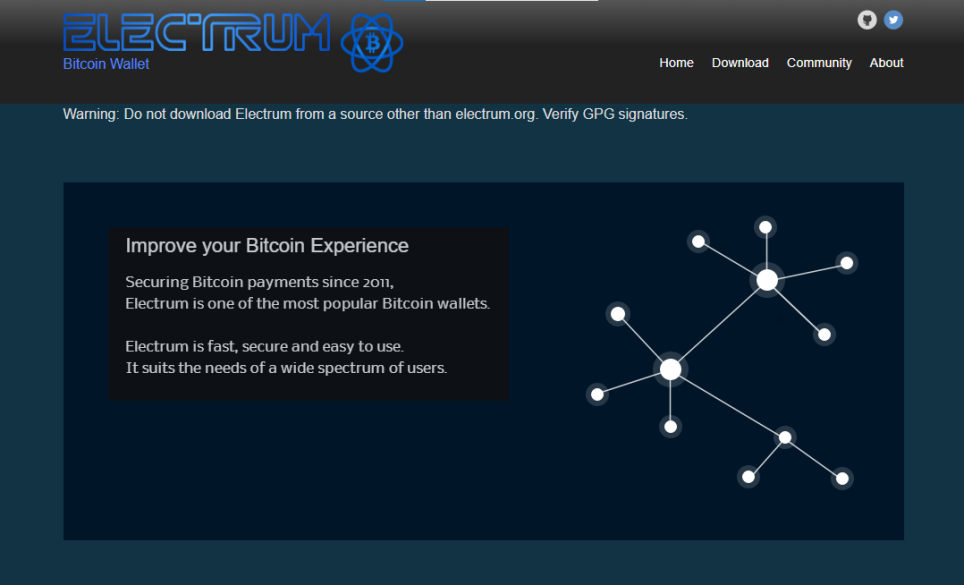
Electrum has been a fixture of the Bitcoin ecosystem since 2011, and it earns its spot through simplicity rather than a long feature list. As a lightweight client, it connects to remote Electrum servers instead of downloading the full blockchain, which makes it faster to set up than a full-node wallet.
Electrum now supports Taproot addresses (bc1p) alongside legacy, SegWit, and native SegWit formats, along with multisig and hardware wallet integration for devices like Ledger, Trezor, and Coldcard. Its interface has not changed much over the years, which experienced users tend to see as a feature rather than a flaw. New users may find the options screens dense at first.
Exodus
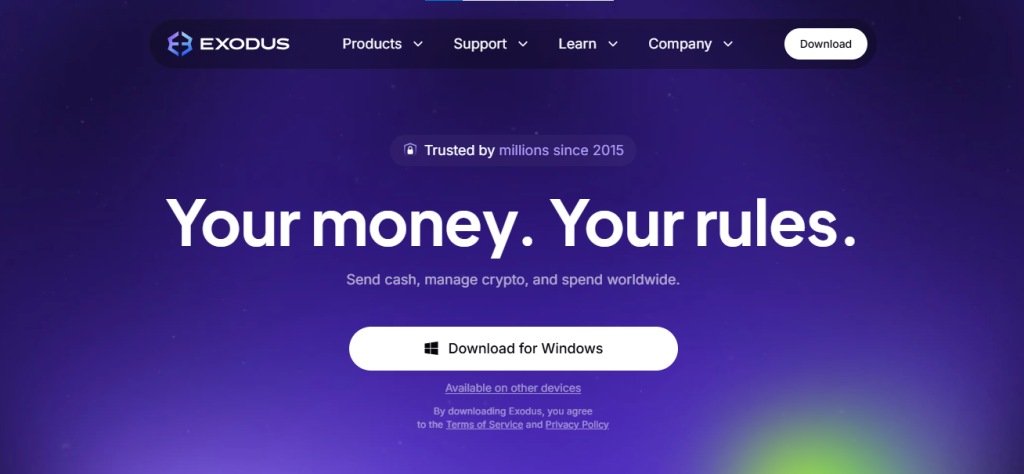
Exodus stays the pick for people who want one polished interface across many chains rather than a Bitcoin-only tool. It supports 60-plus networks, an in-wallet swap feature, staking for assets like Solana, Cardano, and Algorand, and direct Trezor hardware wallet integration for cold storage.
Exodus advertises swap fees starting at 0.5%, but the effective cost can be higher once the spread and network fees are included, especially on smaller trades. It remains a beginner-friendly wallet for managing multiple assets, though users who swap often inside the app should factor in those costs.
Guarda
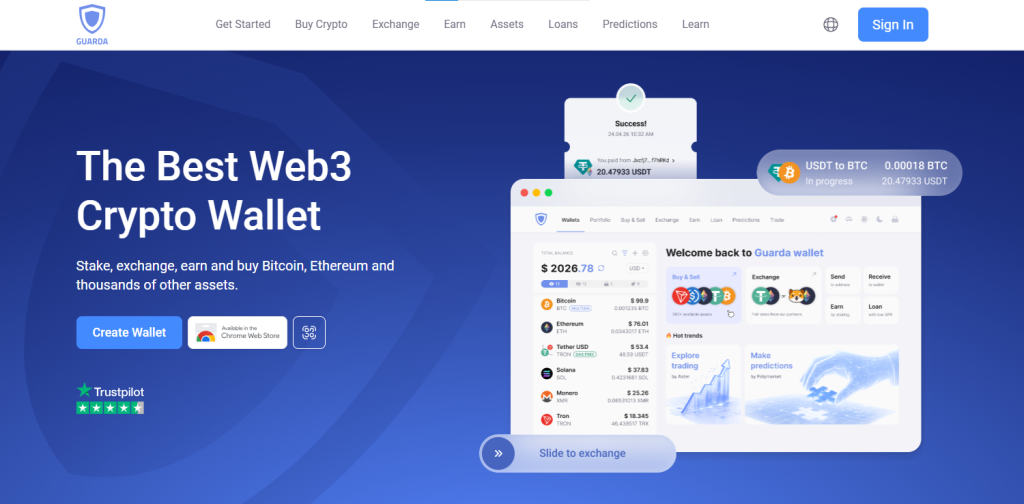
Guarda is a multi-coin wallet aimed at users who want one interface for a wide range of digital assets without a steep learning curve. It supports Bitcoin alongside a large list of other cryptocurrencies, with built-in swap functionality and staking for select assets.
Guarda’s appeal is breadth and ease of use rather than Bitcoin-specific depth. Users who only hold Bitcoin and want strong coin control or multisig will find more of what they need in Sparrow or Electrum instead.
Coinomi
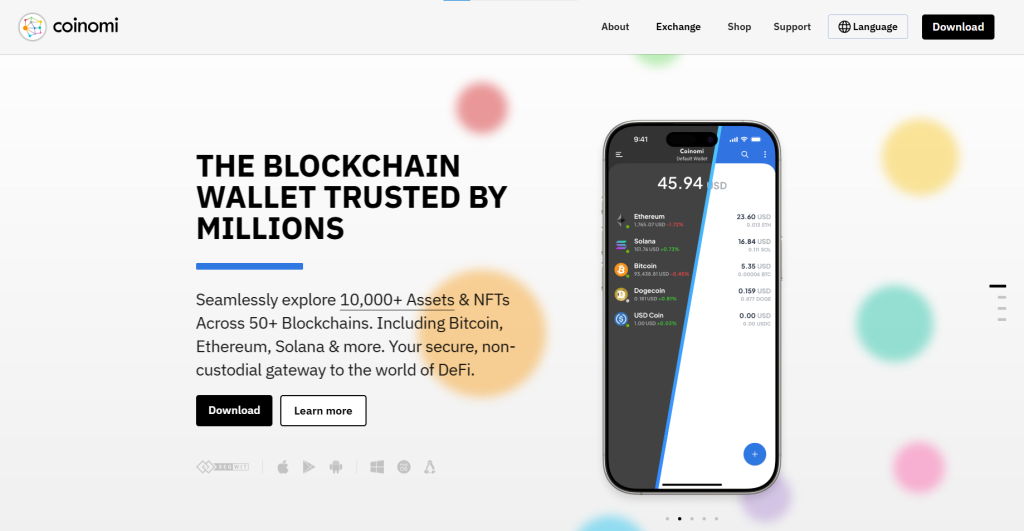
Coinomi has been in the multi-coin wallet space for years and supports an extensive list of assets alongside Bitcoin, with in-wallet swapping built in. Its long track record and broad asset support make it a reasonable option for someone managing several coins from one desktop app.
Like Guarda, Coinomi trades Bitcoin-specific features for breadth. It is not the wallet to reach for if coin control, multisig, or direct hardware wallet pairing are what you need most.
Specter Desktop
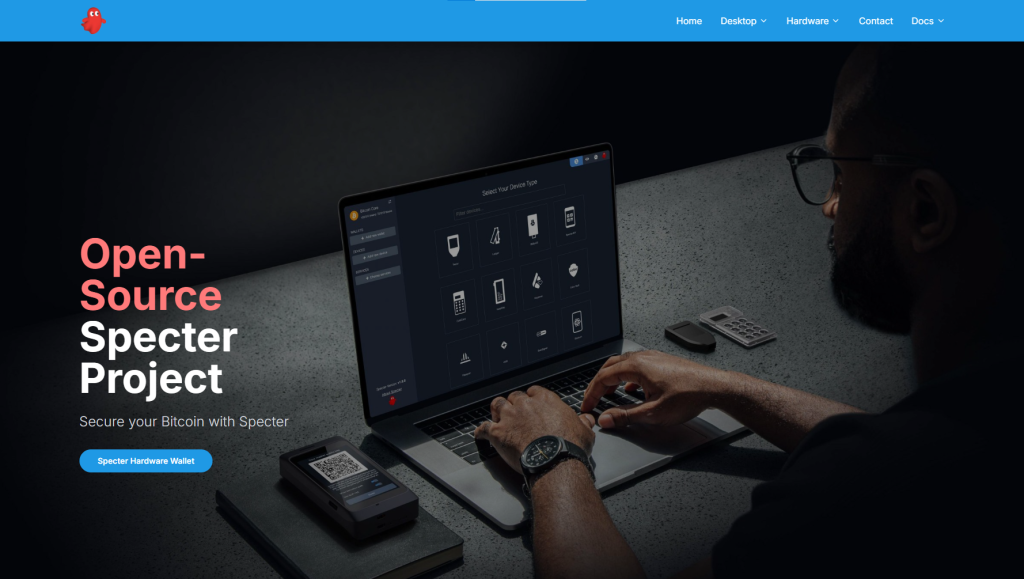
Specter Desktop is the strongest option in 2026 for holders who want a dedicated multisig and cold storage coordinator. It is a free, open-source tool that pairs your own Bitcoin Core node with hardware signing devices like Coldcard, Trezor, BitBox02, and Ledger to build 2-of-3 or 3-of-5 multisig wallets.
Specter Desktop supports PSBT-based signing over USB, SD card, or QR code, which means it can coordinate air-gapped setups where the signing device never touches the internet. It takes more setup than Sparrow, since it typically runs alongside a full Bitcoin Core node, but for holders building a genuine cold storage multisig setup, it is the most actively maintained option built for that specific job in 2026.
Choosing the Right Wallet for How You Hold Bitcoin
Choosing the right Bitcoin wallet is important because it directly affects how you secure, manage, and use your funds. The best choice depends on your priorities, whether that is stronger security, better privacy, easier day-to-day use, or access to advanced features. Understanding these trade-offs helps you select a wallet that matches your experience level and how you plan to use Bitcoin.
Whatever you choose, the wallet only matters as much as your control over the keys behind it. Check out our guide to the best Bitcoin hardware wallets if you are pairing a desktop wallet with cold storage, or read up on common crypto wallet security mistakes before you move any meaningful amount.






Be the first to comment